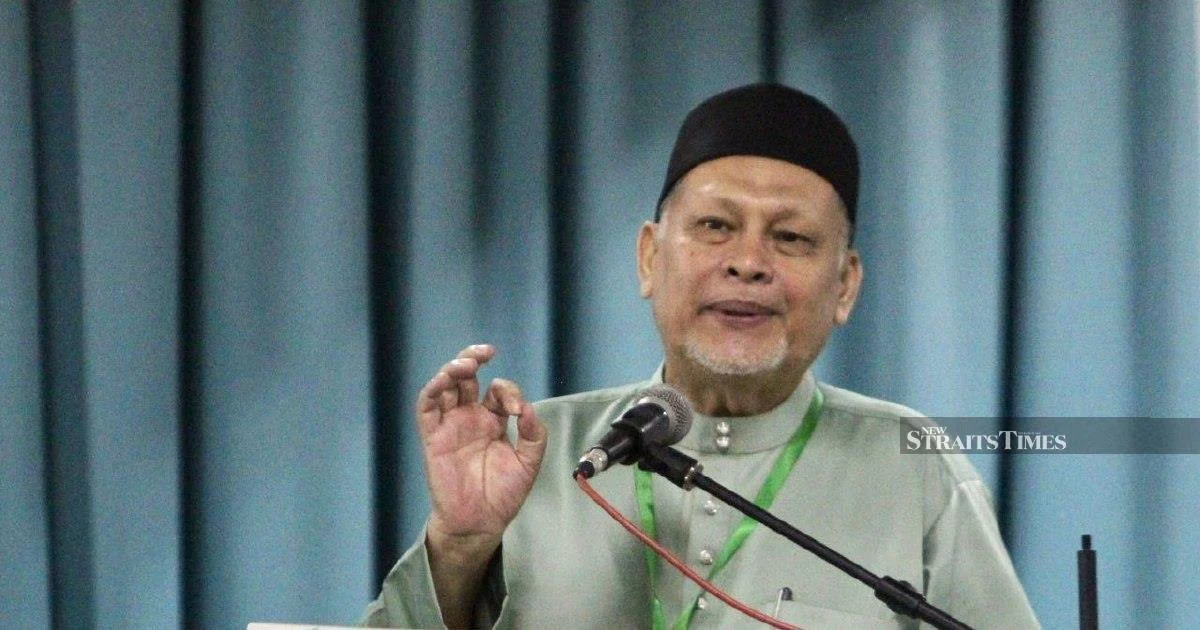
The Islamic party PAS has signalled growing anxiety about the electoral landscape ahead of Malaysia's 16th general election, particularly regarding the proliferation of new political movements aimed at mobilising younger demographics. Party officials have identified this emerging competitive pressure as a key strategic concern that requires careful management, underscoring the shifting nature of voter allegiances among Malaysia's youth.
The Islamist party's wariness reflects broader uncertainties affecting established Malaysian political formations as newer entrants attempt to carve out space in an increasingly fragmented political ecosystem. PAS, which has maintained significant influence especially in states like Kelantan and Terengganu, recognises that demographic shifts and changing voter preferences pose material threats to traditional party machinery and messaging frameworks. Youth engagement has become a critical battleground where established parties must compete against nimbler, digitally-native political initiatives.
This anxiety among PAS leadership points to a deeper reconfiguration of Malaysian politics, where younger voters demonstrate reduced attachment to the conventional party structures that have dominated the post-independence era. The emergence of new parties specifically calibrated to appeal to Gen Z and millennial voters suggests that traditional approaches emphasising party loyalty and organisational networks may require substantial adaptation. For PAS, which derives significant organisational strength from its grassroots religious and community networks, competition from organisations with different value propositions presents a genuine institutional challenge.
The concern articulated by PAS reflects a phenomenon affecting political parties across Southeast Asia. Younger voters in Malaysia increasingly prioritise policy positions on specific issues—economic opportunity, climate action, social justice—over traditional partisan identities. Parties targeting this demographic often leverage social media strategies, focus on digital activism, and appeal to cosmopolitan rather than communal identity frameworks. These approaches diverge markedly from the institutional and ideological foundations that have sustained PAS for decades.
PAS's candid acknowledgment of this challenge demonstrates sophisticated political management, recognising that denial would be counterproductive. By naming the problem, party officials signal internal discussions about adaptive strategies and the necessity for renewal in how the party presents itself to younger Malaysians. The issue transcends mere electoral mechanics; it touches fundamental questions about how established religious and ideological movements maintain relevance in rapidly modernising societies.
The specific timing of these concerns—ahead of GE16—suggests that PAS strategists are conducting serious internal assessments of their competitive position. Party resources, messaging frameworks, and candidate selection processes may all require recalibration to address youth voter preferences more effectively. This necessity comes at a moment when PAS itself occupies an evolving political position, participating in different coalition arrangements at federal and state levels, which may complicate efforts to present a coherent narrative to younger voters.
Regionally, this Malaysian dynamic mirrors challenges confronting established political parties across Indonesia, Thailand, and the Philippines, where new formations and independent candidates have successfully mobilised younger electorates dissatisfied with traditional parties. The capacity of established institutions to adapt their messaging and organisational practices while maintaining core identity remains a critical test of political durability. PAS's acknowledgment that it must address this challenge suggests the party recognises that business-as-usual approaches risk marginalisation.
The emergence of youth-focused political actors in Malaysia has occurred against a backdrop of generational cohort changes, with voters born after 2000 comprising an increasingly substantial proportion of the electorate. These newer voters have fundamentally different experiences of Malaysian politics, having come of age during periods of institutional turbulence, constitutional crises, and significant social media penetration. Their political preferences and mobilisation patterns cannot be assumed to mirror those of earlier generations who formed their political identities during different historical moments.
For PAS specifically, the challenge extends beyond simple electoral competition. The party's identity and institutional structures have historically derived significant strength from its role as custodian of Islamic political thought and Malay-Muslim communal interests. Newer parties may offer alternative formulations of these identities or may transcend ethnic and religious framings entirely. Youth voters' receptiveness to such alternatives suggests that traditional identity categories, while remaining important, may no longer suffice as sole bases for political mobilisation and party loyalty.
The party's identification of this issue also implies broader strategic thinking about Malaysian politics' future trajectory. PAS leadership appears to recognise that the party system itself is entering a period of potential reconfiguration, where established hierarchies and predictable coalition mathematics can no longer be assumed. This awareness, reflected in official statements, indicates serious attention to long-term party sustainability and the adaptations necessary to remain electorally consequential across multiple election cycles.
Moving forward, how PAS responds to this competitive pressure will reveal much about the party's adaptive capacity and its capacity to evolve its political messaging without abandoning core constituencies and ideological commitments. This balance—between innovation and continuity, between tradition and adaptation—represents perhaps the fundamental challenge facing not merely PAS but Malaysian political institutions more broadly as the nation approaches GE16 and contemplates its electoral future.