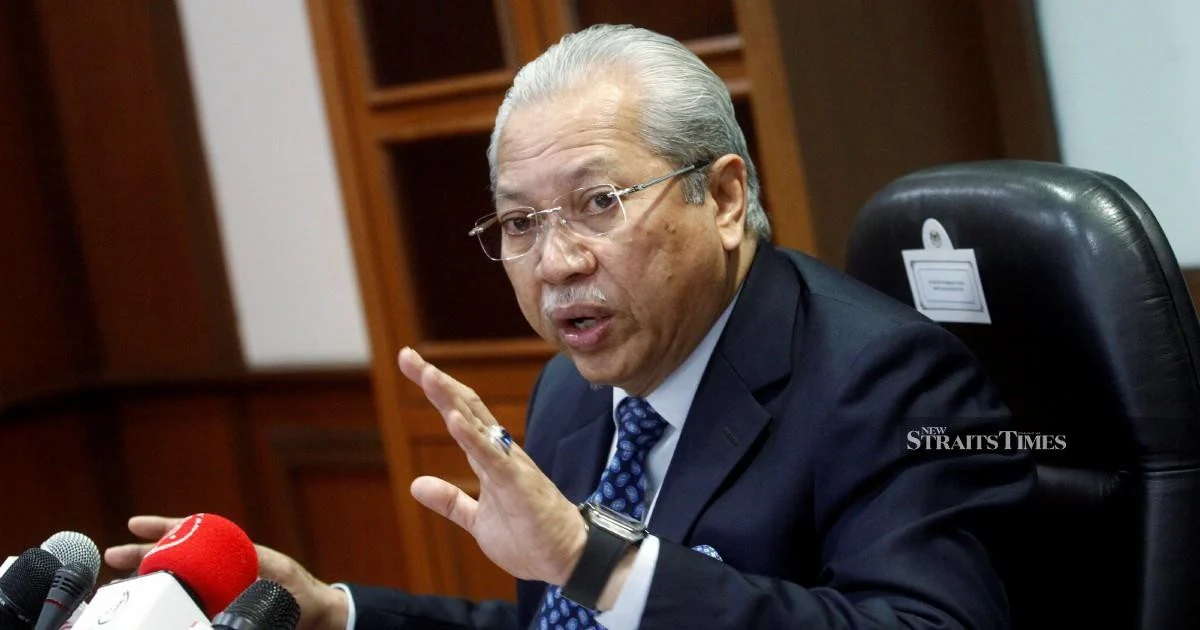
Pas leadership moved to dispel mounting speculation about its intentions towards coalition partner Bersatu, asserting that the Islamic party has never pursued strategies to eject the smaller faction from the Perikatan Nasional framework. Speaking in Kota Baru, party officials addressed the fractious dynamics that have become increasingly apparent within the opposition grouping over recent months, characterising such suggestions as misconceived.
The denial carries particular weight given the palpable tensions between Pas and Bersatu that have played out in public forums and political maneuvering across Malaysian states. Observers have noted divergences in strategic positioning, with the two parties appearing to pursue distinct electoral and organisational priorities. Yet Pas representatives maintained that these differences do not reflect any deliberate campaign to marginalise or remove Bersatu from the coalition structure that was originally forged to challenge the ruling Barisan Nasional.
The Perikatan Nasional configuration emerged as a significant political force, particularly following the 2022 elections when it captured seats across multiple states and secured notable representation in Parliament. Both Pas and Bersatu were instrumental in assembling this bloc, which positioned itself as an alternative to the long-governing Barisan coalition. The partnership between the two parties, however, has consistently been tested by competing interests, ideological nuances, and questions about power distribution within the alliance.
Pas, with its extensive grassroots organisation and substantial electoral base particularly in rural constituencies and Malay-majority areas, represents the coalition's largest component in terms of membership and organisational reach. Bersatu, though smaller in numerical terms, brought different political capital and connections, particularly through its association with former Prime Minister Mahathir Mohamad and subsequently Muhyiddin Yassin. This asymmetry has created inherent tensions regarding decision-making authority and resource allocation within the broader Perikatan framework.
The recent public statements from Pas leadership should be contextualised within the broader Malaysian political landscape, where coalition management remains perpetually challenging. Multiple opposition alliances have historically fractured over disputes ranging from seat allocation and ministerial appointments to fundamental policy disagreements. The Perikatan Nasional has not been immune to these pressures, with both member parties facing demands from their respective support bases and internal factions.
For Malaysian voters and political observers tracking the opposition's trajectory, the Pas clarification addresses a key concern about coalition stability heading into potential electoral contests. A fractured opposition benefits the incumbent government, making maintenance of the Perikatan structure strategically important for both constituent parties. Pas's public reassurance that it harbours no designs to dismantle its partnership with Bersatu therefore serves both a practical and symbolic function within Malaysian political discourse.
The visible tensions between the parties have manifested in various ways across different state legislatures and in parliamentary proceedings. State-level politics, where Perikatan Nasional holds considerable sway in several jurisdictions, has occasionally reflected these friction points. Questions have periodically surfaced regarding the division of ministerial portfolios, representation on key committees, and strategic direction in both parliamentary opposition activities and state governance where the coalition controls executive power.
Bersatu itself has undergone substantial transformations since its establishment, experiencing internal restructuring and shifts in party direction. These internal dynamics have sometimes intersected awkwardly with Pas's strategic positioning, creating perceptions of divergence that have fueled speculation about the coalition's durability. The smaller party's need to maintain political relevance and voter engagement creates pressures that do not always align perfectly with Pas's calculus.
From a Southeast Asian perspective, Malaysia's multi-party coalition politics offers important lessons about opposition alliance management. Unlike neighbouring countries with two-party or dominant-party systems, Malaysian politics must accommodate multiple significant political forces with distinct constituencies and organisational structures. The Perikatan Nasional represents one model of such coalitional politics, where parties with different ideological emphases must find sufficient common ground to function effectively.
The Pas statement should be read as an effort to project stability and commitment to the broader coalition project at a moment when external observers have questioned whether internal contradictions might fracture the arrangement. Such reassurances are typically necessary when strains become sufficiently visible to generate media coverage and public commentary. By explicitly denying any intention to marginalise Bersatu, Pas signals its interest in preserving the coalition as a functional political entity.
Looking forward, the management of Perikatan Nasional will likely continue requiring careful navigation from both constituent parties. Elections at state and federal levels will test whether the coalition can maintain sufficient unity while respecting the distinct identities and interests of its component organisations. The capacity of Pas and Bersatu to coexist productively will substantially influence opposition effectiveness in challenging the Barisan Nasional's dominance.
For Malaysian political stakeholders monitoring coalition dynamics, the substantive question remains whether public reassurances translate into sustained cooperative behaviour within parliamentary and governmental contexts. Coalition stability ultimately depends not merely on public declarations but on institutional mechanisms, resource-sharing agreements, and genuine commitment to collective goals from both leadership and grassroots levels.

