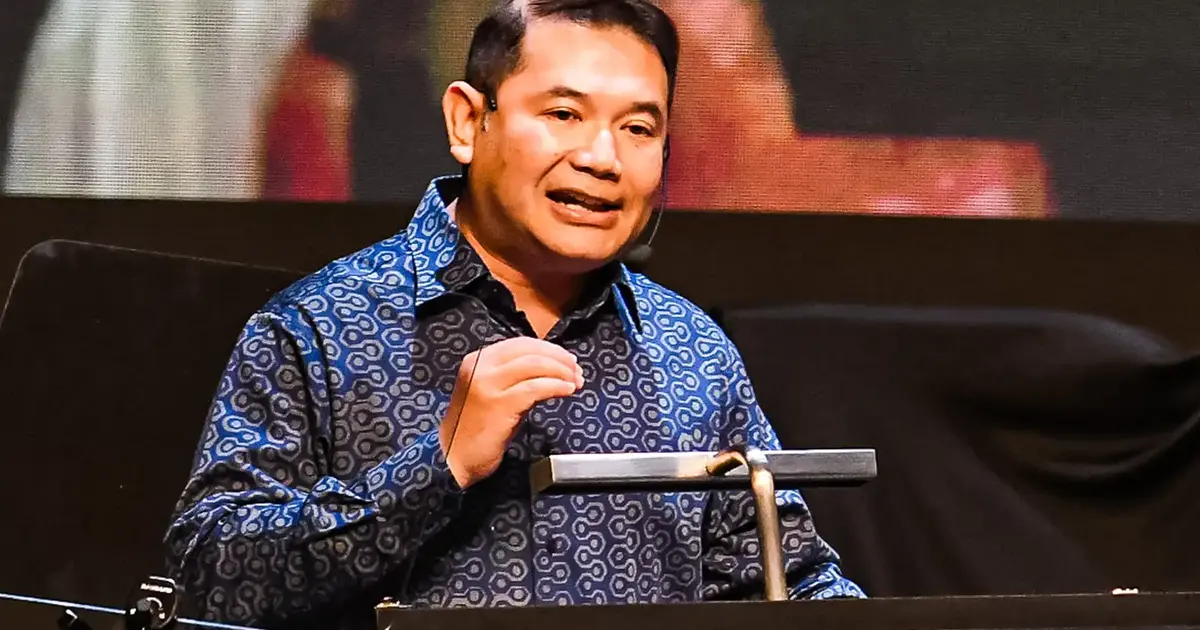
Parti Bersama Malaysia has moved decisively into campaign mode for the Johor state election, announcing that 73 volunteers have put themselves forward to represent the party in the crucial southern poll. The party's leadership, led by Rafizi Ramli, has now completed the rigorous screening and selection process designed to identify which candidates will carry the party's hopes in the contest.
Rafizi Ramli's confirmation that the vetting phase is behind the party signals an organised approach to the election, with the shortlisted candidates expected to be unveiled publicly on Friday. This timeline gives Bersama Malaysia minimal time to kick-start campaign machinery before voters head to the polls, reflecting the compressed nature of Malaysia's electoral calendar once elections are called.
The decision to field 73 candidates reflects Bersama Malaysia's strategic ambitions in Johor, where the party seeks to establish a meaningful foothold. The number of candidates fielded is a tactical statement about which constituencies the party views as winnable or worth contesting, and it provides insight into how widely the party believes it can spread its appeal across the state's voter base.
For Malaysian political observers, Bersama Malaysia's participation in the Johor contest carries broader implications for the country's fractured opposition landscape. The party, which broke away from established political structures to chart its own course, represents an emerging force attempting to reshape Malaysia's political binary. Its performance in Johor will be closely watched as a barometer of whether newer political entities can gain traction against entrenched coalitions and long-established parties.
Johor historically serves as a significant testing ground for opposition parties and emerging political movements. The state's electoral dynamics have shifted considerably in recent years, with voters demonstrating openness to political realignment and new political forces. This volatility creates both opportunity and risk for Bersama Malaysia, which must prove it can convert grassroots enthusiasm into actual electoral support.
The 73 volunteers who stepped forward to contest represent individuals willing to associate themselves with a relatively nascent political project. In Malaysian politics, where party affiliation carries real consequences for career advancement and social standing in some communities, the decision to volunteer for a newer party requires genuine commitment. The calibre and backgrounds of these candidates will significantly influence how observers assess Bersama Malaysia's institutional maturity and organisational depth.
The completion of the selection process within what appears to be a compressed timeframe demonstrates that the party has established functioning internal systems for candidate evaluation and vetting. This organisational capacity, though not yet tested at scale, suggests Bersama Malaysia has graduated beyond purely grassroots activism into structured party mechanics. For a party of its vintage, establishing credible selection procedures is essential to projecting electability and institutional legitimacy to voters.
The announcement timing is strategically important. By finalising candidates on Friday, Bersama Malaysia allows approximately one week for media coverage, candidate introduction to their constituencies, and the activation of grassroots networks before the actual polling day. This condensed campaign window is standard in Malaysian elections, but it means every day of candidate visibility and community engagement becomes proportionally more valuable.
Rafizi Ramli's direct announcement of the completion reflects his central role in steering Bersama Malaysia's strategic direction. His background as a political economist and former PKR deputy president brings technical sophistication to party operations. His willingness to personally confirm candidate selection processes suggests confidence in the choices made, or alternatively, a desire to take direct responsibility for the party's electoral fortunes in this critical contest.
For the broader Southeast Asian context, Bersama Malaysia's electoral experiment carries relevance beyond Malaysia's borders. The region has witnessed multiple new political movements attempt to challenge incumbent coalitions in recent years, with varying success rates. How Bersama Malaysia performs in Johor will contribute to understanding whether voters in mature Southeast Asian democracies seek new political vehicles or remain anchored to established parties.
The Johor election itself represents a consequential political moment. The state is Malaysia's second-largest economy and sits at the gateway between Singapore and the Malaysian peninsula, making it strategically important for political narrative-building. A strong showing by Bersama Malaysia could energise the party's growth trajectory and attract additional volunteers and supporters nationwide, while disappointment could necessitate strategic recalibration.
Looking ahead, the release of the shortlisted candidates on Friday will reveal which individuals and which constituencies Bersama Malaysia is prioritising. The geographic spread of candidates, the diversity of their professional backgrounds, and their prior political experience will provide crucial indicators about the party's strategic calculations and realistic electoral ambitions in Johor.
Ultimately, Bersama Malaysia's 73-candidate slate represents a threshold moment for the party. The selection process completion marks the transition from internal party organisation to public electoral competition, where candidates must now convince voters of their merit and vision for Johor. The party's willingness to contest substantially across the state demonstrates political ambition, while the actual electoral results will demonstrate whether that ambition is grounded in genuine voter receptivity or merely reflects organisational aspiration.

