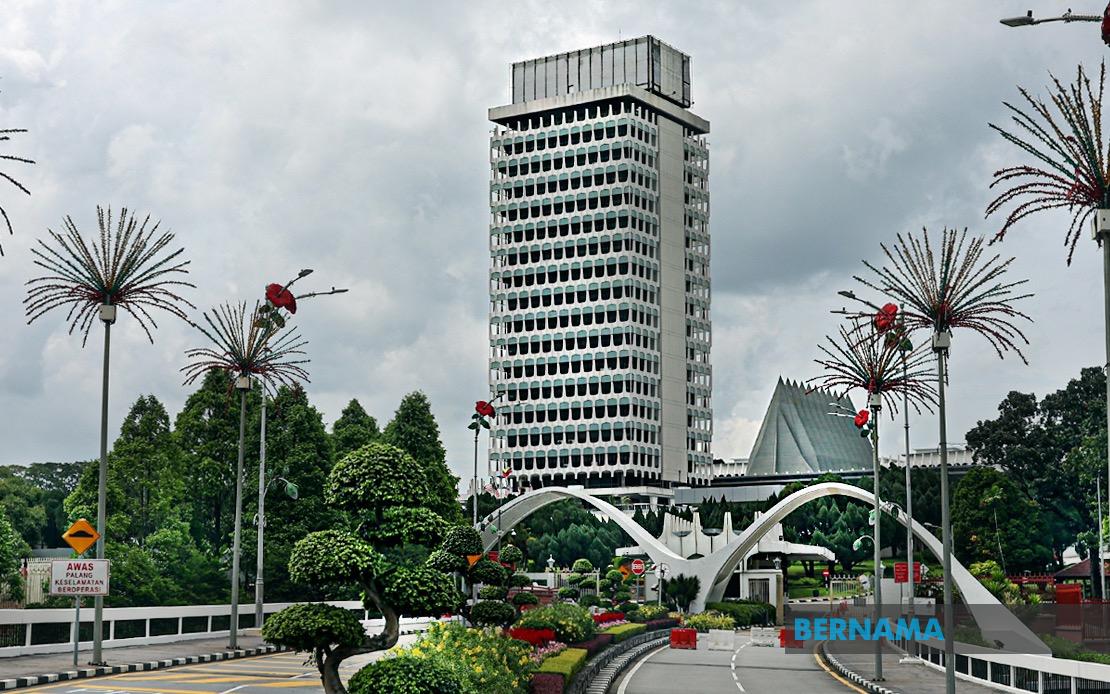
Parliament resumes deliberations today with a sweeping agenda that touches on energy transition, economic resilience, and Malaysia's evolving diplomatic posture in Southeast Asia. The 16-day sitting, which began Monday and continues until July 16, brings into focus several interconnected challenges facing the nation as it navigates technological advancement, regional stability, and economic headwinds.
Energy policy emerges as a central concern, particularly the Corporate Renewable Energy Supply Scheme (CRESS) that underpins Malaysia's ambition to reduce reliance on conventional power sources. Rodziah Ismail of Ampang will probe the Minister of Energy Transition and Water Transformation on implementation progress and industrial uptake, seeking clarity on how many companies have participated to date. Her enquiry extends deeper into systemic costs, specifically the findings of a System Access Charge rate review and how these charges may affect Malaysia's competitiveness as a regional data centre hub. The economics of data centre operations hinge partly on electricity expenses, making this technical review unexpectedly consequential for the nation's digital infrastructure strategy.
The question of energy costs intersects directly with Malaysia's broader economic vulnerabilities. Mohd Syahir Che Sulaiman has requested that the Minister of Economy outline the concrete mitigation strategies deployed by the National Economic Action Council in response to mounting job losses and business contractions triggered by global energy uncertainty and economic deceleration. This line of questioning signals concern within Parliament about whether current measures sufficiently address the downstream employment and investment impacts of prolonged external pressures. The minister will need to demonstrate tangible results and forward-looking strategies to reassure both legislators and constituent businesses.
Fuel subsidy policy, long a contentious and costly aspect of government expenditure, features prominently through Datuk Seri Hasni Mohammad's enquiry to the Finance Minister. His focus on standardised targeting using MyKad identification and the adequacy of the 200-litre entitlement for both petrol and diesel reflects growing parliamentary scrutiny of whether current subsidy architecture genuinely benefits intended recipients or leaks into unintended consumption patterns. Subsidy reform remains politically fraught in Malaysia, and parliamentary questioning of this nature often precedes policy shifts or refinements.
Malaysia's foreign policy direction towards Myanmar assumes particular urgency given the country's geographic proximity and the Five-Point Consensus framework established through the Association of Southeast Asian Nations. William Leong Jee Keen will ask the Foreign Minister how Myanmar policy reflects current diplomatic positions and to what extent the Five-Point Consensus—designed to encourage dialogue and democratic progress—actually shapes Malaysia's bilateral engagement. The consensus, which includes measures for military restraint and humanitarian access, has faced implementation challenges across the region, and Malaysia's specific approach matters for ASEAN cohesion and Myanmar's transition trajectory.
Data sovereignty emerges as a novel and increasingly critical parliamentary concern, elevated by Datuk Seri Amirudin Shari's dual questions to the Digital Minister. He seeks assurance that state-level digital infrastructure projects, exemplified by Selangor's Dark Fiber Network, align strategically with national data protection priorities and national security imperatives. His second query probes whether data sovereignty considerations have been embedded into Malaysia's push to become an artificial intelligence-ready nation by 2030. This reflects growing awareness that technological advancement divorced from data governance frameworks poses geopolitical and security risks, particularly given rising global competition for digital dominance.
Educational standards and federalism feature in two separate parliamentary enquiries. Datuk Idris Ahmad has raised questions about the Islamic Education curriculum's effectiveness in student development and coordination mechanisms between federal authorities and state Islamic Religious Councils to maintain consistent standards nationwide. This touches on a longstanding tension in Malaysia's federal structure where religion falls under state jurisdiction, yet national educational objectives require uniform quality. The enquiry suggests parliamentary interest in strengthening these coordination mechanisms.
Constitutional matters affecting Sabah and Sarawak receive attention through Isnaraissah Munirah Majilis's query on Malaysia Agreement 1963 implementation progress and the timeline for increasing parliamentary representation in the two states to 35 per cent of total seats. This redress of historical underrepresentation remains a commitment to East Malaysian stakeholders and signals Parliament's attention to constitutional promises that affect political representation and resource allocation for these regions.
A briefing from the Public Accounts Committee on health insurance premiums and private hospital charges will examine how rising costs in the private healthcare sector interact with policy frameworks under the Ministry of Finance, Ministry of Health, and Bank Negara Malaysia. This investigation carries implications for public health equity, as increasingly expensive private care may disproportionately disadvantage lower-income Malaysians dependent on public health systems already strained by demand. The PAC's examination will likely illuminate whether regulatory gaps enable unchecked price escalation or whether systemic inefficiencies drive costs upward.
The parliamentary calendar concludes this sitting phase with continued debate on the Prisons (Amendment) Bill 2026, legislative work addressing corrections system governance. Collectively, these parliamentary interventions reflect a Parliament engaging substantive policy questions spanning economic resilience, technological sovereignty, constitutional equity, and regional diplomacy—issues whose resolution will significantly shape Malaysia's economic competitiveness and social stability through 2026 and beyond.

