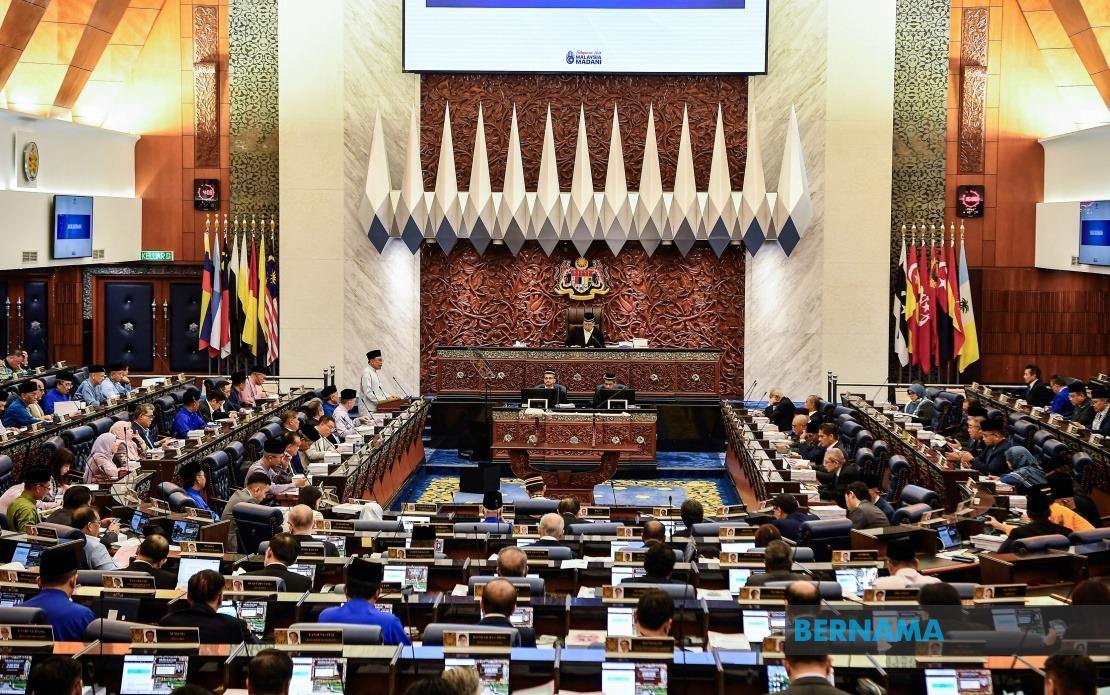
Parliament has cleared the way for Malaysia's most comprehensive cybercrime legislation in a generation, approving the Cybercrimes Bill 2026 on July 1. The measure, which underwent extensive parliamentary debate involving 48 legislators from both government and opposition benches, establishes a legal framework for prosecuting an expanding array of digital offences that have proliferated across Southeast Asia in recent years. At its core lies a focus on emerging threats: deepfakes and the malicious creation and sharing of digitally manipulated intimate images, crimes that have caused documented psychological and reputational harm to victims across the region.
The legislative framework comprises 61 distinct clauses addressing various cybercrime categories, reflecting the complexity of digital wrongdoing in an era when image manipulation technology has become accessible to ordinary users. The passage came through a majority voice vote, indicating broad parliamentary consensus on the necessity of updating Malaysian law to address criminal conduct that conventional legislation struggles to prosecute. This consensus reflects growing public anxiety about image-based abuse, particularly as artificial intelligence tools have made convincing fake videos and photographs exponentially easier to produce and distribute online.
Deputy Prime Minister Datuk Seri Dr Ahmad Zahid Hamidi's remarks during the debate's conclusion revealed a delicate balancing act central to the legislation's design. The government faced pressure to enact robust protections against digital abuse while simultaneously addressing concerns from civil liberties advocates worried about surveillance overreach. Officials sought to demonstrate that the new law would not concentrate unlimited power in the hands of authorities nor supersede established legal frameworks such as the Official Secrets Act 1972. This dual objective reflects Malaysia's broader challenge in developing digital regulation that simultaneously protects citizens and constrains state power.
Crucially, Ahmad Zahid emphasised that investigative access to computer systems and the data they contain remains circumscribed by procedural requirements rather than left to official discretion. The legislation recognises that digital evidence preservation often requires speed—a reality born from the ephemeral nature of online content—yet simultaneously demands that authorities justify such preservation with reasonable belief that the data relates to an investigation and faces imminent deletion or tampering. This threshold attempts to prevent fishing expeditions while permitting legitimate investigative work.
The notice-and-preserve mechanism outlined by the Deputy Prime Minister demonstrates legislative attention to the practical realities of cybercrime investigation. When investigating officers determine that computer data holds relevance to their work and that destruction appears probable without intervention, the law permits issuance of preservation notices. However, these notices operate within defined boundaries: they require the investigating officer's satisfaction regarding relevance and risk, not merely suspicion or convenience. Such procedural guardrails theoretically prevent the legislation from becoming a tool for political surveillance or harassment, though implementation will ultimately determine whether protections prove meaningful.
Regarding disclosure of stored digital information, the government has committed to written procedures requiring notice to the data owner or controller and compliance with investigative legitimacy standards. This approach echoes provisions found in data protection frameworks globally, particularly within the European Union's General Data Protection Regulation which has influenced digital legislation across multiple continents. For Malaysian businesses and individuals storing sensitive information, this requirement theoretically permits them to challenge inappropriate government requests and maintain some visibility into investigative demands.
The deepfakes provision carries particular significance for Malaysian society, where viral misinformation has influenced public discourse and where women and public figures have fallen victim to image-based abuse. The legislation's explicit criminalisation of creating and distributing digitally manipulated intimate images addresses a gap in existing law, where such conduct often escaped prosecution despite causing documented harm. This provision potentially offers recourse to victims who have previously faced limited legal options, though success will depend on investigative capacity and prosecutorial commitment.
From a regional perspective, Malaysia's legislation signals Southeast Asian concern about digital abuse and may influence legislative approaches in neighbouring countries. Thailand, Indonesia, and the Philippines have all grappled with similar legislation, and Malaysia's framework—particularly its approach to balancing investigation with rights protection—may serve as a template or cautionary tale depending on implementation outcomes. The region's growing internet penetration and the prevalence of smartphone ownership mean deepfakes and image-based abuse pose escalating public health challenges requiring legal responses.
The bill's passage reflects a recognition that existing cybercrime provisions, while addressing some digital wrongdoing, inadequately respond to crimes emerging from recent technological development. Malware distribution, online fraud, and website hacking remain prosecutable under previous frameworks, but the generation of synthetic intimate content and its dissemination occupy legal grey areas that courts have struggled to address. The 2026 legislation attempts to clarify these boundaries and establish penalties proportionate to the harm caused.
Implementation will reveal whether the procedural safeguards Ahmad Zahid outlined prove effective in preventing abuse or whether they create bureaucratic obstacles to legitimate investigation. Other jurisdictions have discovered that rights protections sound better in legislative text than they function in practice, particularly when investigating officers face resource constraints or political pressure. Malaysia's Law Enforcement Agency and Attorney General's Chambers will bear responsibility for developing protocols ensuring that the legislation's investigative powers serve legitimate purposes while respecting constitutional protections.
Civil society groups monitoring the legislation's progress have noted both achievements and remaining concerns. While the explicit criminalisation of deepfakes and image-based abuse represents progress, questions persist about whether provisions could be weaponised against whistleblowers or political opponents, particularly given Malaysia's history with broadly-worded sedition and official secrets provisions. The law's legitimacy will depend substantially on how prosecutors exercise discretion and whether courts meaningfully review investigative decisions.
The international dimension also warrants attention, as cybercriminals and abusers often operate across borders. The legislation's effectiveness depends partly on cooperation frameworks with other nations and platforms' willingness to cooperate with Malaysian investigations. Regional cooperation mechanisms and agreements with technology companies will become increasingly important as implementation proceeds. Southeast Asian coordination on digital crime would amplify individual nations' investigative capacity while distributing the burden of combating sophisticated cybercriminals who exploit jurisdictional boundaries.
Moving forward, the true measure of the Cybercrimes Bill 2026 will lie not in its passage but in its application. Training for investigating officers, adequate resourcing for digital forensics, and prosecutorial guidance will determine whether the legislation meaningfully reduces deepfake creation and image-based abuse or merely adds tools to a system lacking capacity to employ them effectively. Malaysian civil society, tech industry representatives, and international observers will necessarily monitor implementation, assessing whether the law achieves its protective aims without becoming an instrument of oppression.

