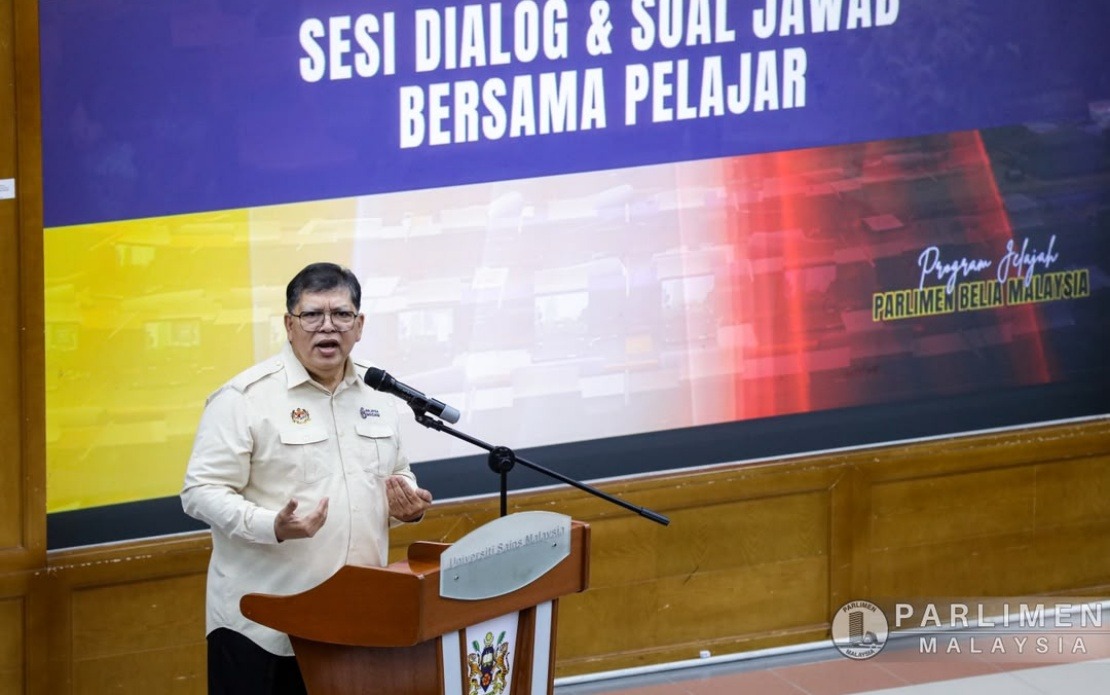
The Speaker of the Dewan Rakyat has called on Members of Parliament to demonstrate exemplary conduct and uphold democratic values as Malaysia's inaugural Youth Parliament, now directly overseen by Parliament itself, prepares to launch in September. Tan Sri Johari Abdul emphasised that the institution must operate as a beacon of integrity and respect, functioning as a foundational learning ground where future political leaders can observe how representative democracy operates at its highest level.
Johari's message carries particular weight as Parliament transitions the Malaysian Youth Parliament from government ministry administration to direct parliamentary oversight. The timing reflects a broader institutional acknowledgment that young Malaysians need authentic exposure to parliamentary processes during formative years. By positioning Parliament as an exemplar rather than merely a functional legislative body, Johari signals that behaviour within the chamber carries educational consequences extending far beyond the immediate legislative agenda.
The Speaker stressed that contemporary parliamentary proceedings are inherently performative in nature. With live broadcasts and social media coverage providing instantaneous access to chamber activities, every gesture, tone, and argument becomes visible to the broader public. This transparency creates an implicit responsibility for legislators to transcend partisan interests and model constructive deliberation. Young observers participating in the youth parliament will absorb not just the stated rules of parliamentary conduct but the actual culture legislators demonstrate through their daily interactions.
Johari characterised the required standard as debate that is fact-based, courteous, and solution-oriented—a deliberate contrast to the acrimonious exchanges that occasionally characterise parliamentary chambers across the Commonwealth. The emphasis on factual grounding suggests concern about the spread of unsubstantiated rhetoric in contemporary politics, while the focus on courtesy addresses interpersonal respect across political divides. Solution-orientation steers discussion away from theatrical blame-assignment toward practical governance.
The Malaysian Youth Parliament comprises 222 seats mirroring the electoral constituencies of the actual Parliament, creating a structural alignment that facilitates comparative learning. Notably, participants form parties within this framework based on registered youth organisations, ensuring that political engagement occurs within clearly defined, non-partisan structures. These youth parties are explicitly prohibited from involvement in national party politics, preventing the initiative from becoming a training ground for existing political machines while still permitting participants to experience coalition-building, party discipline, and inter-party negotiation.
More than ten youth parties have already established themselves within this framework, demonstrating substantial grassroots interest. The diversity of organisational platforms suggests that young Malaysians are ready to engage with political structures once given accessible pathways. Parliament Malaysia has launched an ambitious outreach campaign targeting three hundred thousand Malaysians aged eighteen to thirty for registration, indicating institutional commitment to broad-based participation rather than elite engagement.
The electoral calendar for the youth parliament demonstrates considerable logistical sophistication. Nomination processes commence on July 8, with official candidate announcements following three days later. A twenty-seven-day campaign period from mid-July through early August allows candidates to build support and articulate policy positions, while online voting mechanisms through August 8-9 ensure accessibility for a digitally native demographic. This compressed timeline maintains momentum while preventing campaign fatigue.
The inaugural assembly session on September 11 will establish patterns for ongoing engagement. Sittings are scheduled three times annually across two-day sessions, providing regular parliamentary experience without excessive demands on participants' time. The two-year term length permits meaningful continuity while allowing for generational turnover and expanding participation across cohorts of Malaysian youth. This structural design treats the youth parliament as an institution worthy of sustained investment rather than a one-time ceremonial exercise.
The shift to Parliament Malaysia's direct management, approved in October 2023 after eight years under the Ministry of Youth and Sports, reflects institutional confidence in parliamentary capacity to nurture democratic participation. The transition implies recognition that youth parliamentary engagement operates most effectively when embedded within actual legislative structures rather than managed as a peripheral youth ministry programme. This repositioning elevates the initiative's status and connects it directly to formal parliamentary operations.
For Malaysian observers, the initiative addresses a critical governance challenge: sustaining democratic legitimacy across generational transitions. Young Malaysians entering the political sphere bring digital fluency, different communication preferences, and expectations shaped by global political discourse. The youth parliament provides a structured mechanism for introducing them to deliberative processes, coalition politics, and the incremental nature of legislative change. It simultaneously allows Parliament to demonstrate that its institutions remain relevant and accessible to younger demographics.
The initiative's success depends significantly on the authenticity of parliamentary role-modelling. If legislators engage with the youth parliament cynically or treat it as public relations theatre rather than genuine institutional development, young participants will immediately perceive the disconnect. Conversely, if Parliament operates with the dignity, integrity, and thoughtful deliberation that Johari advocates, the programme can cultivate a generation of leaders who view democratic institutions as worthy vehicles for social change rather than obstacles to circumvent.
For Parliament Malaysia, the youth parliament represents both opportunity and responsibility. The programme offers a platform to rebuild institutional legitimacy among demographics that often display declining faith in traditional political structures. Simultaneously, it creates accountability: Parliament's actions in the chamber now carry explicit pedagogical weight. Members unwilling to observe the standards Johari articulated effectively undermine the programme's foundational premise.
Registration for the Malaysian Youth Parliament is now open through the official portal, with detailed information about the electoral process, campaign guidelines, and participation requirements available online. The initiative invites Malaysian youth to engage directly with democratic structures during a formative period, creating pathways toward political involvement that operate outside traditional party hierarchies while maintaining connection to actual legislative processes.

