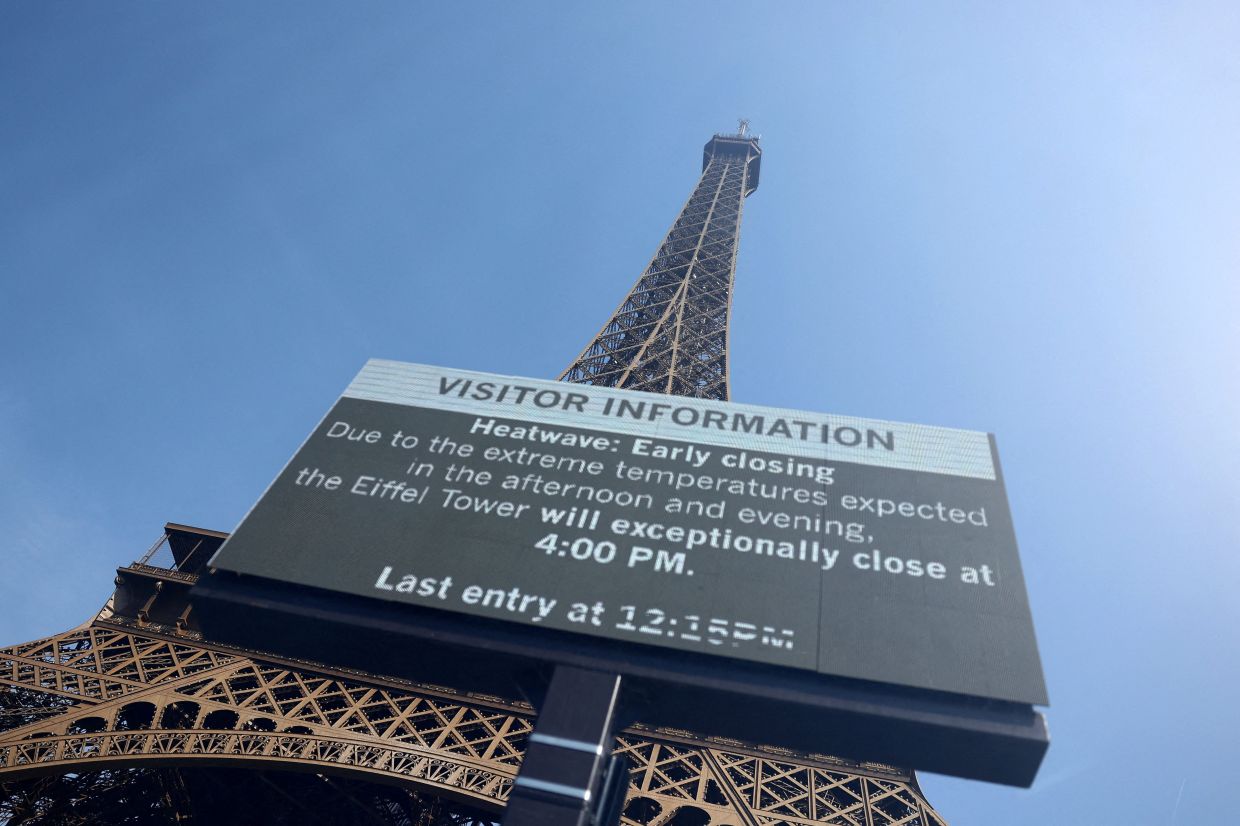
Record-breaking temperatures across France this week have upended travel plans for thousands of international visitors, with major Paris attractions shutting their doors early as the heat becomes unbearable. The Eiffel Tower and the Louvre Museum, two of the world's most recognisable tourist destinations, both curtailed operations on June 23, when France recorded its hottest day since temperature records began in 1947. The disruptions highlight how climate extremes are increasingly affecting the tourism industry, particularly in European destinations that rely heavily on summer visitor numbers to sustain their economies.
For many tourists, the consequences have been deeply disappointing. Maite Blazques, a 35-year-old nurse from Madrid, had spent months saving to bring her six-year-old son to Paris for what she hoped would be an unforgettable holiday. The extreme conditions forced a complete restructuring of their itinerary. She had planned to explore the historic Marais district with a guided tour, enjoy a scenic river cruise along the Seine, and climb to the summit of the Eiffel Tower—all signature Paris experiences for first-time visitors. Instead, sweltering heat made outdoor sightseeing virtually impossible, and the early closure of major landmarks eliminated several marquee activities from their trip. The emotional toll of such disruptions extends beyond mere inconvenience; holidays represent significant financial investments and emotional anticipation, particularly for families travelling internationally.
The Eiffel Tower, which draws approximately seven million visitors annually, suspended operations at 4pm on June 23 rather than its usual closing time past midnight during the peak season. The tower's operators indicated that shortened hours would "very likely" continue, signalling that the heatwave's impacts would persist beyond a single day. This represents a severe operational disruption for a monument that has operated largely uninterrupted for over a century. American tourist Tamara Dancer experienced this disruption firsthand when her guided tour was cancelled on Tuesday afternoon, leaving her frustrated that the carefully planned experience she had paid for simply vanished due to circumstances beyond anyone's control.
Tourists who ventured into the streets found themselves battling oppressive conditions with whatever improvised protection they could muster. Armed with umbrellas, wide-brimmed hats, and portable fans, visitors attempted to navigate Paris's famous pavements, which themselves radiated heat upward and intensified the ambient temperature. John Beeler, a 45-year-old American engineer, described the experience as genuinely distressing. He reported that the heat was inescapable—the streets felt suffocating, the underground metro system offered no relief, and even his rental accommodation became uninhabitable without air conditioning. He and his wife ultimately relocated to a hotel with climate control, converting their Paris holiday into what amounted to an indoor retreat rather than the immersive cultural experience they had anticipated.
The practicalities of exploring Paris fundamentally depend on walking—something the British retiree Drake Winners succinctly articulated. The city's charm, history, and character reveal themselves through street-level wandering, casual café stops, and spontaneous discovery. Extreme heat transforms this essential mode of tourism into a health risk. Winners initially attempted to power through but quickly recognised that meaningful exploration was impossible under such conditions. He pivoted to indoor alternatives: museums and churches where climate control and shelter made extended visits feasible. This adaptation, while better than nothing, fundamentally changes the Paris experience from one of vibrant outdoor engagement to one of interior shelter-seeking.
The Louvre, welcoming approximately nine million visitors annually and home to Leonardo da Vinci's Mona Lisa and countless other masterpieces, faced its own operational challenges. The museum's management disclosed that the historic palace—developed incrementally over centuries by successive French monarchs and presidents—lacks sufficient climate adaptation infrastructure to handle contemporary extreme heat events. This admission reflects a broader vulnerability affecting heritage institutions across Europe: many were constructed and designed for historical climate patterns rather than the intensified extremes now occurring with increasing frequency. The Louvre's problems extend beyond the current heatwave; it has battled a major jewellery theft worth US$100 million (RM414 million), water damage, and ongoing maintenance crises that compound the challenge of managing visitor flows during adverse conditions.
Beyond Paris, the heat emergency has paralysed tourism across France. More than half of mainland France remained under the national weather service's highest alert level, triggering precautionary closures and visitor warnings at attractions nationwide. Mont Saint-Michel, the spectacular island fortress in Normandy and one of France's most visited attractions outside the capital, issued explicit guidance urging visitors to postpone their visits entirely during the red alert period. Such advisories represent an extraordinary measure—essentially admitting that conditions pose genuine risk and that tourism simply cannot operate safely during certain weather extremes.
This convergence of factors reveals how climate change is reshaping the tourism industry in fundamental ways. Popular destinations that have reliably operated on seasonal calendars now face unpredictable disruptions that undermine business models, disappoint customers, and expose the vulnerability of heritage infrastructure. For Malaysian and Southeast Asian travellers, these disruptions carry practical implications: European summer trips, long considered the pinnacle of international tourism, increasingly require contingency planning and flexibility. The expectation that iconic attractions will simply be open and accessible during planned visits no longer holds universally true.
The broader economic implications trouble France's tourism sector significantly. Summer represents the critical revenue period for attractions, hospitality businesses, restaurants, and transportation services. Shortened operating hours, early closures, and visitor warnings translate directly into reduced spending, fewer overnight stays, and diminished employment. The French tourism industry, which normally absorbs millions of international visitors during June and July, faces compounding losses if heat emergencies persist or expand. For smaller attractions and regional businesses dependent on visitor spending, these disruptions threaten viability.
Looking forward, the experience of Paris's June heatwave suggests that European destinations will increasingly need to invest in climate adaptation infrastructure. Museums must enhance cooling systems, outdoor attractions require shade structures and hydration stations, and transport networks need resilience upgrades. Additionally, tourism boards and operators must develop more flexible booking policies and cancellation frameworks that acknowledge climate variability. The days when summer European tourism represented a guaranteed, predictable experience appear to be ending. Travellers planning visits should now approach such journeys with realistic expectations, adequate travel insurance that covers climate-related disruptions, and flexibility in their itineraries to accommodate closures and operational changes.

