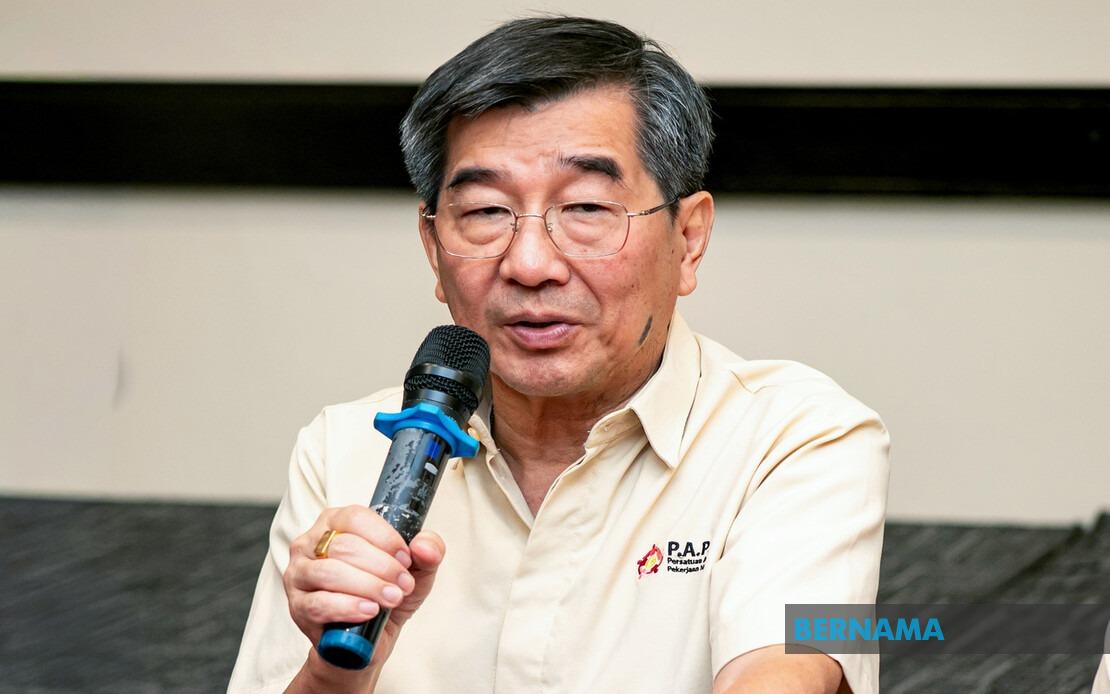
The Malaysian Association of Employment Agencies (PAPA) has unveiled a comprehensive insurance scheme designed to bridge long-standing protection gaps affecting both employers and domestic workers across the country. The initiative, developed in collaboration with GMAT Sdn Bhd and Allianz Malaysia, represents a significant evolution in how Malaysia's informal domestic workforce manages employment-related financial risks. Speaking at the launch in Kuala Lumpur, PAPA president Datuk Foo Yong Hooi emphasised that the programme directly addresses vulnerabilities created by Malaysia's existing recruitment framework, which typically leaves employers exposed after standard guarantee periods expire.
The structural challenge underpinning this scheme stems from how domestic worker placements currently operate. Employment guarantees conventionally extend between three and six months, a window during which placement agencies shoulder responsibility for worker performance and reliability. Once these periods conclude, employers assume complete financial exposure with minimal recourse should problems arise. This vulnerability has historically driven many employers toward informal, higher-risk employment arrangements. The new insurance product explicitly targets this critical vulnerability by extending meaningful protection well beyond the initial guarantee phase, fundamentally altering the risk calculus for both parties.
A cornerstone feature addresses one of the most costly scenarios employers face: worker abscondment. Under the scheme's first-year coverage, employers receive RM5,000 compensation when a domestic worker abandons employment during the insured period. This amount reflects realistic recruitment and placement expenses employers typically incur when replacing departed workers. The RM5,000 threshold represents careful actuarial consideration of actual replacement costs without creating perverse incentives. Notably, this benefit applies only during the initial high-risk year; from the second year onward, coverage transitions toward different protective dimensions, reflecting how abscondment risk typically decreases once employment relationships stabilise.
Beyond abscondment protection, the scheme introduces hospitalisation and surgical coverage for domestic workers themselves, marking a significant departure from existing arrangements. This component extends protection to general medical conditions rather than confining coverage to workplace-related injuries, addressing a persistent blind spot in Malaysia's informal employment sector. Domestic workers, historically classified outside formal employment frameworks, have lacked accessible mechanisms to address sudden illness or medical emergencies without creating severe financial hardship. The programme provides weekly compensation extending up to twelve weeks when medical professionals certify workers as unfit for duty, creating a temporary income replacement mechanism during recovery periods. Additionally, the policy offers limited assistance covering loss of essential documents such as passports, recognising the particular vulnerability of migrant domestic workers dependent on such documentation.
This expansion of domestic worker protections directly responds to systemic inadequacies in Malaysia's existing safety net structures. The Social Security Organisation (PERKESO) currently provides limited coverage focused exclusively on work-related accidents and injuries, leaving significant gaps surrounding non-occupational illnesses. Datuk Foo highlighted cases where pre-existing medical conditions emerged only after employment commenced, creating unexpected financial burdens on employers and leaving workers without treatment options. By extending coverage to general health conditions, the new scheme acknowledges the reality that domestic workers require holistic medical protection, not merely occupational accident coverage.
Historical context illuminates why this programme represents a necessary recalibration. Approximately two decades ago, PAPA introduced a similar abscondment policy that ultimately proved unsustainable due to fraudulent claims patterns. This experience shaped the current initiative's design, incorporating stricter verification requirements and clearer benefit structures intended to minimise moral hazard while maintaining genuine protection. The intervening years have generated valuable lessons about which coverage elements function effectively and which require more sophisticated governance mechanisms. Today's programme reflects this accumulated institutional knowledge, positioning it as a more sustainable solution to longstanding vulnerabilities.
The scheme's operational accessibility enhances its potential uptake across Malaysia's diverse employer demographics. The policy permits online purchase, removing traditional bureaucratic friction points that characterised earlier insurance products. Reimbursement mechanisms allow employers to utilise private hospital facilities subject to specified coverage limits, acknowledging that Malaysia's private healthcare sector often provides domestic workers with more accessible and responsive care than public alternatives. GMAT Sdn Bhd chief executive officer M. Marimuthu emphasised this flexibility as a core design principle, recognising that effective protection requires aligning coverage options with how domestic workers and employers actually access healthcare services.
While initially launched for PAPA member organisations, the programme's architects have deliberately structured eligibility to encompass employers outside formal agency associations. This inclusive approach reflects recognition that Malaysia's domestic worker employment ecosystem extends far beyond agency-mediated placements. Many employers engage workers through informal networks and personal referrals, creating coverage deserts in insurance markets. By explicitly welcoming non-member participation, the scheme attempts to extend protection into traditionally underserved employment arrangements, potentially influencing how informal recruitment networks operate by introducing affordable, accessible insurance products.
For Malaysia's broader economic landscape, this initiative carries implications extending beyond individual employer-worker relationships. Domestic workers constitute a significant portion of Malaysia's informal employment sector, yet have historically remained largely outside formal employment protections and social insurance frameworks. This marginalisation creates inefficiencies throughout the domestic service market, as employers compensate for protection gaps through higher wages, shorter employment contracts, or by avoiding formal arrangements entirely. By introducing affordable insurance products bridging these gaps, the scheme potentially facilitates formalisation pressures throughout the sector, gradually drawing more employment relationships into regulated spaces.
The scheme also reflects evolving Malaysian approaches to informal employment governance. Rather than relying exclusively on regulatory mandates or government-provided social protection, the model leverages private insurance mechanisms to address protection gaps. This public-private approach aligns with regional trends toward hybrid governance structures in informal employment sectors. Several Southeast Asian nations have experimented with similar frameworks, recognising that traditional employment regulation often proves difficult to enforce in informal contexts but that market-based solutions can sometimes address protection gaps more effectively than regulatory approaches alone.
Longer-term, the insurance scheme may influence how domestic worker recruitment and employment practices evolve across Malaysia. Employers with access to affordable abscondment protection and worker medical coverage may invest more substantially in worker training and development, secure in the knowledge that unexpected departures carry reduced financial consequences. Similarly, workers covered by hospitalisation and illness protection gain greater security, potentially reducing turnover driven by fear of medical crises. These behavioural changes, whilst individually modest, could cumulatively reshape Malaysia's domestic employment market toward greater stability and professionalism.
The programme's success will depend substantially on how effectively PAPA and its insurance partners communicate the scheme's benefits across employer and worker populations. Awareness gaps represent a common barrier to insurance uptake in informal employment contexts, particularly among less-educated populations unfamiliar with formal insurance mechanisms. Educational efforts reaching domestic workers and employers will likely determine whether the initiative achieves meaningful market penetration. Given Malaysia's substantial domestic worker population and the historical underinsurance of this sector, the potential addressable market appears substantial, though realising that potential requires sustained engagement and trust-building efforts.
Moving forward, the scheme may serve as a template for extending protection to other informal employment categories currently operating with minimal insurance coverage. Malaysia's large informal economy encompasses numerous work arrangements sharing similar protection vulnerabilities as domestic employment. Should this initiative demonstrate durability and positive outcomes for participating employers and workers, pressure may mount to develop comparable schemes for security guards, cleaners, gardeners, and other informal occupations. The pilot dynamics of this domestic worker insurance programme thus extend beyond its immediate participants, potentially shaping how Malaysia approaches informal employment protection more broadly.

