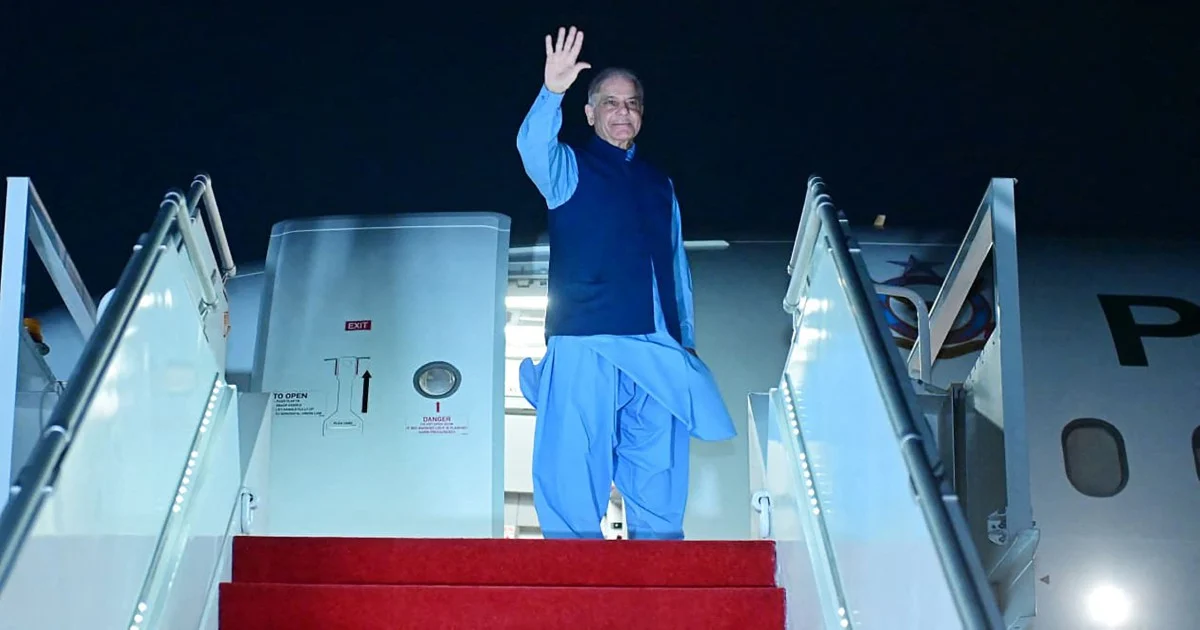
Pakistan's Prime Minister Shehbaz Sharif touched down in Switzerland on Sunday morning, positioning himself as a key participant in high-stakes technical discussions between the United States and Iran designed to de-escalate ongoing armed conflict in the Middle East. The arrival underscores Pakistan's growing diplomatic involvement in efforts to broker peace in a region where instability continues to reverberate across South and Southeast Asia.
Pakistan's presence at these negotiations carries particular significance given Islamabad's historical ties with both Washington and Tehran. As a nation bordering Iran and hosting one of the world's largest refugee populations from the Middle East, Pakistan has substantial stakes in any agreement that could stabilise the volatile region. The country has long sought to position itself as a bridge between major powers, and Sharif's participation reflects this broader strategic orientation.
The technical-level talks represent a critical phase in diplomatic efforts aimed at reducing tensions between Washington and Tehran. While such discussions often receive less public attention than high-level meetings, they frequently determine whether broader political agreements can be reached and successfully implemented. Pakistan's involvement suggests that regional stakeholders view these negotiations as sufficiently promising to warrant direct participation from senior government figures.
For Malaysian readers and Southeast Asian observers, Pakistan's diplomatic activism in Middle Eastern peace processes matters considerably. Regional stability in the Middle East directly influences everything from oil prices and shipping routes to the security environment across Asia. Any escalation of US-Iran tensions inevitably impacts the broader Indo-Pacific region, affecting trade corridors, investment flows, and security partnerships that Southeast Asian nations depend upon.
Pakistan's historical experience navigating relationships between the United States and Iran gives Islamabad a particular credibility in these discussions. Unlike many nations that must choose between alignment with Washington or Tehran, Pakistan has managed more nuanced relationships with both powers, though often with considerable difficulty. This delicate balance positions Pakistani officials as potentially helpful intermediaries who understand the concerns and red lines of both parties.
The armed conflict that these talks aim to address encompasses multiple dimensions beyond conventional military confrontation. Regional proxy conflicts, naval tensions, missile programmes, and nuclear-related concerns all feature prominently in US-Iran disputes. Technical discussions typically focus on verifiable measures, confidence-building mechanisms, and specific provisions that could form the basis of any broader agreement. Pakistan's participation suggests that Islamabad may be offering expertise or potentially serving as a guarantor for aspects of any agreement.
Sharp escalations in US-Iran tensions have periodically threatened to destabilise global energy markets and disrupt international shipping, matters of grave concern for oil-importing nations across Asia. Malaysia and other Southeast Asian economies remain vulnerable to sudden spikes in energy prices or disruptions to the Strait of Hormuz, through which roughly one-third of seaborne traded oil passes. Successful de-escalation would provide significant relief for regional economies still recovering from pandemic-related disruptions.
Pakistan's economic circumstances also shape its interest in these negotiations. As a nation grappling with significant fiscal challenges and dependence on international financial support, Islamabad has incentives to prevent major regional conflicts that could trigger international sanctions or disrupt trade relationships. A more stable Middle East would benefit Pakistan's own development prospects and access to regional markets and energy resources.
The timing of these technical discussions reflects acknowledgment from multiple parties that some level of negotiated settlement may be preferable to continued confrontation. Neither the United States nor Iran has demonstrated capacity to achieve decisive military victory, and both face domestic pressures regarding the costs of prolonged tension. Pakistan's willingness to engage at this phase suggests Islamabad perceives genuine movement toward dialogue.
Regional powers beyond Pakistan are watching these developments closely. India, Saudi Arabia, the United Arab Emirates, and others maintain complex relationships with both Washington and Tehran, and outcomes of these talks could reshape alignments across Asia's geopolitical landscape. Pakistan's diplomatic moves often presage broader regional shifts, and Sharif's participation may signal that multiple stakeholders believe substantive progress is achievable.
The success or failure of these technical-level discussions will likely determine whether more comprehensive negotiations can proceed. Pakistan's contribution—whether providing venues, offering mediation assistance, or simply demonstrating unity among regional players on the importance of de-escalation—adds weight to diplomatic efforts that have faced numerous setbacks in recent years. For a region still recovering from multiple conflicts and seeking predictability in energy and trade relationships, the outcomes of these Switzerland discussions carry consequences extending far beyond the immediate parties involved.

