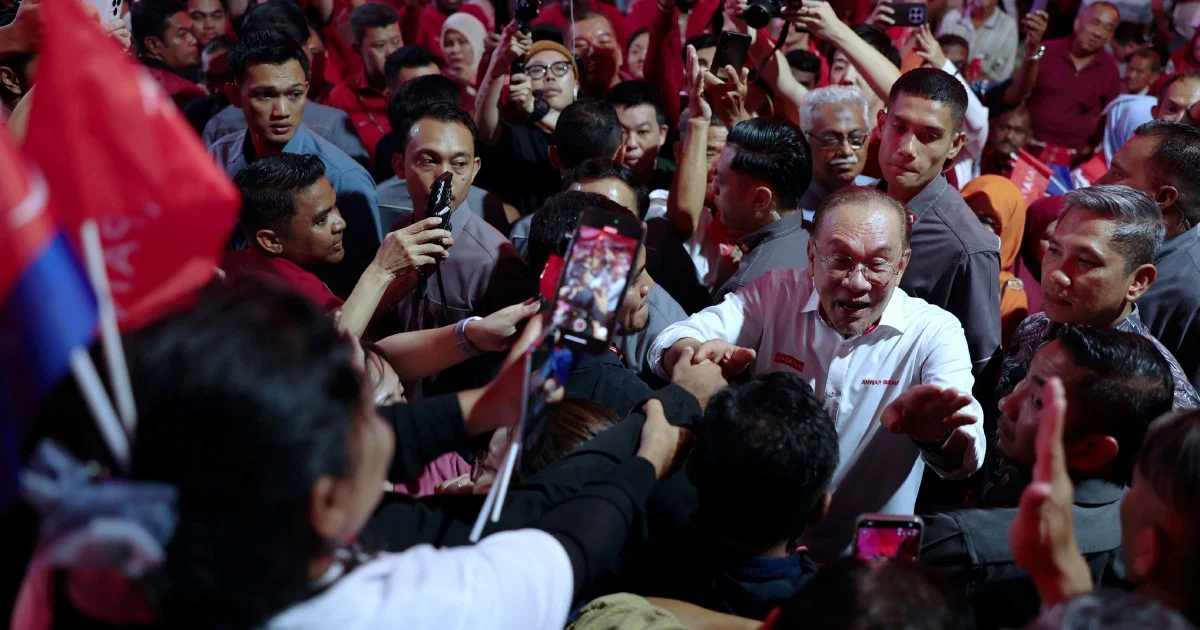
Pakatan Harapan made its electoral intentions clear this week when coalition chairman Datuk Seri Anwar Ibrahim formally presented the opposition bloc's full complement of 56 candidates vying for seats in the upcoming Johor state assembly election on July 11. The announcement, made at Tangkak, marked a critical milestone in PH's preparations for what observers view as a significant test of the coalition's organisational strength and popular appeal in Malaysia's southernmost state.
The unveiling of candidates represents far more than a procedural formality in Malaysian electoral politics. It signals the conclusion of extensive internal negotiations among PH's constituent parties—DAP, PKR, Amanah, and aligned independents—over seat allocations and candidate selection. These negotiations invariably prove contentious, as each component party seeks to maximise its representation while maintaining coalition cohesion. The fact that PH managed to finalise its candidate list ahead of the official announcement window demonstrates the coalition's determination to present a unified front despite underlying tensions.
Johor holds particular strategic importance in PH's political calculus. The state has traditionally served as a Barisan Nasional stronghold, though recent electoral shifts have created openings for opposition inroads. The July 11 election will test whether PH can translate anti-establishment sentiment and recent by-election performances into sustained state-level gains. With 56 candidates contesting all available seats, PH is demonstrating confidence in its ability to compete across the entire political landscape rather than concentrating resources in select constituencies.
The composition of PH's candidate slate—including the balance between established figures and fresh political talent—will likely influence voter perceptions of the coalition's long-term vision. Observers are particularly attentive to whether the coalition has prioritised incumbent legislators or introduced new faces, as this signals either continuity in established PH strongholds or expansion strategies in previously challenging territory. The presence of Anwar Ibrahim at the announcement ceremony underscores the coalition's view of Johor's importance to its broader political agenda.
For Malaysian voters in Johor, the candidate slate provides concrete options for evaluating PH's offer relative to competing coalitions. The quality, experience, and local resonance of individual candidates frequently determine electoral outcomes more decisively than abstract policy positions or national-level political narratives. Voters assess whether proposed representatives understand local issues—whether concerns about infrastructure, employment, education, or economic opportunity—and demonstrate genuine commitment to constituency service.
The timing of the announcement reflects Malaysia's compressed electoral calendar and the practical demands of campaign organisation. Candidates require adequate time to establish campaign machinery, conduct grassroots engagement, and build name recognition in their respective constituencies. The several weeks preceding the July 11 poll provide the window for these essential activities, making timely candidate announcement a prerequisite for effective campaigning.
This election also occurs within Malaysia's evolving political landscape following the 2022 general election and subsequent coalition realignments. PH's performance in Johor will provide insights into whether the coalition has successfully consolidated its voter base or whether political volatility continues to characterise Malaysian electoral behaviour. The state election becomes a barometer for PH's viability as a genuine alternative government at the state level.
Regional observers beyond Malaysia have also noted the Johor election's significance. In Southeast Asia's broader context, where questions about democratic institutions and competitive elections remain salient, Malaysia's handling of state-level electoral competition demonstrates how multi-party democracy functions in practice. The Johor election illustrates the mechanisms through which opposition coalitions organise, present themselves to voters, and compete for power within established institutional frameworks.
The 56-candidate slate also reflects demographic and social considerations affecting Malaysian politics. PH's candidate selection has presumably balanced gender representation, generational diversity, and ethnic composition to appeal to Johor's heterogeneous electorate. These considerations increasingly influence candidate selection processes across Malaysian political parties, as coalitions recognise that diverse representation sends signals about inclusivity and responsiveness to changing voter expectations.
Moving forward, attention will shift to campaign messaging, candidate performance in public forums, and how effectively PH communicates its policy platform to Johor voters. The candidate announcement, while important for organisational purposes, represents merely the opening move in a multi-week campaign process. Voters will ultimately evaluate candidates' substantive proposals, their track records in public service, and their credibility in addressing Johor-specific concerns during the campaign period.
The Johor election assumes added weight given that Malaysian state elections frequently precede or follow federal electoral cycles, creating cascading political momentum. Strong PH performance in Johor could energise the coalition's supporters nationally and demonstrate institutional strength ahead of potential future federal-level contests. Conversely, disappointing results would prompt difficult questions about coalition viability and the persistence of voter preferences for incumbents in state politics.

