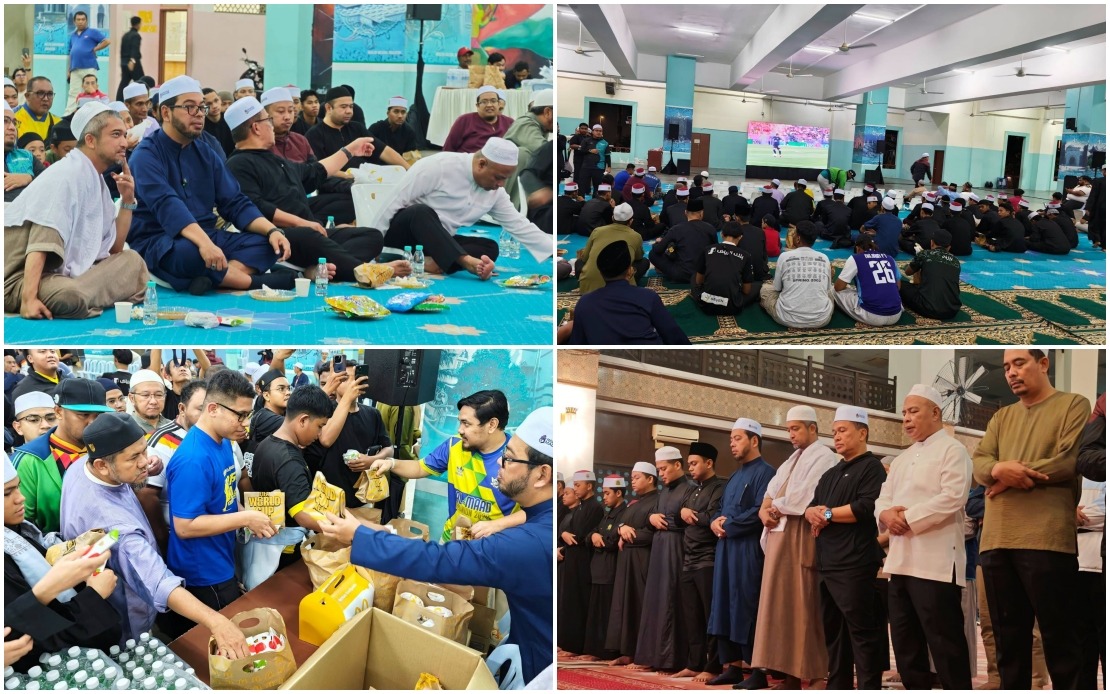
An innovative religious programme in Kuala Lumpur has demonstrated how mosques can engage younger congregants by merging traditional Islamic practices with contemporary entertainment. On June 21, Masjid Usamah bin Zaid in Wangsa Maju drew more than 300 worshippers, predominantly young people, who arrived well before dawn to participate in Qiyamullail—the voluntary prayers performed during the final third of the night—before staying on to watch a screening of the 2026 FIFA World Cup Group E match between Germany and Ivory Coast. The German team ultimately triumphed 2-1 in a competitive encounter that provided ample material for post-match discussion.
The initiative reflects a strategic approach by Malaysian religious authorities to position Islam as compatible with modern life rather than at odds with it. Dr Zulkifli Hassan, the Minister in the Prime Minister's Department overseeing Religious Affairs, attended the event and characterised it as evidence that young people's enthusiasm for football could be channelled into enriching spiritual activities. This perspective aligns with broader efforts across Muslim-majority nations to modernise religious engagement, particularly among demographics that might otherwise become disconnected from formal mosque participation. By positioning the mosque as a venue for both devotion and community gathering, organisers sought to demonstrate that religious identity and contemporary pastimes need not be mutually exclusive.
The participation of senior government officials underscored the programme's significance within Malaysia's religious establishment. Datuk Nizam Yahya, chief executive officer of the Federal Territories Islamic Religious Council (MAIWP), and Datuk Ajib Ismail, deputy director-general of the Malaysian Islamic Development Department (JAKIM), were present throughout the proceedings. Both men actively contributed to preparations for the worshippers' breakfast, helping prepare traditional roti canai alongside the Federal Territories Mufti. This hands-on involvement by senior bureaucrats signalled institutional endorsement of the mosque's novel approach and reinforced the message that religious leadership could be accessible and engaged with congregant life.
The event incorporated football expertise into its spiritual framework, with analysis and commentary provided during the match interval. Shahril Arsat, a nationally recognised football figure, and Khushairi Aizad, a former player for Selangor FA, offered tactical insights into the Germany-Ivory Coast contest and discussed the distinctive playing philosophies of both teams. This integration of sporting analysis into a religious gathering created a hybrid experience where spiritual devotion, community bonding, and football enthusiasm converged. The inclusion of recognised sporting personalities also lent credibility and appeal to the event, suggesting that excellence in sport and dedication to faith could coexist within the same individuals and spaces.
The magnitude of participation—over 300 attendees arriving in the pre-dawn hours—indicated substantial grassroots enthusiasm for this type of initiative. The fact that the majority were young people highlighted a successful strategy for attracting demographic groups that statisticians and religious scholars have sometimes characterised as at risk of disengagement from traditional religious institutions. Early morning gathering for prayers, followed by extended communal time, created opportunities for social connection and mentoring that transcend typical mosque experiences. The meal provided to all attendees further reinforced the sense of communal care and investment in participant wellbeing.
The programme's execution involved extensive coordination across Malaysia's religious bureaucracy and civil society. The Federal Territories Mufti Department, JAKIM, MAIWP, the Federal Territories Islamic Religious Department (JAWI), the Malaysian Islamic Dakwah Foundation (YADIM), and the Malaysian Islamic Economic Development Foundation (YAPEIM) all contributed to planning and delivery. Additionally, the youth movement Angkatan Belia Islam Malaysia (ABIM), the sports-focused religious organisation Persatuan Menembak Agama (PMA), and private food sponsors participated in making the event feasible. This multi-stakeholder approach distributed responsibility and resource requirements while demonstrating institutional consensus around the value of innovative religious programming.
For Malaysian readers and Southeast Asian observers, this event exemplifies a broader trend in contemporary Islamic practice—the deliberate integration of popular culture and entertainment into religious spaces. Rather than positioning mosques solely as venues for ritual observance, organisers increasingly recognise them as potential sites for multifaceted community life. The 2026 World Cup itself carries particular significance for Southeast Asian football enthusiasts, as the tournament represents the sport's highest global stage. By hosting viewing events within religious frameworks, mosques position themselves as central gathering points for major international sporting moments, thereby maintaining institutional relevance as media consumption patterns evolve.
The notion of "wisdom-based dakwah" referenced by authorities suggests a conscious philosophical shift away from approaches perceived as overly restrictive or disconnected from popular concerns. Dakwah, the Islamic concept of invitation or proselytisation, traditionally emphasised doctrinal instruction and moral guidance. Modern interpretations increasingly emphasise meeting people where they are—acknowledging their interests and concerns—rather than demanding prior surrender of those interests. Under this framework, a young Muslim's passion for football becomes not something to be suppressed or compartmentalised, but rather something that can be integrated into a broader spiritual identity.
The timing of the event during Ramadan season would have resonated particularly strongly with participants, as the focus on night prayers and early morning gatherings aligns with practices many Muslims intensify during that month. Even if held outside the fasting month, Qiyamullail remains an encouraged practice with spiritual significance. The combination of voluntary worship and community entertainment may establish a model that other Malaysian mosques replicate, particularly in urban areas with younger, more diverse populations and greater access to broadcast facilities.
Looking forward, the apparent success of this Kuala Lumpur initiative may influence how religious institutions across Malaysia and the broader Southeast Asian region conceptualise their role in congregant life. The demonstration that facilities can accommodate both deep spiritual practice and secular cultural consumption without compromising either suggests new possibilities for religious institutional vitality. For policymakers concerned with youth engagement and religious resilience, such programmes offer evidence that innovation within tradition need not dilute either dimension. The event ultimately suggests that Malaysia's religious establishment recognises younger generations' needs and preferences, and possesses both creativity and institutional capacity to respond meaningfully.

