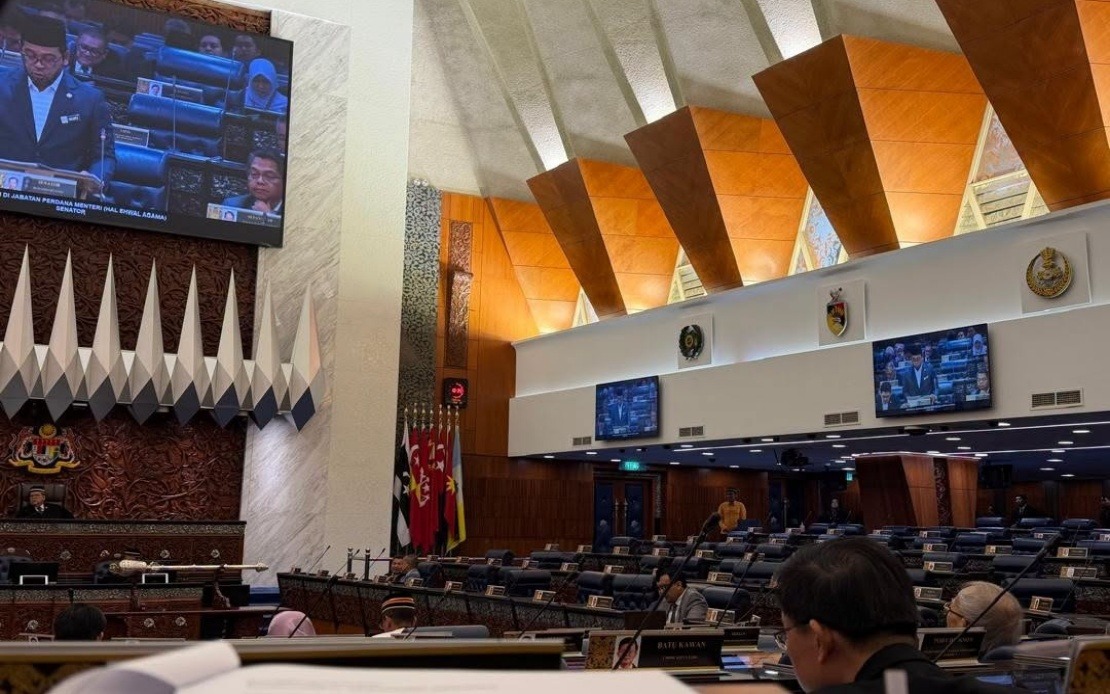
Parliament witnessed a dramatic walkout by opposition MPs on August 11 as tension flared over the presentation of the Royal Commission of Inquiry report concerning Lembaga Tabung Haji, Malaysia's Islamic pilgrimage savings fund. The boycott occurred before Minister in the Prime Minister's Department for Religious Affairs Dr Zulkifli Hasan could address lawmakers on the inquiry findings, leaving government officials questioning the opposition's legislative commitment and raising questions about the future direction of parliamentary discourse on financially sensitive matters affecting Muslim Malaysians.
The orchestrated departure centred on Speaker Tan Sri Johari Abdul's decision to proceed with the special sitting despite the absence of Prime Minister Datuk Seri Anwar Ibrahim and Deputy Prime Minister Datuk Seri Fadillah Yusof, both undergoing medical treatment. This procedural disagreement transformed into a broader political statement when opposition benches emptied in protest. Perikatan Nasional chief whip Datuk Seri Takiyuddin Hassan had previously sought postponement of the session, arguing that the simultaneous absence of the Prime Minister and Deputy Prime Minister warranted delay, but the Speaker ruled otherwise and proceeded with proceedings.
Government response crystallised around allegations of inconsistency and political theatre. MADANI Government Backbenchers Club chairman Datuk Seri Dr Zaliha Mustafa, who represents Sekijang, articulated the administration's frustration through a sharply worded Facebook statement. She framed the walkout not as principled parliamentary protest but as avoidance of substantive engagement with a matter directly affecting the financial interests of Muslim depositors whose savings are held by Tabung Haji. Her remarks underscored a growing perception within government circles that opposition engagement with parliament has become increasingly performative.
The Tabung Haji inquiry report carries particular significance for Malaysian Muslims and the broader financial sector. The institution manages billions of ringgit in savings from pilgrims intending to perform the Hajj, making transparency and accountability in its management matters of genuine public concern. A Royal Commission probe into the organisation's governance signals acknowledged governance issues that require parliamentary scrutiny and public explanation. The opposition's decision to absent itself from this debate therefore struck observers as strategically questionable regardless of procedural disagreements over ministerial attendance.
Dr Zaliha's critique extended beyond the immediate walkout to encompass what she characterised as contradictory opposition positioning on Islam and Muslim interests. She noted that opposition politicians have long positioned themselves as champions of Islamic causes and depositor protection, yet declined the opportunity to interrogate official findings when given explicit parliamentary opportunity. This apparent contradiction raises questions about whether opposition engagement with religious and financial matters serves genuine constituent protection or primarily functions as opposition rhetoric outside the chamber.
The substantive implications for parliamentary accountability deserve examination. A properly functioning parliament requires all sides to engage seriously with reports addressing significant public concerns, particularly those affecting vulnerable constituencies such as Hajj pilgrims whose savings depend on institutional management. When major parliamentary blocs choose boycott over engagement, the opportunity for rigorous testing of official claims and thorough vetting of recommendations diminishes. Opposition MPs could have employed parliamentary procedure to challenge disputed findings, propose amendments, and defend their positions through factual argument and debate—conventional democratic tools rendered unavailable through absence.
The episode also illuminates ongoing tensions surrounding Prime Minister attendance at parliamentary proceedings. While the absence of senior leadership due to medical necessity may justify procedural adjustments in some contexts, the opposition's response suggests deeper frustration with parliamentary management generally. The Speaker's decision to proceed created a focal point for opposition displeasure that overshadowed substantive policy discussion. Whether such procedural disputes warrant full boycotts remains contested, but the pattern suggests parliament increasingly struggles to maintain consensus on basic operational conventions.
For Malaysian depositors and the broader Muslim community, the walkout has uncertain implications. A comprehensive parliamentary examination of Tabung Haji governance failures could have produced recommendations strengthening institutional safeguards and rebuilding public confidence. The absence of opposition participation potentially weakened such scrutiny, leaving the government's narrative less contested and the report's findings less thoroughly tested. Whether this serves public interest remains debatable, but the democratic value of robust opposition engagement seems diminished.
Looking forward, the incident suggests parliament faces challenges in maintaining legitimacy as a forum for substantive national debate. Opposition MPs must balance procedural objections against legislative responsibilities, while government leadership must ensure opposition concerns about procedural fairness receive serious consideration. The Tabung Haji matter, affecting millions of Malaysian Muslim families, deserves engagement transcending partisan positioning. Whether subsequent parliamentary sessions can restore meaningful dialogue on this crucial issue remains uncertain given the escalating pattern of parliamentary friction.

