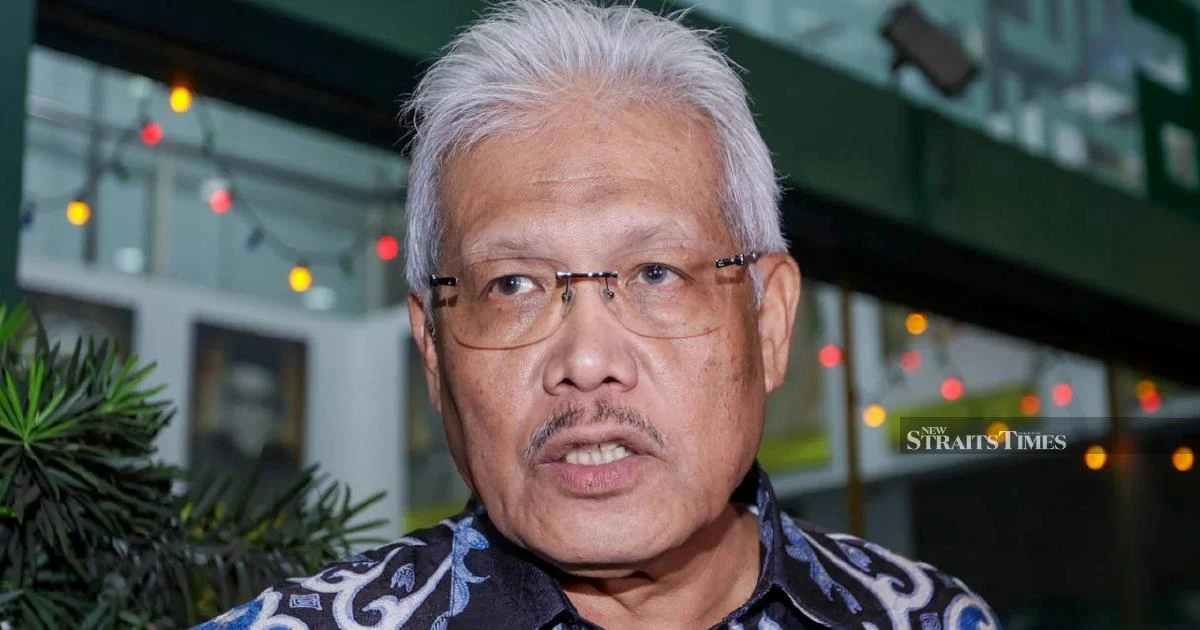
The opposition coalition is moving swiftly to formalize Datuk Seri Hamzah Zainudin's elevation to opposition leader, with officials confirming that official paperwork will reach the Dewan Rakyat Speaker before parliament reconvenes. The procedural notification marks a critical institutional moment, translating what has been a political agreement among opposition parties into formal parliamentary recognition and constitutional standing.
Hamzah's emergence as opposition leader represents a significant recalibration of Malaysia's political landscape. As a former Defence Minister and Pekan Member of Parliament, his appointment carries weight across multiple factions within the opposition bloc. The timing of this formalization—before the next parliamentary sitting—underscores the opposition's intent to establish his authority and legislative standing at the earliest possible moment, preventing any ambiguity about representation and parliamentary privileges that flow from the post.
The notification process itself carries procedural importance that extends beyond mere formality. Once the Dewan Rakyat Speaker receives and acknowledges the official letter, Hamzah will gain statutory recognition as the leader of the opposition, a distinction that carries substantial parliamentary privileges. These include dedicated speaking time during debates, access to government documents classified for opposition leaders, the ability to table questions and motions with priority, and significantly, a salary increment to reflect the responsibilities of the position. For a Malaysian opposition long fragmented across competing interests and personalities, this formal recognition helps establish clearer hierarchical legitimacy.
The decision to notify the Speaker before the next parliamentary session rather than waiting for the sitting itself demonstrates calculated political timing. By completing the administrative steps in advance, opposition leadership ensures that Hamzah enters the chamber with his credentials already recognized by the institution's senior officer. This prevents potential procedural challenges or disputes about his standing during parliamentary business and eliminates opportunities for government benches to contest his formal recognition through parliamentary debate.
Hamzah's appointment comes at a moment when opposition unity has been tested by competing visions and leadership claims. Multiple opposition blocs have existed in recent parliamentary terms, fragmented between Pakatan Harapan, Perikatan Nasional's opposition wing, and independent MPs. The coalescing around a single opposition leader signals a maturation of opposition strategy toward presenting a more unified, coordinated challenge to the government. This organizational clarity matters substantially for legislative effectiveness, as a unified opposition can coordinate votes, table coherent alternative policies, and mount more systematic scrutiny of government bills and expenditure.
The appointment also reflects calculations about leadership credentials and cross-factional appeal. Hamzah's background encompasses service in both Umno-led and opposition-aligned administrations, potentially positioning him as a figure capable of bridging some of the historical divisions that have plagued Malaysia's opposition. His Defence Ministry experience also endows him with security and defence policy credentials that carry weight in parliamentary deliberations, an important consideration given how frequently national security matters dominate Malaysian political discourse.
From a Southeast Asian perspective, the formalization of opposition leadership structures matters for democratic institutional health. Countries across the region have experienced periods where opposition parties remained organizationally weak or fragmented, undermining their capacity to serve as genuine institutional checks on executive power. Malaysia's establishment of clearer opposition leadership hierarchies, even when achieved through procedural notifications, contributes to stronger parliamentary democracy by enabling more systematic legislative oversight and policy alternative development.
The notice will constitute the first major parliamentary procedural act of Hamzah's leadership, setting a tone of institutional engagement and formal respect for parliamentary processes. This contrasts with periods in Malaysian politics when opposition ascendancy was marked by confrontational or extra-parliamentary rhetoric. By proceeding through established notification channels and working within existing parliamentary rules, the opposition demonstrates commitment to institutional legitimacy rather than purely adversarial positioning.
For government backbenchers and the ruling coalition, Hamzah's formalization as opposition leader clarifies who holds principal responsibility for coordinating opposition business. This can paradoxically improve parliamentary efficiency, as ministers and government representatives know exactly whom to engage with regarding opposition positions, parliamentary scheduling, and legislative negotiations. While adversarial, opposition and government operations function more smoothly when institutional recognition is clear and accepted by all parties.
The submission of formal notification before the next parliamentary sitting also prevents opposition leadership from being decided through parliamentary acclamation or informal recognition. This procedural thoroughness exemplifies how institutional practices shape political legitimacy. Where the opposition leader emerges through clearly established channels rather than contested claims or informal arrangements, parliamentary legitimacy becomes harder to challenge and the opposition's institutional position becomes more defensible against government criticism.
As Hamzah assumes the role with formal Speaker recognition imminent, the opposition gains a defined public face for policy articulation and parliamentary direction. This matters for Malaysian voters seeking coherent alternative visions to government policy, and for international observers assessing the strength of Malaysia's democratic institutions. The procedural completion of his appointment through official notification represents, in many respects, the transition from political agreement to genuine institutional authority.

