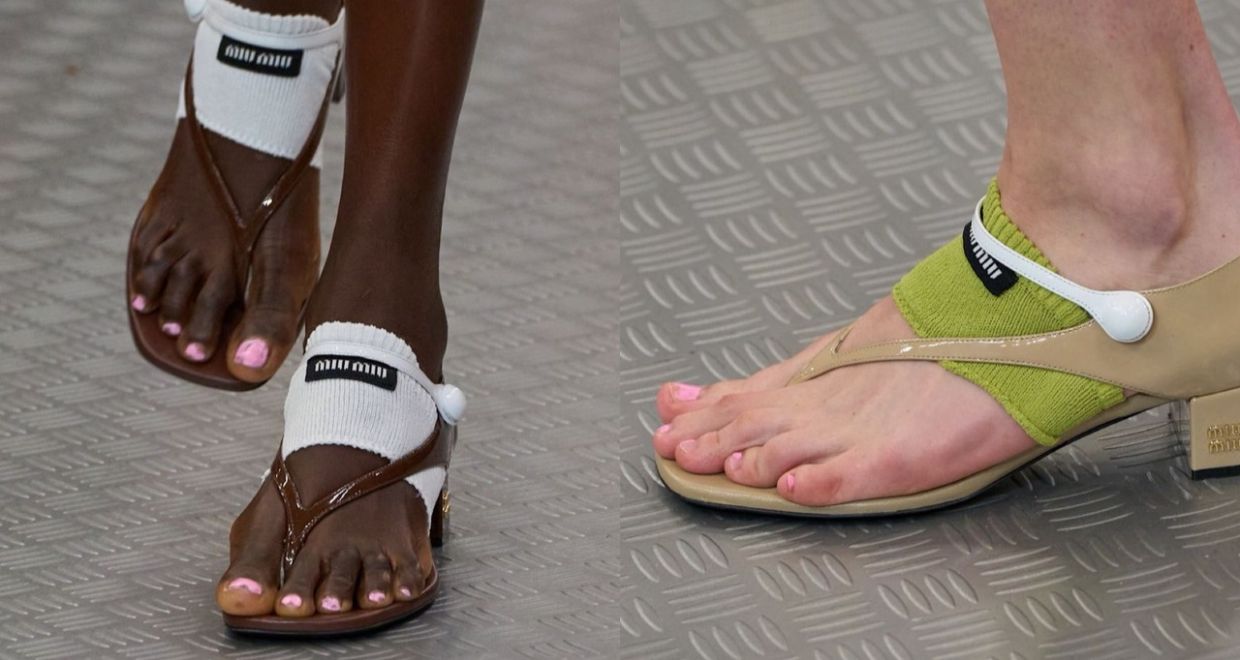
Fashion insiders across East Asia are championing an unconventional solution to the eternal summer dilemma: choosing between going barefoot or enduring the stuffiness of traditional socks. Open-toe socks—cropped styles that envelop the top of the foot while leaving toes completely exposed—have rapidly gained traction as retailers capitalise on surging consumer demand. This seemingly niche product represents a broader shift in how contemporary fashion embraces functional impracticality, transforming a basic wardrobe staple into a visible styling statement that commands attention on the street.
The trend's momentum accelerated sharply in South Korea, where an unusually early heat wave prompted shoppers to seek lighter footwear options well ahead of the typical summer season. Data from major fashion retailers demonstrates the explosive growth: online commerce platform W Concept reported an 80 percent spike in sales of summer shoes including mules, slides, and flip-flops between May 31 and June 7 compared to the same period last year. Even more dramatically, transaction values for flip-flop socks jumped 1,664 percent on style commerce platform Ably over a one-month period from mid-May through mid-June, with search interest climbing by 3,227 percent. These astronomical figures suggest retailers and consumers alike are embracing a genuinely novel approach to seasonal dressing.
The concept emerged from high fashion's most influential quarters. Luxury house Miu Miu showcased an innovative sock design in their 2025 Spring/Summer collection that deliberately departed from conventional footwear design by wrapping fabric only around the arch rather than covering the entire foot. This designer validation proved transformative, lending credibility to an otherwise counterintuitive accessory. Celebrity endorsement further amplified the trend's reach when actor Cha Jung-won shared social media posts featuring sky-blue flip-flops paired with beige knit leg warmers, demonstrating how influencers could translate runway experimentation into wearable reality for mass audiences.
What distinguishes current open-toe sock iterations from their winter predecessors is fundamental material composition and intended function. Contemporary versions prioritise breathability through sheer, mesh, and loosely knitted fabrics that would be wholly unsuitable for cold-weather wear. Rather than provide thermal insulation, these redesigned socks function primarily as styling accessories that introduce colour, texture, and visual interest to otherwise straightforward summer shoes. Fashion retailers have positioned them as a bridge between completely bare feet—which retailers consider aesthetically unfinished—and the discomfort of full socks in humid, warm conditions. This strategic repositioning transforms a practical garment into a deliberate fashion choice.
The practical advantages underlying the trend's appeal extend beyond mere aesthetics. Socks that cover the upper foot substantially reduce friction and chafing caused by flip-flop straps, which constantly rub against exposed skin during extended wear. This functionality proves particularly valuable during monsoon seasons characteristic of Southeast Asia, where consistent moisture aggravates skin irritation. When paired with rain boots—a practical necessity during tropical downpours—open-toe socks provide a protective barrier that prevents the blistering and discomfort associated with bare feet in wet boots. For consumers in humid climates, the combination offers genuine relief rather than purely stylistic indulgence.
Navigating the styling possibilities requires understanding foundational colour theory and deliberate coordination. Fashion advisors recommend beginning with neutral foundations: grey, black, or white socks worn with complementary footwear provide an accessible entry point for hesitant adopters. Grey socks paired with black flip-flops or ballerina flats create cohesive silhouettes that integrate seamlessly with denim, Bermuda shorts, and satin skirts—a combination suitable for both casual and semi-formal settings. For consumers seeking bolder expression, vivid colour choices such as bright yellow, hot pink, or sky blue create striking visual contrasts. Deliberately mismatching sock and shoe colours—pairing a vibrant sock shade against a contrasting shoe tone—reads as intentionally fashion-forward rather than accidentally coordinated, signalling sophisticated style awareness.
Styling successfully with open-toe socks requires restraint in remaining outfit elements. Since the socks and shoes inherently command visual attention through their distinctive silhouette and colour, other garments should remain visually quiet and familiar. A simple T-shirt with shorts or a straightforward shirt with a skirt allows the eye to focus on the innovative footwear pairing without competing for attention. This principle of visual economy prevents outfits from becoming chaotic or overwrought. Patterns and prints fare exceptionally well with open-toe sock combinations, particularly polka dots or floral motifs on socks that coordinate with simpler, solid-coloured upper garments. The interplay between patterned socks and plain shoes creates depth without overwhelming the overall aesthetic.
The phenomenon reflects broader cultural shifts in how consumers approach self-expression through fashion. Rather than viewing socks as purely utilitarian items meant to be concealed, contemporary style philosophy celebrates visible accessories that demonstrate intentionality and creative confidence. This representational approach aligns with Southeast Asian fashion sensibilities, where colour, pattern, and bold styling choices have long enjoyed cultural prominence. For Malaysian consumers accustomed to vibrant street fashion and creative personal expression, open-toe socks represent a natural extension of existing style preferences rather than a radical departure. The trend empowers individuals to view humble basics as legitimate styling tools worthy of careful coordination and visual emphasis.
Industry observers predict sustained momentum for this trend throughout the summer months and potentially beyond, particularly across Southeast Asian markets where climate conditions mirror South Korea's hot and humid environment. The combination of celebrity validation, practical benefits, and genuine style potential positions open-toe socks as more than a fleeting seasonal gimmick. Instead, they represent an evolution in how contemporary consumers balance comfort, functionality, and aesthetic ambition. As fashion retailers continue expanding product ranges and consumers experiment with colour combinations and styling approaches, open-toe socks will likely transition from novelty item to established wardrobe category. For those previously caught between uncomfortable choice and uninspired sameness, this unexpected innovation finally offers a genuine third option worthy of exploration.

