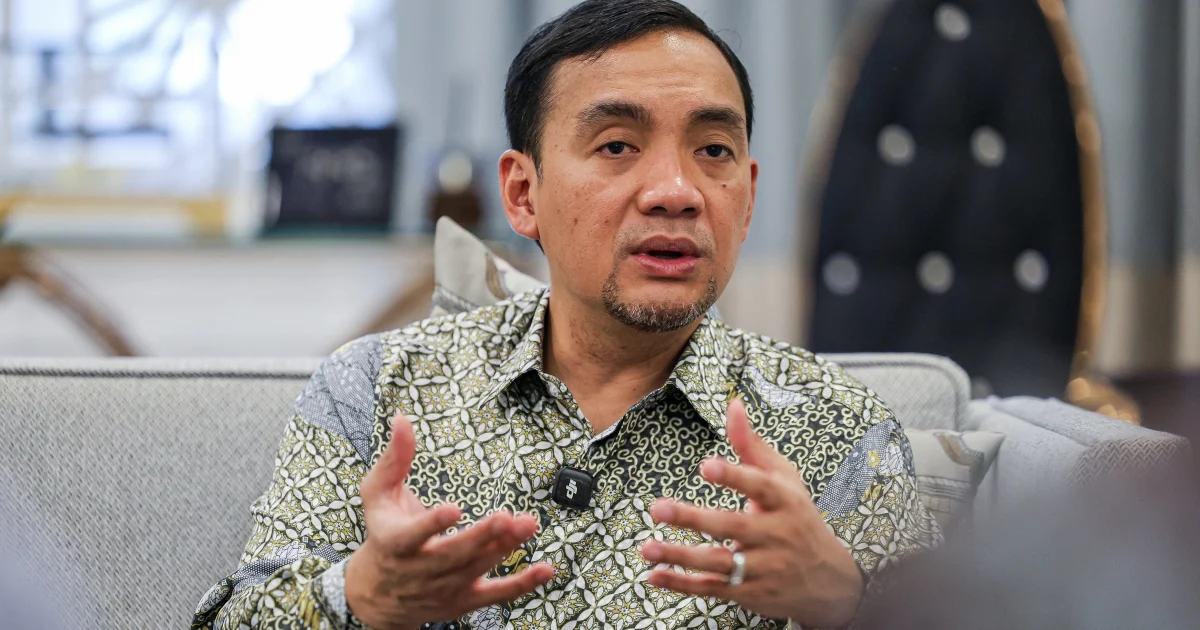
Johor's caretaker Menteri Besar Datuk Onn Hafiz Ghazi has moved swiftly to distance himself from claims that he attributed the state assembly's dissolution to a palace directive, pushing back firmly against contentions raised by Datuk Dr Mohd Puad Zarkashi. The denial underscores the politically delicate nature of executive decisions in Malaysia's constitutional monarchy, where the line between official government action and royal involvement must be carefully maintained in public discourse.
The dispute centres on whether Onn Hafiz characterised the assembly dissolution as something mandated by the palace or as an independent decision taken by the government. Such distinctions carry significant constitutional weight in Malaysia, where the Sultan's role as constitutional head of state requires careful delineation from executive decision-making by elected officials. For a Menteri Besar to suggest that the palace "ordered" a major political action could be interpreted as implying the Sultan overstepped constitutional bounds, making the denial strategically necessary.
Onn Hafiz's rejection of Puad Zarkashi's version of events highlights growing tensions within Johor's political establishment as the state navigates the period between assembly dissolution and the upcoming election. In Malaysia's system, the decision to dissolve a state assembly is formally made by the Menteri Besar and requires the Sultan's consent, but the initiative rests with the executive. The careful constitutional choreography requires public acknowledgement of this distinction, even when palace discussions may have preceded the formal decision.
The controversy also reflects deeper fissures in Johor's ruling coalition. Datuk Dr Mohd Puad Zarkashi, a prominent political figure, appears to have raised these claims publicly, possibly signalling dissatisfaction with how the dissolution process was handled or communicated to coalition partners. His decision to air such allegations suggests internal disagreements about the transparency and consultation surrounding the decision, issues that often simmer beneath the surface in Malaysian state politics.
For Malaysian readers, this episode illustrates the constant tension between democratic accountability and constitutional monarchy that characterises the nation's political system. While the Sultan's role is ceremonial and advisory in theory, the reality involves nuanced consultations that are rarely fully transparent to the public. Leaders must navigate the challenge of appearing decisive and executive-driven while simultaneously respecting and acknowledging the constitutional role of the monarchy, a balance Onn Hafiz now finds himself defending.
The timing of these claims and denials matters considerably. Coming during the caretaker period when political jostling intensifies, such statements can influence voter perceptions and intra-coalition dynamics. If voters believe decisions were palace-imposed rather than government-driven, it affects how they evaluate the Menteri Besar's leadership and independence. Conversely, if the perception takes hold that the government is deflecting responsibility onto the palace, it undermines confidence in the decision-making process itself.
Johor's political landscape has experienced considerable turbulence in recent years, with coalition changes and leadership transitions keeping the state in the headlines. This latest spat cannot be divorced from that broader context of shifting alignments and competing ambitions. The assembly dissolution, regardless of who initiated it or how it unfolded behind closed doors, represents a reset moment for state politics, and various factions are already positioning themselves for advantage in the upcoming election.
Onn Hafiz's denial also serves to protect the institution of the monarchy from perceptions that it actively directs government decisions beyond its constitutional remit. In Malaysia, where the sultans occupy an especially revered position, any suggestion that they are dictating executive actions can be politically explosive. By firmly rejecting the characterisation that the palace "ordered" dissolution, Onn Hafiz safeguards not just his own credibility but also the careful boundaries maintained between the institution of the monarchy and day-to-day governance.
The exchange between these two political figures encapsulates the broader challenge facing Malaysian leadership: how to acknowledge constitutional respect for the monarchy while asserting genuine executive authority. For state-level politics in particular, where sultans are more directly involved in certain ceremonial and advisory capacities than federal institutions, this balance becomes even more delicate. Onn Hafiz's robust denial indicates he understands these sensitivities and is determined to position the dissolution as a government decision taken in consultation with—but not under orders from—the palace.
As the state moves toward fresh elections, clarity on decision-making processes becomes important for voter confidence. The controversy, though it centres on semantics and constitutional interpretation, touches on fundamental questions about who holds power and how it is exercised. The caretaker Menteri Besar's refusal to accept Puad Zarkashi's framing suggests he believes the narrative around the dissolution's origins will matter when voters head to the polls. For observers of Malaysian politics, this episode serves as a reminder that behind formal constitutional arrangements lie intricate negotiations and perceptions that shape how citizens understand their government.

