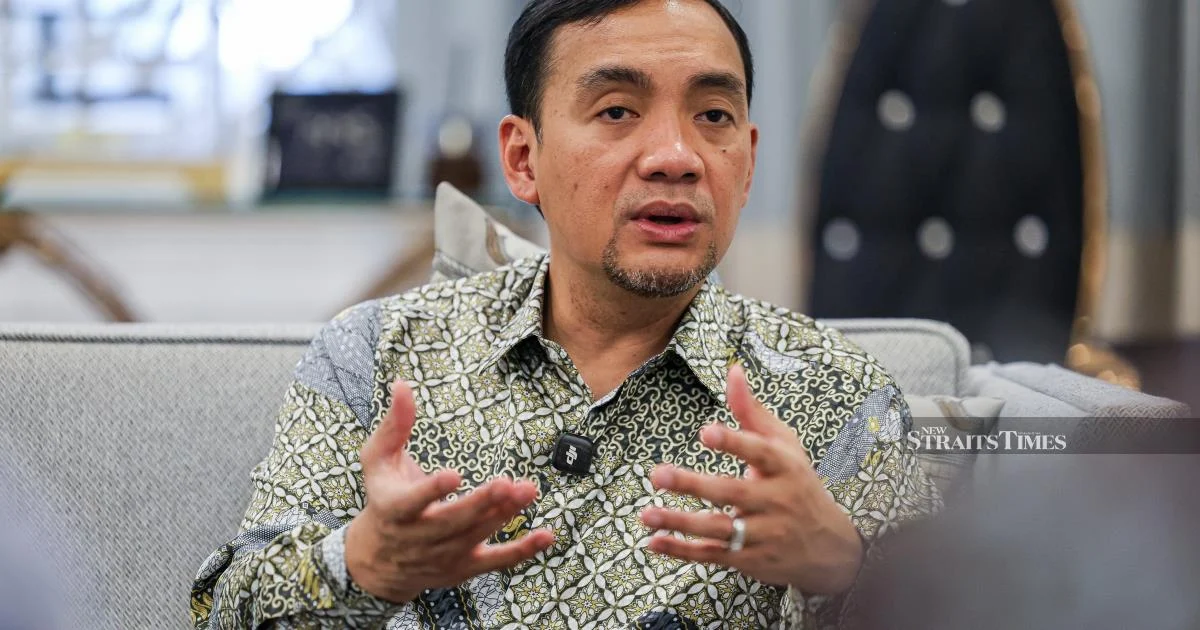
Johor's caretaker Menteri Besar Datuk Onn Hafiz Ghazi has drawn a firm line in the sand regarding post-election alliances, declaring that Barisan Nasional will not collaborate with the Democratic Action Party to establish state governance in Malaysia's second-largest economy by population. The declaration carries significant weight as Johor prepares for its political renewal, with Onn Hafiz positioning himself as the custodian of BN's ideological integrity in the southern state.
The statement comes at a critical juncture in Malaysian politics, where coalition flexibility and pragmatic power-sharing arrangements have become increasingly commonplace across various state and federal governments. Yet Onn Hafiz's unequivocal stance suggests that in Johor, at least, certain political red lines remain firmly in place. The Menteri Besar's comments underscore a broader tension within Malaysian politics between winning elections and maintaining party principles, a dilemma that has plagued coalition partners in other states.
Onn Hafiz's reasoning centers on ideology rather than mere electoral calculation or seat arithmetic. This framing reveals how deeply entrenched certain political divisions have become, particularly between BN's traditionally conservative component parties and DAP's more progressive political platform. For Malaysian readers across diverse regions, this ideological positioning matters because it suggests that even when pragmatism might dictate cooperation, fundamental differences in political philosophy can override electoral logic.
The Johor context deserves particular attention, as the state has historically been a BN stronghold and a testing ground for broader Malaysian political trends. Any shift in Johor's governance structure reverberates through national politics, making Onn Hafiz's positioning significant beyond the state's borders. His refusal to countenance DAP partnership signals confidence in BN's capacity to retain Johor through its own resources and appeal, without resorting to cross-coalition arrangements.
DAP's role in Malaysian politics has evolved considerably, particularly following the 2018 political earthquake that brought Pakatan Harapan to federal power. However, the party's urban-centric support base and reformist agenda have sometimes clashed with BN's more establishment-oriented conservatism. In Johor specifically, where traditional constituencies and rural areas remain politically significant, such ideological differences may indeed present substantial barriers to cooperation.
Onn Hafiz's emphasis on ideology rather than opportunism reflects a calculated political message aimed at reassuring BN's traditional voter coalition. By articulating that principles guide BN's partnership decisions, he positions the coalition as guided by conviction rather than mere seat-seeking desperation. This rhetorical strategy becomes particularly important when election outcomes remain uncertain or when coalition partners might otherwise defect to more attractive alliances.
The refusal also carries implications for DAP's strategic calculations across Malaysia. While the party might have harbored aspirations of regional influence in Johor through post-election negotiations, Onn Hafiz's categorical rejection diminishes such possibilities. This places greater pressure on DAP to either strengthen its independent electoral performance in the state or to focus its organizational efforts on regions where it commands more substantial voter support.
Historically, Malaysian political coalitions have proven flexible when circumstances warrant, with various parties abandoning previous rivals to form working governments. The persistence of BN-DAP hostility in Johor therefore suggests something deeper than tactical positioning—it indicates genuine strategic and philosophical incompatibility, at least at the current historical moment. Should political circumstances change dramatically, these positions might prove less immovable, yet for now, Onn Hafiz has cast his vote against pragmatic coalition-building.
For Southeast Asian observers, this development highlights how Malaysia's decentralized federal structure allows for considerable variation in state-level political arrangements, even as national-level politics oscillates between different coalition configurations. Johor's insistence on maintaining clear ideological boundaries contrasts with other states' more fluid approach to partnership negotiations, illustrating the complexity of Malaysian politics below the federal headline.
The Menteri Besar's comments also reflect broader questions about voter preference and mandate interpretation. If BN secures electoral victory in Johor, Onn Hafiz's position suggests that the state government would pursue governance priorities aligned with traditional BN platforms rather than accommodating DAP's progressive agenda. This clarity, whether voters ultimately reward it or penalize it, at least removes ambiguity about post-election governing coalitions.
Moving forward, this stance creates clear expectations for both Johor voters and political observers. Should elections deliver an inconclusive result where neither BN nor Pakatan Harapan achieves overwhelming dominance, Onn Hafiz's earlier rejection of DAP cooperation might constrain available options for government formation. The Menteri Besar appears willing to accept this risk rather than compromise on ideological positioning.
The ideological dimension that Onn Hafiz emphasizes deserves recognition as legitimate political discourse, even in an era when pragmatic coalition arrangements have become normal. Different visions for governance, developmental priorities, and social policies constitute genuine areas of disagreement between BN-aligned parties and DAP. By articulating these differences openly rather than papering over them with coalition agreements, Onn Hafiz invites voters to choose between competing philosophies rather than merely selecting between individuals or parties.