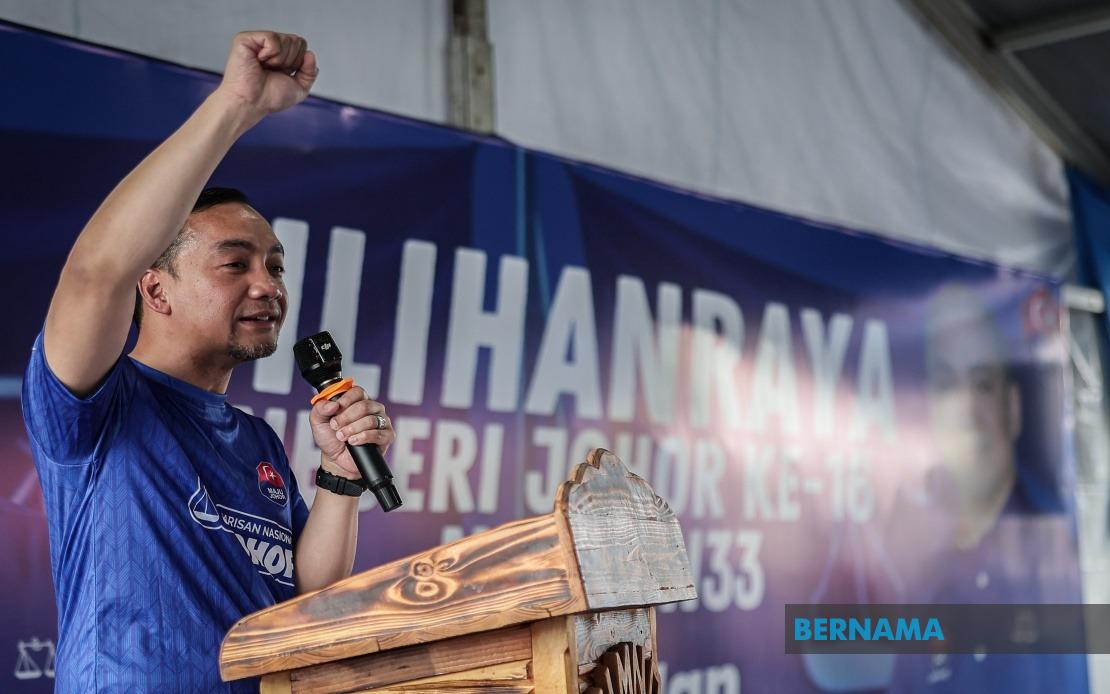
Barisan Nasional (BN) officials have signalled growing confidence in their electoral prospects for the Johor state election, citing encouraging community engagement with the coalition's candidate for the Endau seat. The positive momentum comes as Alwiyah Talib, colloquially known as "Kak Awi", campaigns ahead of the polling scheduled for July 11, with BN chairman Datuk Onn Hafiz Ghazi describing voter reception as highly encouraging during the campaign period.
Onn Hafiz, who serves as Johor Menteri Besar, attributed the receptive atmosphere partly to Alwiyah's track record of public service. Despite her recent history with the opposition—she contested the 2022 Johor state election as a Perikatan Nasional candidate—party officials have framed her return to BN within the broader "Rumah Bangsa" framework, a concept championed by UMNO president Datuk Seri Dr Ahmad Zahid Hamidi that emphasises coalition unity and inclusive governance structures.
Alwiyah's political journey reflects the shifting alignments within Johor's political landscape. Originally winning the Endau constituency under the BN banner during the 14th General Election, she subsequently joined Bersatu and contested the 2022 state election as a PN candidate, securing a majority of 3,041 votes in a five-cornered contest. Her return to BN represents a strategic realignment that party leadership believes strengthens their position heading into the 16th Johor state election.
The decision to welcome her back into the coalition appears deliberate rather than controversial from BN's perspective. Onn Hafiz's public remarks emphasised continuity of public service over partisan positioning, arguing that Alwiyah's capabilities as a leader remain relevant regardless of formal party affiliation. This messaging strategy reflects BN's broader effort to consolidate support by emphasising governance competence and continuity rather than ideological distinctions.
The Endau campaign forms part of a wider electoral strategy across multiple constituencies. Onn Hafiz also highlighted preparations in the neighbouring Tenggaroh seat, where BN candidate Mohd Youzaimi Yusof is mounting his challenge. The apparent synchronisation of campaign activities across multiple seats suggests coordinated party machinery engagement designed to amplify momentum across the state's political geography.
For Malaysian observers, the Johor state election carries significance beyond the immediate electoral stakes. As the nation's second-largest state and a traditional BN stronghold, Johor's electoral dynamics influence broader federal political calculations. The coalition's performance in the state election provides early indicators of voter sentiment and party organisational capacity ahead of potential future national contests.
The campaign environment appears comparatively stable, with Onn Hafiz reporting that proceedings have unfolded without untoward incidents. This characterisation matters given Southeast Asia's experience with occasionally contentious electoral periods. A smooth campaign period in Johor suggests adequate institutional management and relative political civility, though this remains specific to one jurisdiction within Malaysia's federal system.
Alwiyah's candidacy also reflects evolving gender dynamics within Malaysian electoral politics. Her prominence as a BN candidate in a competitive constituency underscores increasing female participation in higher-profile electoral contests, though systemic assessments of gender representation within party structures and candidate selection processes would require broader analysis beyond this single election cycle.
Voter engagement appears to play a central role in BN's confidence framework. Rather than relying solely on party machinery, officials emphasise organic community reception. This distinction matters politically, as perceived grassroots enthusiasm can translate into volunteer mobilisation and informal advocacy networks that formal campaign structures sometimes struggle to replicate. The characterisation of "Santai ONN X ONN Bersama Menteri Besar Johor" events—casual engagement opportunities with state leadership—reflects contemporary campaign approaches prioritising approachability over formal ceremonialism.
The timeline toward July 11 includes early voting on July 7, potentially affecting turnout patterns and campaign strategies. Early voting provisions have become standard in Malaysian elections, though their impact on final results varies by constituency. Campaigns must typically adjust messaging and mobilisation efforts to account for voters who cast ballots before election day.
Onn Hafiz's invocation of Islamic phrasing—"Insya-Allah, we pray that this momentum continues"—situates electoral politics within familiar cultural and religious frameworks common in Malaysian political discourse. Such language carries multiple functions simultaneously: signalling piety and cultural alignment with predominantly Muslim electorate, acknowledging matters beyond human control, and reinforcing community solidarity.
For regional observers, Johor's electoral dynamics merit attention regarding BN's broader South East Asian positioning. The coalition's capacity to retain or expand support in traditionally favourable constituencies influences Malaysia's political stability and federal governance arrangements. A strong BN performance in Johor would reinforce the coalition's narrative of sustained public confidence, while setbacks might prompt internal recalibration of campaign strategies or policy emphases.
The Endau constituency specifically represents a test case for BN's cross-factional integration strategies. Whether voters reward the coalition's embrace of Alwiyah despite her recent opposition affiliation, or whether residual partisan sentiment affects turnout and voting patterns, will provide insights into contemporary Malaysian voter priorities: whether performance and continuity supersede strict party loyalty, or whether faction and ideological positioning remain determinative.

