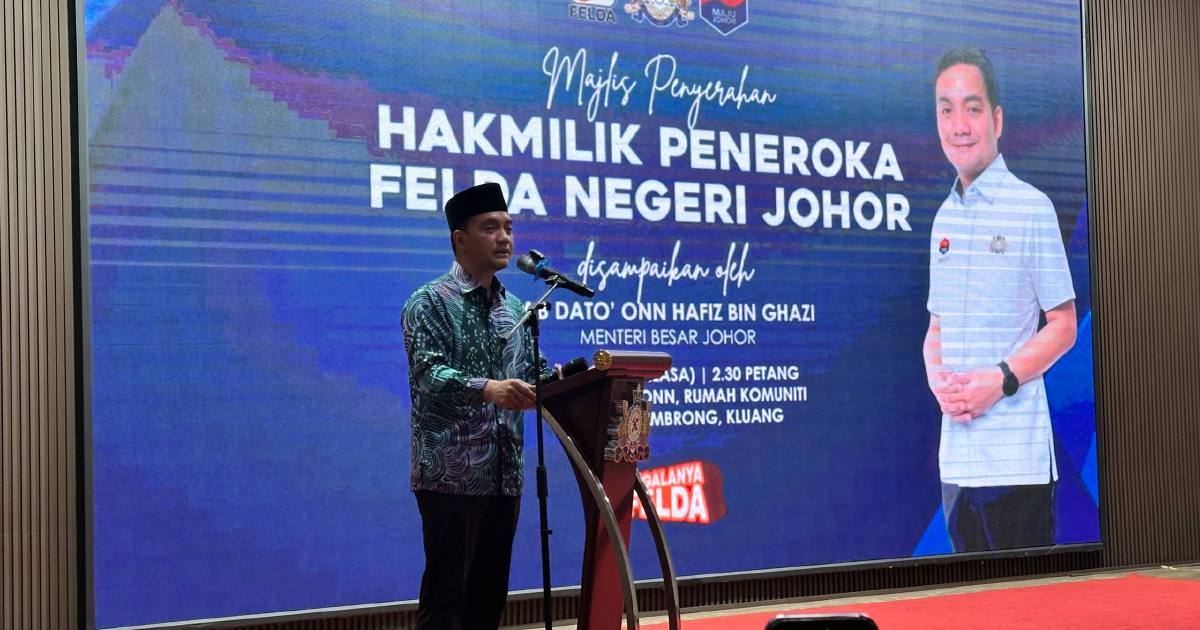
Johor's caretaker Menteri Besar Datuk Onn Hafiz Ghazi has claimed that he was prevented from entering a Felda settlement in Kluang two days ago, where he was scheduled to present land titles to residents as part of a development initiative. The allegation has drawn attention to potential impediments to official duties during the period when the state operates under caretaker management following the dissolution of the state assembly.
The incident centres on what appears to be a routine administrative function—the distribution of land titles to Felda settlers—that forms a standard responsibility of the Menteri Besar's office. Land title distribution programmes carry particular significance in rural constituencies, where land security represents a foundational issue for settlement communities and their long-term economic stability. Such ceremonies typically garner considerable local interest and media coverage.
Felda settlements across Malaysia have historically served as important constituencies for multiple political parties, and Johor's settlements remain strategically significant. The denial of access to conduct official business within these communities raises questions about who wielded authority to restrict the caretaker Menteri Besar's movements. In Malaysia's constitutional framework, caretaker officials retain their statutory responsibilities and powers until a new government assumes office, yet practical exercises of these powers can sometimes face unofficial obstruction.
The timing of the alleged obstruction carries particular weight. During caretaker periods, when the state assembly stands dissolved and elections loom, political tensions often intensify. Various stakeholder groups may seek to consolidate their positions or challenge the interim administration's legitimacy. Restricting a caretaker leader's ability to perform ceremonial duties could represent an attempt to diminish his standing or undermine public perception of governmental continuity.
Onn Hafiz's claim invites scrutiny into the mechanisms that might have been deployed to prevent his entry. Felda settlements typically operate under administrative structures that include settlement management bodies, security personnel, and community representatives. Determining whether the obstruction originated from official settlement administration, security protocols, or unofficial intervention becomes crucial to understanding the episode's implications.
From a governance perspective, the incident highlights vulnerabilities in Malaysia's caretaker arrangements. While legal frameworks attempt to delineate the powers and limitations of interim administrations, practical enforcement remains subject to various interpretations and local political dynamics. When caretaker officials encounter restrictions in performing routine duties, it exposes gaps between constitutional design and operational reality.
The broader implications extend to public administration principles in Malaysia's states. If caretaker leaders cannot reliably access public venues or communities they ostensibly serve, questions arise about institutional neutrality and the rule of law during election periods. These matters transcend individual incidents and speak to how effectively Malaysia's interim governance structures protect administrative continuity and prevent partisan interference.
Felda communities in Johor have traditionally demonstrated mixed political allegiances, and land issues remain potent electoral factors. A caretaker Menteri Besar's inability to communicate development progress or distribute tangible benefits like land titles could affect public perception during a critical pre-election window. Conversely, if access restrictions were imposed legitimately—perhaps due to health protocols, security concerns, or administrative procedure—clarification would address concerns about institutional obstruction.
The incident also reflects deeper questions about caretaker governance in Malaysia. Unlike some democracies with more precisely codified interim administration protocols, Malaysia's caretaker conventions rely substantially on constitutional interpretation and political convention. When these conventions face practical challenges, they reveal underlying tensions between different authorities or stakeholders claiming legitimate governance roles.
For Malaysian readers and observers, this episode underscores how electoral periods can introduce friction into governmental operations. Whether the obstruction represented intentional political maneuvering, administrative confusion, or legitimate procedural grounds requires transparent investigation. Establishing clear accountability mechanisms for such incidents would strengthen confidence in Malaysia's electoral and governance processes.
The Felda settlement context particularly matters, given these communities' historical political engagement and economic dependence on state administration. Settlers have concrete interests in uninterrupted governance services and transparent communication from their representatives. Any perception that political actors could restrict official access during crucial pre-election periods potentially undermines institutional trust within these communities.
Onn Hafiz's allegation therefore warrants official response and clarification. Whether through official channels or public statement, articulating the precise circumstances surrounding the denial of entry would serve institutional transparency. Such clarifications also establish precedent for how similar situations should be handled during future election cycles, strengthening Malaysia's caretaker governance framework through practical consistency rather than constitutional abstraction alone.

