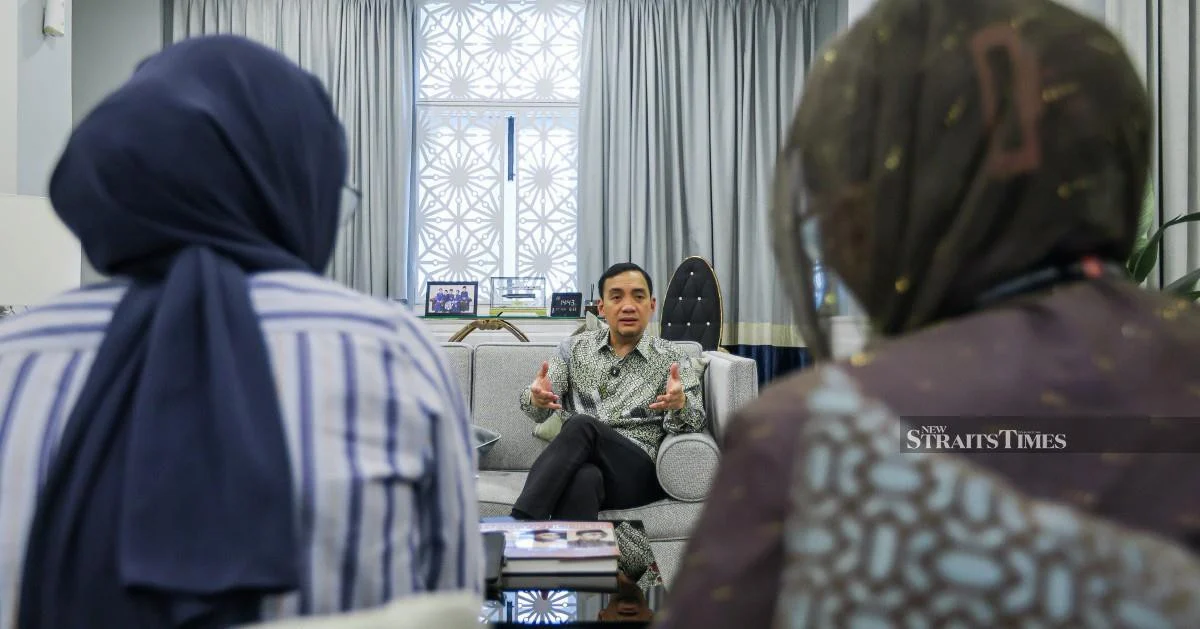
Caretaker Johor Menteri Besar Datuk Onn Hafiz Ghazi has cast doubt on the opposition's ability to form a credible and functioning government, using their failure to announce a chief minister candidate as evidence of inadequate preparation for the upcoming state election.
The political salvo reflects a widening divide between the ruling coalition and opposition parties as campaigning intensifies ahead of polling day. Onn Hafiz's challenge strikes at a fundamental requirement for electoral credibility: voters need to know who will lead them if an alternative coalition wins. The absence of such clarity, the Menteri Besar suggests, indicates either internal disunity within opposition ranks or a lack of serious commitment to winning the election.
In Malaysian political contests, the nomination of a chief ministerial candidate has traditionally served as a benchmark of preparedness. It demonstrates that a coalition has resolved internal negotiations, established a power-sharing agreement, and identified a leader capable of commanding support across the governing structure. The opposition's delay in making such an announcement can be interpreted multiple ways: as strategic deliberation to maximize coalition negotiations, as a sign of competing ambitions within the alliance, or as a message that the opposition does not genuinely expect to win.
For Johor specifically, the timing carries particular weight. Malaysia's southern state is traditionally a stronghold of ruling coalition politics, and any opposition victory would represent a significant political realignment. The Menteri Besar's remarks therefore serve both as a tactical challenge to the opposition and as a signal to Johor voters that the ruling coalition possesses clarity of purpose and organizational discipline.
The opposition's position in Johor has historically been fragmented, with multiple parties competing for the same constituencies and voter bases rather than consolidating support. The failure to unite behind a single menteri besar candidate perpetuates this perception of disunity and may reinforce voter scepticism about opposition governance capabilities. Each day of delay amplifies Onn Hafiz's argument and potentially strengthens the ruling coalition's narrative during the campaign period.
In broader Southeast Asian context, chief ministerial candidates play a critical role in translating popular discontent into organized political change. When oppositions struggle to present unified leadership, they lose momentum and credibility. The Malaysian electorate has demonstrated in recent electoral cycles that they are willing to vote for change, but they require confidence that alternative governments can function effectively. The opposition's apparent hesitation on this fundamental matter may cost them dearly.
From a governance perspective, Onn Hafiz's challenge highlights a genuine administrative issue. Leading a state requires navigating complex bureaucratic systems, managing revenue and expenditure, and maintaining relationships with federal authorities. An opposition coalition that cannot agree on who should shoulder these responsibilities may struggle to govern coherently once in office. Voters reasonably ask whether such a coalition can deliver on campaign promises or will fracture under the pressures of actual governance.
The incumbent position allows the Menteri Besar to present himself as a stable, tested administrator with demonstrated capability. He leads a government that has operational continuity, established relationships, and proven ability to execute policy. Against this backdrop, opposition uncertainty about leadership becomes more pronounced and potentially more damaging to opposition prospects.
Onn Hafiz's intervention also reflects recognition that the opposition poses a credible electoral challenge. A caretaker government confident of overwhelming victory would not invest effort in challenging opposition preparedness. The fact that such arguments are being deployed suggests the ruling coalition views this election as genuinely competitive and believes it must actively persuade voters rather than assume automatic support.
As the campaign progresses, this issue will likely become a recurring theme in political debate. Opposition parties will need to demonstrate not only that alternatives to current governance exist, but that those alternatives can be implemented by competent, unified leadership. Until a menteri besar candidate emerges from opposition ranks, Onn Hafiz's challenge will continue to resonate with undecided voters and provide ammunition for ruling coalition campaigners seeking to emphasize opposition weakness.
The political dynamics underscore how Malaysian state elections involve far more than choosing between policies. They fundamentally test whether opposition coalitions possess the cohesion, discipline, and clarity of purpose necessary for governance. Without a named chief ministerial candidate, the opposition invites exactly the kind of scrutiny that Onn Hafiz has now articulated, forcing them to address questions about readiness and unity rather than focusing on substantive campaign messaging.

