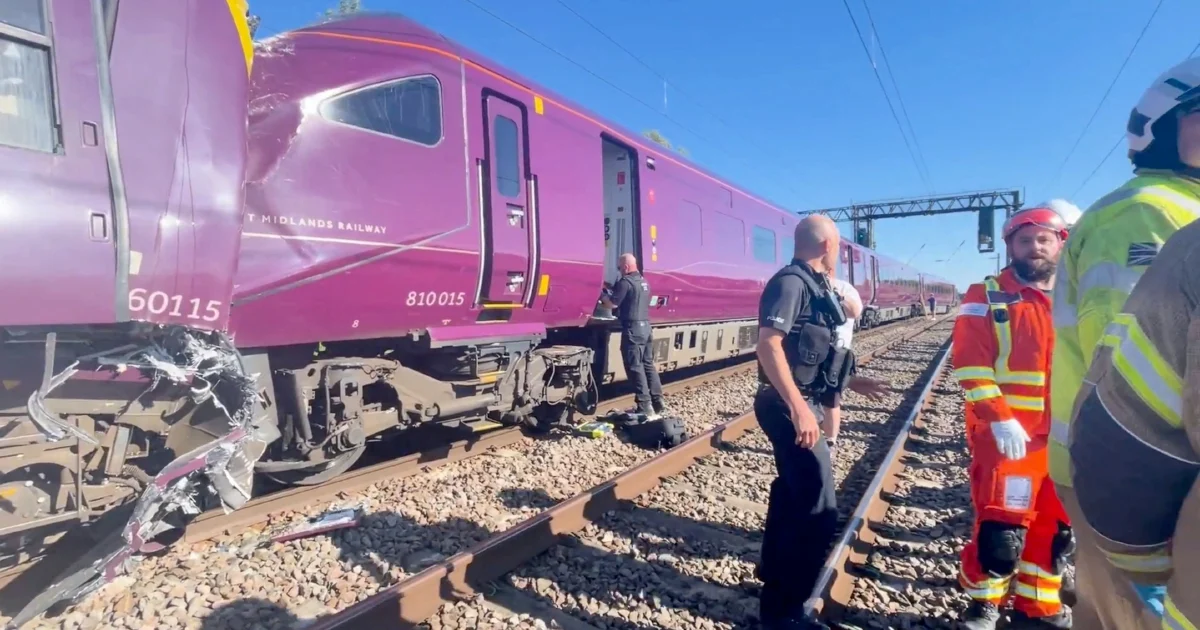
A major train collision north of London has resulted in one fatality and widespread injuries across dozens of passengers, with emergency services confirming that 11 people sustained critical injuries in the Friday incident. The emergency response to the crash highlighted the coordinated efforts of UK rescue teams mobilised to the scene to manage the significant number of casualties from what appears to be the most serious rail accident in the region in recent months.
The impact of the collision between the two passenger trains created an immediate crisis requiring urgent medical intervention. Paramedics and rescue personnel worked to extract injured passengers from the wreckage and provide emergency treatment at the scene. The severity of injuries sustained by a substantial proportion of those involved indicates the force with which the two trains made contact, suggesting a high-speed impact that overwhelmed the safety systems designed to protect passengers in such scenarios.
Rail accidents of this magnitude are relatively uncommon across the UK network, where modern signalling systems and safety protocols have significantly reduced collision risks over the past two decades. However, when incidents do occur, they often expose gaps between existing infrastructure standards and the highest safety benchmarks. The Friday collision serves as a reminder of the potential consequences when multiple protective layers fail simultaneously.
The location of the accident north of London places it within one of Britain's busiest rail corridors, where passenger volumes are consistently high and train frequencies are dense throughout operational hours. This geographical context compounds the severity of the incident, as the region typically experiences multiple services per hour, meaning a relatively small operational failure can create cascading problems affecting large numbers of people. The timing and specific circumstances of how the collision occurred remain under investigation by rail accident authorities.
Emergency services deployed extensive resources to manage the aftermath, with ambulances, fire crews, and rescue personnel coordinating their efforts to treat the injured and secure the accident scene. The 11 people classified as critically injured faced the most urgent medical needs and would have required immediate transportation to specialist trauma centres equipped to handle severe injuries. The remaining injured passengers sustained less critical injuries but still required professional medical assessment and treatment.
This incident carries significant implications for rail safety in Southeast Asia, where rapid network expansion and increasing passenger volumes mirror conditions in busy UK corridors. Malaysian rail operators and the broader regional transport sector can draw important lessons from how the UK emergency response unfolded and the preliminary investigations that will follow. The effectiveness of rail accident procedures and staff training directly influences casualty outcomes in such events.
The collision raises questions about maintenance schedules, driver fatigue protocols, and the adequacy of automated safety systems on routes handling high-traffic volumes. Train operators across Asia have invested heavily in upgrading signalling technology and implementing collision avoidance systems, yet incidents like the London crash demonstrate that technological solutions must be complemented by rigorous operational discipline and workforce training.
The investigation into the cause will likely examine whether mechanical failure, human error, or environmental factors contributed to the accident. Train collision investigations typically examine brake functionality, signal recognition, speed management before the impact point, and driver response times. The findings will inform safety recommendations not only for UK rail operations but also influence best-practice discussions within the international rail community.
For Malaysian passengers and industry observers, the incident underscores the importance of continued investment in railway safety infrastructure at a time when regional rail networks are expanding rapidly. The Klang Valley, Singapore, and other major urban corridors in Southeast Asia operate at comparable intensity to UK routes, meaning the vulnerability profile is similar. The UK's established systems for managing rail emergencies and investigating accidents provide a reference point for developing safety frameworks in less mature rail markets across the region.
The human cost of the collision—one death and numerous serious injuries—reflects the vulnerability that persists despite modern technology. No transportation system achieves absolute safety, but the difference between incident frequency and severity lies in how comprehensively safety systems are designed, maintained, and monitored. The Friday collision will likely generate international safety reviews and recommendations that ripple through rail operators worldwide, including those managing passenger services in Malaysia and neighbouring countries.

