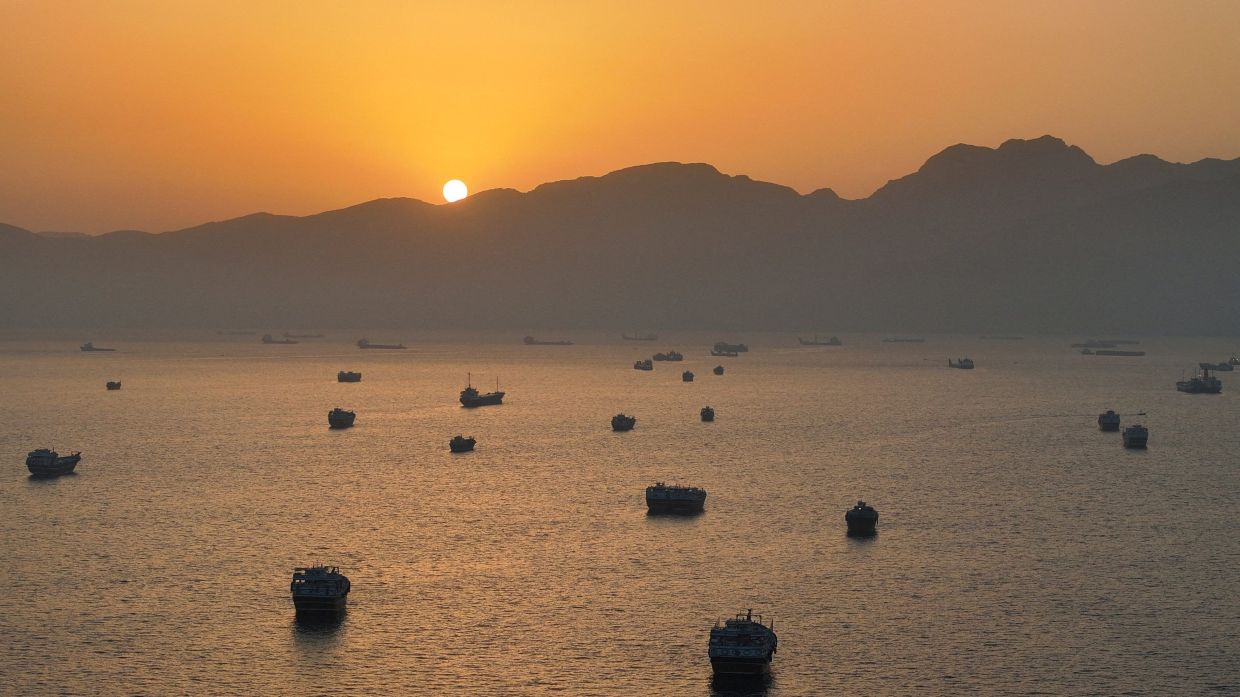
The Strait of Hormuz, one of the world's most critical energy chokepoints, is finally showing signs of clearing after weeks of congestion caused by regional tensions. Three substantial oil tankers carrying a combined five million barrels of crude exited the waterway on Wednesday, marking a significant acceleration in the movement of supplies that had accumulated in the Persian Gulf since the conflict in the Middle East intensified. The breakthrough comes as a temporary accord between Iran and the United States begins to unlock the gridlock, potentially easing pressure on global oil markets that have been sensitive to any disruption in this crucial shipping corridor through which roughly one-third of all seaborne petroleum passes.
Shipping data tracked by LSEG and Kpler identified the South Korean-flagged VL Breeze as one of the vessels to clear the strait, carrying two million barrels of Qatari condensate and crude from Abu Dhabi destined for the South Korean port of Daesan. The Very Large Crude Carrier is chartered by Hyundai Oilbank, one of South Korea's leading independent refiners with significant exposure to Middle Eastern supplies. The movement of this vessel is particularly noteworthy because it signals that Asian refiners, who are among the heaviest consumers of Gulf crude, are once again confident enough to position their ships for loading in what had become an increasingly risky region.
Two additional tankers also departed the congested waters, each with substantial cargo loads. The Liberian-flagged Plata Carrier, operating under contract to India's state-owned Oil Corp, sailed with two million barrels of Saudi crude, while the Suezmax tanker Prudent Warrior made way with one million barrels of Iraqi Basrah crude toward the Omani port of Sohar. The involvement of Indian Oil Corp, one of Asia's largest petroleum importers, underscores the regional importance of resuming normal crude flows, as India depends heavily on Gulf supplies to meet its rapidly growing energy demands. Both vessels flying Liberian flags indicates the complex flag-of-convenience arrangements common in international shipping, though their departure nonetheless represents concrete progress in freeing trapped energy resources.
The scale of the backlog that has now begun to clear was substantial. Analysts at Kpler and Vortexa, two major shipping intelligence firms, had estimated that nearly 90 million barrels of crude remained stranded within the Gulf prior to this recent exodus. This represents an enormous volume of energy inventory that could not reach markets, effectively removing it from global supply calculations and contributing to price volatility. The clearing of even a fraction of this trapped oil carries implications for energy costs worldwide, though the full impact remains dependent on how rapidly the entire backlog can be relieved through resumed normal shipping patterns.
South Korea's maritime ministry confirmed that four vessels operated by South Korean shipping companies had successfully transited the strait, with one heading to South Korea and the others proceeding to third countries. However, the ministry also noted a sobering reality: of the 26 vessels that had been stranded since the beginning of Middle East hostilities, only eight have now managed to depart, leaving 18 vessels still caught in the Gulf. This ratio illustrates that while progress is occurring, the vast majority of blocked shipping remains immobilized, suggesting that the crisis, though easing, is far from resolved and that sustained pressure on global energy supplies will persist until more comprehensive shipping normalcy returns.
The mechanics of safe passage through this contested region remain somewhat ambiguous. It remains uncertain whether the departing vessels navigated through the temporary maritime corridors that Oman and the International Maritime Organization established specifically to facilitate safe vessel movements in this volatile environment. Oman, a nation strategically positioned on the Arabian Peninsula and conscious of its role as a stabilizing influence in regional affairs, has committed to maintaining the Strait of Hormuz as an open shipping corridor without imposing any transit tolls. The country has designated two alternative shipping routes running north and south of the main established lane to provide vessels with safer passage options while departing the region, reflecting a pragmatic approach to managing the crisis without extracting economic advantage.
Beyond crude oil, the normalisation extends to liquefied natural gas markets, where supply disruptions pose equally serious concerns for energy-dependent economies across Asia. Shipping monitors have identified two empty LNG tankers, the Shandong Redwood and Milaha Qatar, transiting westward through the strait to load cargoes from Qatari facilities. This brings the total number of empty LNG vessels known to be moving through the strait toward Qatar loading facilities to nine, the highest count since the broader conflict commenced. The movement of these specialised vessels, which require specific terminals and handling procedures, signals growing confidence among energy companies that the security situation has improved sufficiently to restart normal LNG operations.
Qatar, the world's largest LNG exporter and a crucial energy supplier for global markets particularly in Europe and Asia, has signalled its intention to restore normal production within several weeks, according to remarks attributed to Prime Minister Sheikh Mohammed bin Abdulrahman al-Thani and reported by the Financial Times. This timeline, if achieved, would represent a meaningful restoration of global LNG availability and could help ease the tight energy market conditions that have persisted throughout recent months. For nations like Malaysia, Singapore, and other Southeast Asian economies with either direct energy needs or downstream petrochemical industries dependent on stable feedstock supplies, any expansion of Qatari LNG exports carries significant economic implications.
The interim understanding between Iran and the United States appears to be having tangible effects on shipping behaviour and merchant confidence, even as the broader political complexities underlying the regional tensions remain unresolved. The fact that major refiners and trading companies are again positioning vessels for cargo collection suggests that insurance costs, security premiums, and reputational risks associated with operating in the Gulf have declined to more manageable levels. For Malaysian and regional Asian energy consumers accustomed to stable supplies during previous decades, the current period of gradual normalisation offers cautious optimism that the most acute supply disruptions may be passing, though vigilance regarding potential future instability remains warranted given the region's continuing geopolitical sensitivities.

