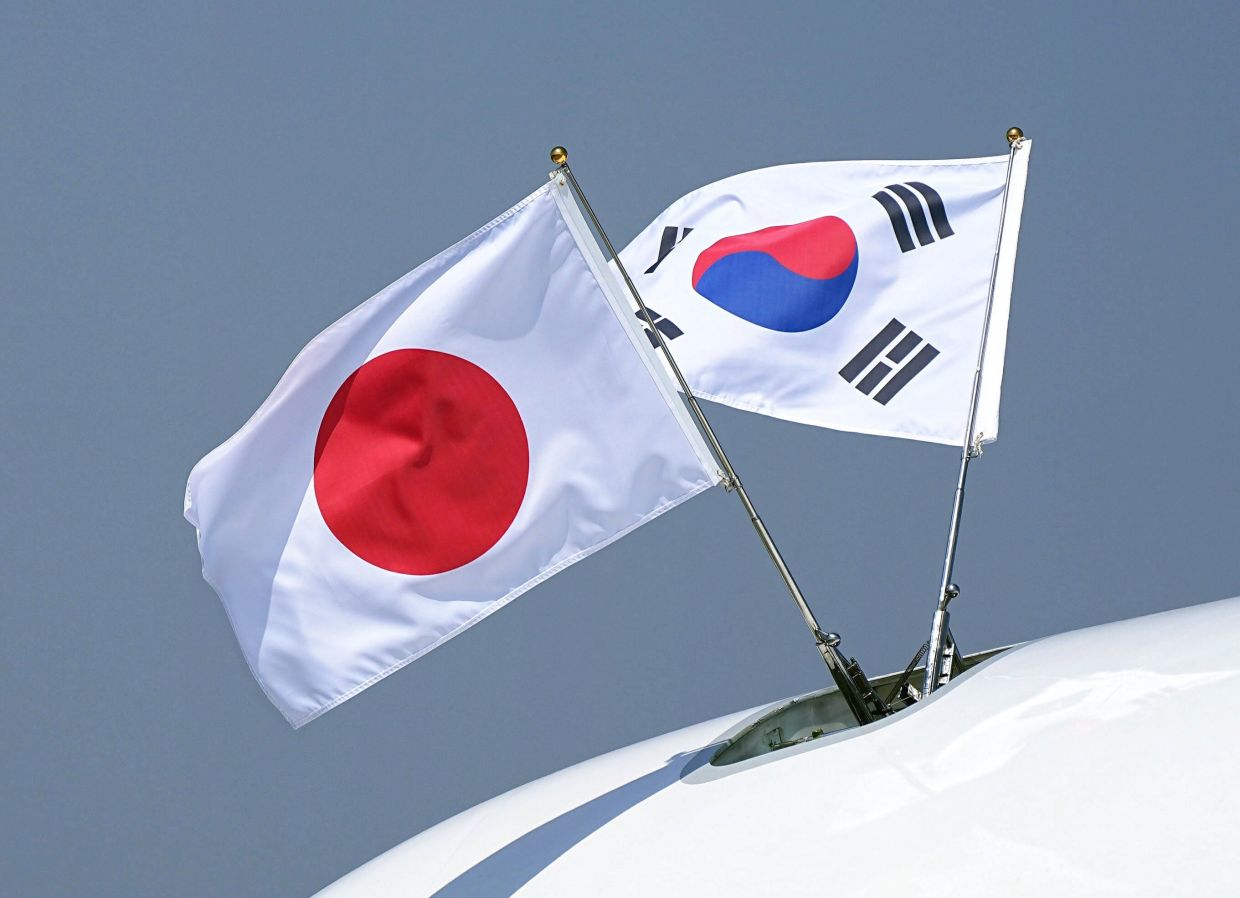
Japan and South Korea remain officially non-nuclear, yet research from Washington's Centre for Strategic and International Studies reveals a troubling vulnerability in this consensus: the moment one nation acquires atomic weapons, public and elite support for the other to follow could surge dramatically. The finding carries profound implications for northeast Asia's delicate security balance, suggesting that nuclear proliferation in the region operates less as isolated state decisions and more as interconnected dominoes awaiting the first push.
The CSIS survey, completed by October's end and released on Thursday, polled an influential cross-section of Asian decision-makers and thought leaders. Respondents included serving and retired government officials, members of national parliaments, university scholars, researchers from major think tanks, and senior corporate figures. These individuals, numbering in the hundreds across both nations, represent the intellectual and policy-making architecture that shapes how Tokyo and Seoul approach existential security questions. Their responses painted a picture of studied restraint: approximately 75 per cent of South Korea's strategic establishment and roughly 80 per cent of Japan's expressed opposition or pronounced ambivalence toward their countries developing nuclear arsenals.
Yet this elite consensus masks a far more fractured public landscape in South Korea, revealing a dangerous gap between those who deliberate policy and those who eventually must live with its consequences. A 2024 survey by the Chey Institute for Advanced Studies, administered by polling firm Gallup, found that over 72 per cent of ordinary South Koreans favour their nation possessing nuclear weapons. This 50-point gap between elite scepticism and public enthusiasm underscores the political fragility of South Korea's non-nuclear stance. Should security conditions deteriorate markedly, or should North Korea's nuclear capabilities advance further, elected officials could face overwhelming domestic pressure to abandon the current framework. Japan, by contrast, shows greater alignment between expert opinion and public sentiment, with approximately 80 per cent of Japanese citizens similarly opposed to nuclear acquisition, according to Kristi Govella, CSIS senior adviser and Japan chair. Govella cautioned that international media have overstated the strength of pro-nuclear voices within Japanese policy circles, though this reassurance may ring hollow if circumstances shift.
The survey's most alarming finding centres on a contagion effect: if either nation were to reverse course and pursue nuclear weapons, the other would almost certainly follow. The mechanism underlying this cascade differs significantly between the two countries. South Korean proponents of nuclear armament frame their position primarily through the lens of managing an unpredictable North Korea, whose own weapons programme continues advancing despite decades of sanctions and diplomatic efforts. Japanese nuclear advocates, conversely, express deeper anxieties about American staying power in the region. They worry that the United States commitment to extending its nuclear umbrella over Tokyo cannot be guaranteed indefinitely, particularly as Washington confronts rising tensions elsewhere and debates the optimal allocation of defence resources. These distinct drivers mean that resolving the proliferation temptation requires tailored approaches addressing each nation's specific security obsessions.
The timing of the CSIS publication is significant, arriving as the United States undertakes intensive diplomatic engagement with both allies on nuclear matters. Earlier in the month, American officials convened bilateral consultations in Seoul focused on expanding nuclear cooperation initiatives with South Korea. These talks were followed by extended deterrence discussions in Tokyo with Japanese counterparts. The United States is simultaneously pressing China to join negotiations on nuclear arms control agreements, though Beijing has consistently refused participation, maintaining that it will not accede to treaties governing its atomic weapons while the United States and Russia remain far larger nuclear powers. This American strategy—reassuring allies through deeper nuclear integration while trying to constrain potential competitors—reflects Washington's conviction that assured allies prove less tempted toward independent nuclear arsenals.
American nuclear strategy itself is undergoing significant evolution, driven by concerns over rising Chinese and Russian capabilities. Brandon Williams, serving as under secretary for nuclear security at the Department of Energy and heading the National Nuclear Security Administration, stated Thursday at the Hudson Institute that accelerating American nuclear weapons production has become imperative to counter what Washington perceives as destabilising behaviour from Beijing and Moscow. His agency intends to invest US$600 million in artificial intelligence development during the current year, targeting the digitalisation of nuclear weapons design and production processes. This technological push aims to compress the traditional timeline from identifying a military requirement to fielding an operational system, which currently stretches across ten to fifteen years. Such accelerated capability could theoretically strengthen extended deterrence guarantees to Japan and South Korea, yet it simultaneously signals to Beijing that the nuclear competition is intensifying, potentially justifying Chinese expansionism in its own arsenal.
Parallel discussions at CSIS centred on whether the United States should reconsider limiting its hypersonic weapons exclusively to conventional warheads. Heather Williams, who directs the nuclear issues project at CSIS, argued that nuclear-armed hypersonic systems deserve inclusion in the American arsenal. Her reasoning combines deterrence logic with reassurance: a more diversified and technically sophisticated American nuclear force, she contends, would both complicate adversaries' strategic calculations and provide reassurance to allied nations that the deterrent extends comprehensively. This argument parallels the CSIS survey's central conclusion: assured allies prove less inclined toward nuclear weapons development. If Tokyo and Seoul genuinely believe that American nuclear commitments remain credible and comprehensive, their own incentives to acquire independent arsenals diminish substantially. Conversely, erosion of confidence in American nuclear guarantees could prove catastrophic.
The broader regional implications deserve careful consideration from Malaysian and Southeast Asian policymakers. Northeast Asian nuclear proliferation would fundamentally alter the security environment across the entire Asia-Pacific region. A nuclear-armed Japan and South Korea would create a densely nuclearised strategic space alongside China, Russia, and North Korea, raising the statistical probability of miscalculation or accident. The electromagnetic pulse effects of any nuclear exchange in northeast Asia would radiate throughout the region, disrupting supply chains, financial systems, and military communications. ASEAN nations would inevitably face pressure to choose nuclear alignment, with geopolitical consequences extending far beyond their own borders. The cascading instability would dwarf the strategic consequences of reduced American troop deployments, which themselves remain a significant concern among defence planners in the region.
China's response to American diplomatic engagement with Japan and South Korea on nuclear matters has been characteristically sharp. Beijing has repeatedly characterised Japanese security posture adjustments as evidence of "remilitarisation," and specifically accused Tokyo of pursuing nuclear weapons development. This Chinese frame reflects Beijing's own security anxieties but also demonstrates how contested the interpretation of Japanese security decisions has become. What Tokyo and Washington present as defensive extensions of existing arrangements, Beijing views as offensive repositioning. This interpretive gulf complicates de-escalation efforts and creates space for misunderstanding to metastasize into crisis.
The path forward requires recognition that nuclear proliferation in northeast Asia operates as a coordination problem rather than an inevitable march toward weapons acquisition. Japan and South Korea can remain non-nuclear if both remain confident in American security guarantees and perceive the other as similarly committed. Yet this equilibrium proves fragile, dependent on maintaining mutual confidence and American credibility simultaneously. The CSIS research suggests that elite communities in both nations understand this fragility, yet public opinion gaps, particularly in South Korea, create political pressure that could override expert judgment. Managing this tension demands sustained American diplomatic attention, concrete demonstrations of nuclear commitment through operational deployment and integration, and mechanisms allowing Japan and South Korea to signal restraint while maintaining capability hedges that preclude sudden vulnerability. Without such comprehensive engagement, the region faces a future where nuclear weapons acquisition, once initiated by either nation, triggers an unstoppable cascade of proliferation.

