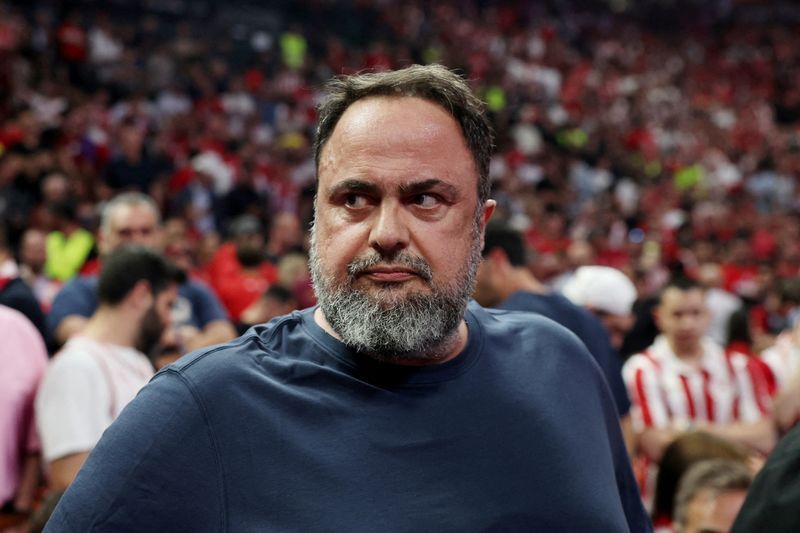
Nottingham Forest owner Evangelos Marinakis has launched a libel lawsuit against Premier League club Crystal Palace at London's High Court, escalating tensions between the two English football clubs following an incident involving supporters' conduct at a match last season. The Greek shipping magnate filed proceedings against CPFC Limited and unidentified individuals in connection with a provocative banner displayed during Palace's home fixture against Forest in August of the previous campaign.
The disputed banner, according to media reports, depicted Marinakis in a threatening manner alongside midfielder Morgan Gibbs-White, with accompanying text that read sarcastically: "Mr Marinakis is not involved in blackmail, match-fixing, drug trafficking or corruption." The banner represented an attempt by Crystal Palace supporters to mock and disparage the Nottingham Forest owner through public humiliation at a football stadium, reaching thousands of spectators and generating wider circulation through social media and news coverage.
The underlying context for the supporters' hostile demonstration relates to significant UEFA regulatory action that affected Crystal Palace's European competition prospects. The London club faced demotion from the Europa League to the Conference League—a far less prestigious competition—after breaching UEFA's multi-club ownership regulations. Notably, Nottingham Forest subsequently benefited from this regulatory enforcement, moving up to fill the vacancy in the Europa League that Crystal Palace had vacated. This straightforward consequence of rule violation provided Palace supporters with a grievance they expressed through the provocative banner.
Marinakis, who has held ownership of Nottingham Forest since 2017, simultaneously maintains controlling interests in other football clubs, most prominently Olympiacos, the dominant force in Greek football. This portfolio approach to football club ownership has occasionally attracted scrutiny regarding potential conflicts of interest, though the magnate has consistently and emphatically denied all allegations pertaining to match-fixing, corruption, blackmail, drug trafficking, or other illicit activities. His legal representatives have not previously indicated that specific incidents triggered these denials, instead maintaining a general posture of refutation against unsubstantiated claims.
The decision to pursue formal legal action through England's High Court represents a significant escalation in Marinakis's defence of his reputation. Rather than allowing the banner controversy to fade from public consciousness, the Forest owner has chosen to engage the judicial system, seeking damages and potentially an injunction against further defamatory conduct. This approach carries implications for how football clubs and their ownership structures navigate supporter expression and the boundaries between legitimate criticism and actionable defamation.
Neither Marinakis's legal team nor Crystal Palace officials offered immediate comment regarding the lawsuit's filing, suggesting both parties may prefer to conduct their dispute through formal legal channels rather than engaging in public statements that could further inflame tensions between the organisations. The absence of response indicates either careful legal consideration or deliberate silence as a strategic choice in what promises to become a protracted legal matter.
For Malaysian and Southeast Asian football followers, this controversy illustrates the increasingly complex regulatory environment surrounding modern football ownership, particularly regarding multi-club ownership structures that have become more prevalent globally. The UEFA regulations that prompted Palace's demotion reflect ongoing attempts by major European football bodies to prevent individual owners from manipulating competition outcomes or creating conflicts of interest across multiple clubs. Such regulatory frameworks remain relatively underdeveloped in Southeast Asian football, where governance structures continue evolving.
The case also demonstrates how supporter culture and expression intersect with commercial interests and legal concepts of defamation. Stadium banners and supporter protests occupy ambiguous territory—they represent fans' rights to express criticism and frustration, yet they may cross into territories that courts consider defamatory, particularly when they make specific accusations about criminal activity. This tension between supporter expression and legal liability will likely persist as courts throughout Europe continue adjudicating similar disputes.
Marinakis's willingness to pursue costly litigation against supporter conduct reflects broader trends among wealthy football club owners who increasingly employ legal remedies to combat criticism and alleged defamation. The decision to sue carries reputational implications on both sides—it demonstrates Marinakis's resolve in defending his character while simultaneously drawing renewed attention to the very allegations contained in the banner. Whether such legal action ultimately vindicates his reputation or merely amplifies controversy remains uncertain as the case proceeds through England's judicial system.

