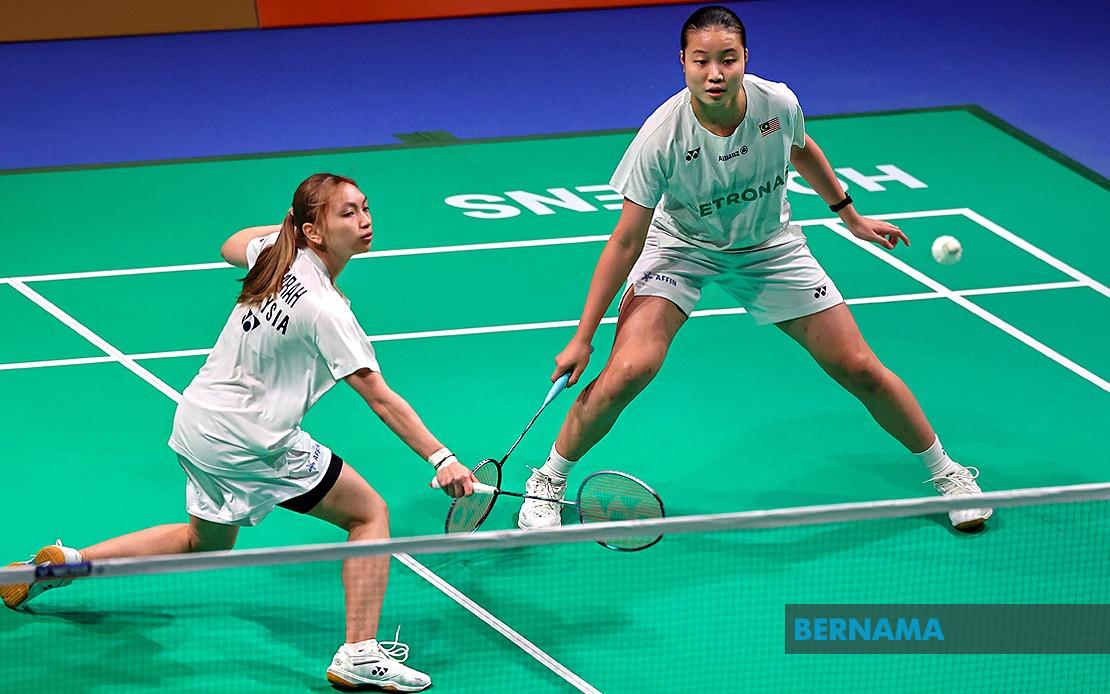
Malaysian badminton's bright prospect Noraqilah Maisarah Ramdan and her partner Low Zi Yu have adopted a pragmatic strategy for their career trajectory, focusing on incremental progress rather than pursuing lofty goals prematurely. The 18-year-old national player emphasises the importance of building momentum through deliberate, step-by-step advancement, reflecting a maturity in approach that suggests both players understand the demands of international competitive badminton.
Currently positioned at 70th in the world rankings, the pair has outlined breaking into the top 50 as their immediate objective. This measured target-setting marks a departure from the conventional ambition often displayed by emerging athletes, who may feel pressure to jump directly to the pinnacle of their sport. Noraqilah's willingness to compartmentalise her aspirations demonstrates strategic thinking that prioritises sustainable growth over rushed accomplishment.
While the top 32 barrier holds significance in professional badminton circles—serving as a gateway to participation in marquee tournaments—the duo has chosen to establish their foundation at the 50-level first. This threshold represents a critical juncture where players gain broader access to international competitions, expanded prize money opportunities, and increased exposure to elite-level opponents. For Malaysian badminton, which maintains a proud tradition in the sport, the emergence of homegrown talents competing consistently at such rankings strengthens the country's competitive ecosystem.
The partnership between Noraqilah and Low Zi Yu demonstrates tangible evidence of progression on court over recent months. Their performance at the Australian Open served as a watershed moment, where they managed to overcome Taiwan's Hsieh Pei Shan and Hung En Tzu, a pairing ranked eighth globally. This victory transcends mere tournament success; it represents a psychological breakthrough indicating their capacity to trouble established elite competitors.
Noraqilah's reflection on their matches against Taiwanese opponents over a two-month period reveals the sophistication of her analytical approach. In earlier encounters, the Malaysian pair lacked the tactical control and technical execution necessary to impose meaningful pressure on higher-ranked opposition. By their most recent clash, they had narrowed this gap considerably, demonstrating improved court positioning, stroke consistency, and mental resilience—hallmarks of maturing partnerships.
This incremental improvement carries implications beyond individual achievement. Malaysia's badminton infrastructure has long relied on the development pipeline producing competitive pairs capable of earning ranking points across diverse tournament circuits. Noraqilah and Low Zi Yu's progression contributes to this developmental narrative, particularly as they operate in the women's doubles category where Malaysia has traditionally invested significant resources.
The psychological dimension of their approach warrants examination. By rejecting the temptation to target the top 32 immediately, they mitigate the risk of demoralisation should rapid progress prove elusive. Unrealistic timelines often precipitate burnout and performance anxiety among young athletes. Instead, this duo's philosophy of methodical advancement creates achievable milestones that provide regular validation and motivation for continued dedication.
International badminton rankings fluctuate based on tournament participation, results, and point accumulation across sanctioned events. The journey from 70th to 50th requires consistent tournament appearances, competitive performances, and strategic selection of competitions where they can accumulate ranking points. This path demands sustained financial investment, coaching quality, and competitive opportunities—resources that Malaysian badminton bodies must prioritise.
Looking forward, the impact of Noraqilah and Low Zi Yu's success extends to grassroots badminton culture in Malaysia. Young players observing their journey witness that excellence emerges through patient construction rather than explosive breakthrough. This message counters the mythology surrounding overnight success and underscores the importance of discipline, consistent training, and emotional intelligence in competitive sport.
As they pursue their top-50 objective, the pair's realistic framework provides a template for sustainable athlete development. Their acknowledgment of improvement trajectories and willingness to celebrate intermediate victories suggest long-term thinking that could yield dividends across their competitive lifespan. For Malaysian badminton enthusiasts tracking emerging talent, Noraqilah and Low Zi Yu represent the measured ambition that often precedes breakout success on the global stage.