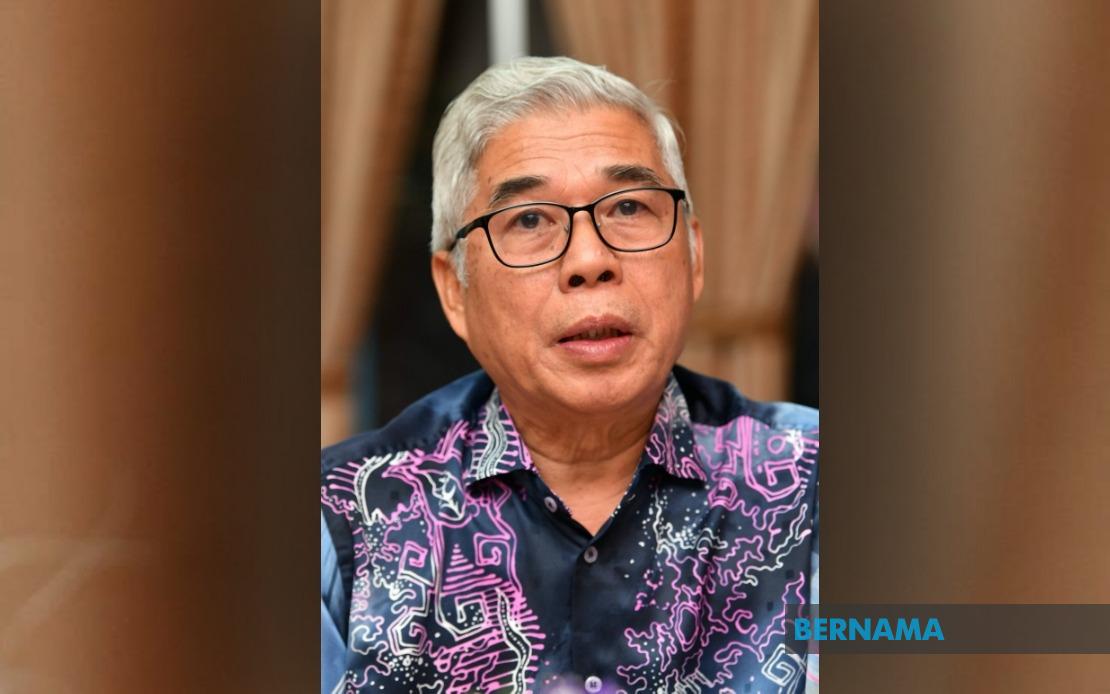
Pasir Gudang Member of Parliament Hassan Abdul Karim has cautioned the MADANI Government against rushing toward a premature general election, advocating instead that it honours its full constitutional mandate to demonstrate tangible policy outcomes. In remarks made on social media, Hassan urged Prime Minister Datuk Seri Anwar Ibrahim to resist the temptation to dissolve Parliament in the near term, despite recent electoral setbacks experienced by PKR across several state contests.
Hassan's intervention reflects broader anxieties within government ranks about the political momentum following PKR's recent mixed performance in state elections across Sabah, Johor, and Negeri Sembilan. Rather than viewing these outcomes as a signal to seek fresh public endorsement through a snap poll, Hassan contends that such a course would be premature and strategically unwise. His argument centres on the premise that the coalition requires additional time to allow its economic and governance initiatives to gain traction and demonstrate measurable benefit to ordinary Malaysians.
The timing of Hassan's statement carries significance for Malaysian political observers. With the government theoretically able to govern until late 2027 or early 2028 under the current parliamentary cycle, his call for patience stands in contrast to speculation that leadership may be tempted to capitalise on any residual goodwill or seek a fresh mandate sooner. The electoral calendar has become an increasingly fraught issue within coalition politics, with different factions potentially holding divergent views about optimal timing.
Hassan emphasised that the coming 12 to 18 months represent a critical window during which the government should prioritise consolidating economic gains and restoring public confidence through visible improvements in living standards. His strategy hinges on the belief that voters respond more favourably to tangible improvements in economic conditions than to political rhetoric alone. This perspective aligns with international political economy scholarship suggesting that incumbent parties benefit substantially when economic indicators demonstrate positive trends in the run-up to elections.
The MP specifically highlighted the importance of attracting foreign direct investment and strengthening Malaysia's broader economic position as priorities that cannot be rushed. Economic policymaking typically requires sustained implementation periods before yielding measurable results in employment, wage growth, and business confidence. An early election call, Hassan suggests, would interrupt precisely the kind of longer-term strategic initiatives that the government has articulated as central to its MADANI platform.
Hassan's intervention also carries implicit reassurance for PKR members and coalition supporters who may harbour concerns about party viability following recent state-level disappointments. His tone—drawing on metaphors of resilience and struggle—attempts to reframe electoral setbacks not as harbingers of terminal decline but as temporary obstacles requiring strategic recalibration. He explicitly encouraged party members to view themselves as reform-oriented fighters capable of adapting their approach rather than succumbing to demoralisation.
The framing of Hassan's argument reveals important assumptions about voter behaviour and political accountability in Malaysia. His suggestion that people should witness economic improvements before rendering electoral judgment reflects a social contract model in which voters trade time and patience for demonstrated competence. This differs markedly from approaches emphasising early election calls as mechanisms for capitalising on perceived momentum or manufactured enthusiasm.
From a Southeast Asian perspective, Malaysia's experience with general election timing reflects broader regional patterns around incumbent behaviour. Other democracies in the region have grappled with similar tensions between completing development agendas and pursuing electoral validation. Hassan's argument essentially contends that premature elections serve neither the government's long-term legitimacy nor the nation's development imperatives.
The political context underlying Hassan's remarks warrants careful examination. PKR's recent electoral performance, while not disastrous, has not generated the momentum narrative that might encourage an aggressive early election strategy. State-level contests have demonstrated that opposition parties retain significant organisational capacity and voter appeal. An early national election called under circumstances of diminished coalition momentum could prove risky for the MADANI coalition's long-term viability.
Hassan's advocacy for patience also tacitly acknowledges that economic policy operates according to timelines distinct from political cycles. Infrastructure projects, foreign investment commitments, and employment generation require runway periods that cannot be compressed to accommodate electoral calendars. His call for completing the government's term recognises these structural realities.
The broader implication of Hassan's intervention is that Malaysia's political leadership should prioritise substance over strategic positioning. By allowing the government to complete its full constitutional term, he argues, voters will obtain genuine information about policy effectiveness rather than making decisions based on campaign atmospherics or political positioning. This argument carries particular weight in Malaysian discourse, where public frustration with unfulfilled promises has contributed to electoral volatility.
Ultimately, Hassan's position represents an appeal to longer-term thinking within the coalition, suggesting that fractional electoral gains in the near term cannot compensate for fundamental failures to deliver on development promises. His message to party leadership emphasises that genuine political renewal requires demonstrating competent governance over sustained periods, not manufacturing electoral opportunities at moments of perceived advantage.

