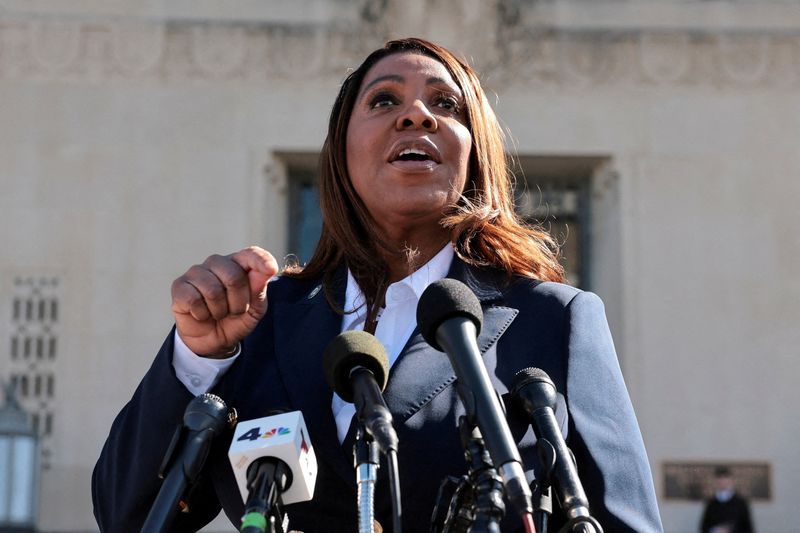
A Manhattan court has dealt a significant setback to Zelle, the digital payment platform owned by a consortium of major American banks, by refusing to dismiss fraud allegations brought by New York Attorney General Letitia James. Justice Phaedra Perry-Bond of the New York state court ruled on Tuesday that James had presented sufficient evidence to proceed with her case, rejecting Zelle's argument that the claims lacked legal merit. The decision represents a critical juncture in what has become an increasingly contentious dispute over the safety standards of popular peer-to-peer payment services, with potential implications for how financial technology companies balance innovation and consumer protection.
At the heart of the dispute lies James's allegation that Zelle's parent company, Early Warning Services, deliberately rushed the platform to market without implementing essential security features. According to the attorney general, this decision was driven by corporate priorities that favoured rapid expansion and user adoption over safeguarding customers from fraud. Justice Perry-Bond found the evidence compelling enough that Early Warning Services, controlled by seven of America's largest banks—Bank of America, Capital One, JPMorgan Chase, PNC, Truist, US Bank, and Wells Fargo—had indeed subordinated consumer protection to business objectives. The judge's characterisation of the company's approach as prioritising "accessibility, convenience, consumer adoption, and market dominance at the expense of consumer safety" provides a framework that James can use to build her case forward.
The scope of the alleged fraud is substantial. James contends that Zelle users have lost more than $1 billion to scammers since the platform's launch in 2017. The types of fraud documented include account hacking with unauthorised transfers, social engineering schemes in which victims are deceived into sending money for non-existent products and services, and impersonation tactics where fraudsters pose as banks, government agencies, or utility companies to extract payment. These schemes have proven remarkably effective, in part because Zelle is widely perceived as a secure service backed by legitimate financial institutions. The platform's marketing materials have emphasised phrases like "peace-of-mind" and promoted the message that Zelle was "backed by the banks, so you know it's secure"—claims that James argues created false expectations about the level of protection available to users.
A particularly damaging element of the case involves Zelle's continued collection of fees from transactions later identified as fraudulent. Justice Perry-Bond noted that Zelle continues to retain and collect revenue from these compromised transactions, creating what some legal analysts view as a perverse incentive structure. This arrangement raises fundamental questions about whether the company had implicit or explicit knowledge of fraudulent activities yet benefited financially regardless. The judge's observation that Zelle was still profiting from fraud transactions in this manner significantly strengthens James's argument that the company had a financial interest in maintaining permissive rather than protective policies.
The timeline of Zelle's adoption of security measures further undermines the company's defence. According to James's filing, Early Warning Services had proposed what are now considered "basic" safeguards as far back as 2019, yet did not implement them until 2023. This four-year delay came only after external pressure mounted from the U.S. Consumer Financial Protection Bureau and members of Congress began their own investigations. The reluctance to implement widely-available security measures despite having knowledge of their necessity for years demonstrates, in James's view, a calculated decision to prioritise growth over safety. This sequence of events provides a chronological roadmap that prosecutors can use to demonstrate intent and negligence.
Zelle's response to the court ruling emphasises the company's track record on fraud prevention. Spokesperson Eric Blankenbaker contended that "reports of fraud and scams committed by bad actors against Zelle users have always been exceptionally low," suggesting that the platform's safety record is superior to public perception. Blankenbaker also accused James of pursuing the litigation for political purposes, arguing that other courts across the country have rejected similar claims as lacking legal foundation. The company's rebuttal strategy appears designed to cast doubt on both the magnitude of the problem and the attorney general's motivations, though the court's decision to allow the case to proceed suggests that these defences did not persuade the judge that dismissal was warranted at this stage.
The legal grounds on which Zelle sought dismissal are also instructive. The company argued that advertising its platform as safe and secure was not inherently misleading, and that it could not be held liable for what it characterised as "passive nonfeasance"—essentially, the argument that failing to implement additional safety measures is not the same as actively causing harm. Justice Perry-Bond's rejection of this reasoning suggests that New York courts may be prepared to hold financial technology platforms to a higher standard of affirmative responsibility for consumer protection, particularly when those platforms actively promote their security credentials to the public. This interpretive shift could have ramifications across the fintech sector far beyond Zelle.
The Zelle platform, which launched in 2017, operates in a competitive landscape that includes similar services such as PayPal's Venmo and Block's Cash App. These platforms have become integral to how millions of Americans conduct informal money transfers, making their security protocols a matter of significant public concern. The prevalence of fraud across the digital payments ecosystem suggests this is not an isolated problem but rather a systemic challenge that regulators and platforms must address collaboratively. For Malaysian readers, the case illuminates broader questions about how digital payment services—increasingly common in Southeast Asia—should balance rapid adoption with robust consumer safeguards.
The legal action by James follows the U.S. Consumer Financial Protection Bureau's decision to drop its own similar enforcement case in March 2025, shortly after President Donald Trump began his second term in office. This withdrawal of federal enforcement pressure may have prompted state-level action, with New York taking the lead in pursuing accountability measures. The contrast between the CFPB's retreat and James's aggressive pursuit suggests that consumer protection enforcement may increasingly fall to individual states rather than federal regulators, a development with significant implications for the consistency and scope of oversight across the financial technology sector. For regional observers, this pattern raises questions about how different jurisdictions might approach emerging digital finance challenges.
The implications of this ruling extend beyond the immediate parties involved. Financial institutions and fintech companies across the United States will likely view the court's decision as a warning that failure to implement available safety measures, combined with marketing claims emphasising security, may expose them to substantial legal liability. The ruling effectively establishes that platforms cannot rely solely on disclaimers or general terms of service to absolve themselves of responsibility for fraudulent activity when they have promoted themselves as secure and safe. This precedent may accelerate industry-wide adoption of more robust fraud prevention mechanisms, though whether such changes will emerge from genuine commitment to consumer protection or merely from legal risk management remains an open question.

