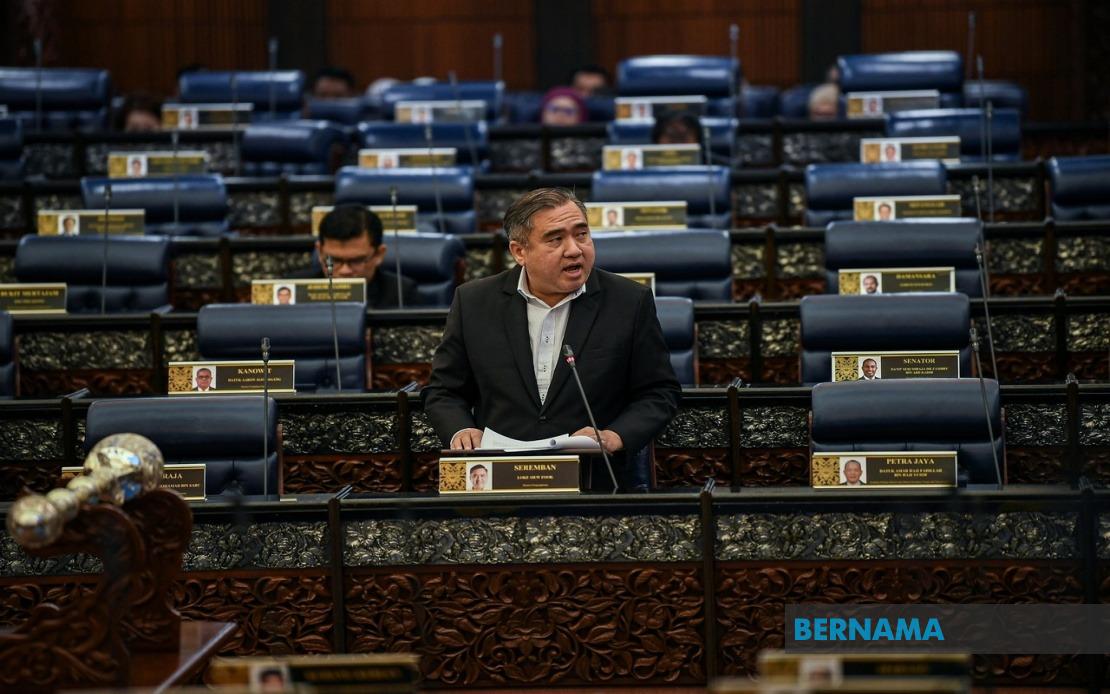
Malaysia is moving to establish dedicated criminal offences specifically targeting illegal street racing and unauthorised speed testing on public roads, a shift that reflects growing frustration with dangerous driving practices that authorities have struggled to prosecute effectively. Transport Minister Anthony Loke tabled the Road Transport (Amendment) Bill 2025 in parliament on June 23, marking a significant hardening of the country's approach to one of the road safety sector's most persistent challenges. The new legislation represents a departure from current enforcement practices, which rely on broader dangerous driving provisions that often prove inadequate for tackling organised racing activities that occur without resulting in accidents or fatalities.
Under the proposed Section 42A of the Road Transport Act 1987, participants in street racing or speed trials would face criminal liability regardless of whether their activities cause collateral damage or injuries. This preventative dimension addresses a fundamental enforcement gap that has long frustrated traffic police and highway safety advocates across the region. Previously, officers could only take action after an incident occurred, allowing dangerous behaviour to persist unchecked. The amendment empowers authorities to intervene at the moment racing or speed testing begins, transforming the legal landscape for what has become a pervasive urban phenomenon, particularly among younger motorists who use social media to organise late-night events on highways and city streets.
First-time offenders convicted under the new provision will face financial penalties ranging from RM2,000 to RM10,000, alongside potential imprisonment for up to two years, or both sanctions applied simultaneously. Loke emphasised that repeat offenders face substantially more severe consequences, with fines escalating to between RM5,000 and RM20,000 and imprisonment extending to five years maximum. This graduated penalty structure acknowledges that habitual racers pose greater public safety threats than those engaged in isolated incidents, creating deterrent effects calibrated to individual culpability levels. The differential approach also recognises that repeat offences may indicate entrenched criminal behaviour requiring incapacitation through extended custodial sentences.
The legislative change addresses what enforcement agencies have characterised as a critical loophole in existing road safety frameworks. Illegal racing cases have traditionally been prosecuted under dangerous driving provisions, which require demonstrating actual hazard creation or harm. Authorities must gather evidence of speeding, reckless manoeuvring, or traffic violations occurring simultaneously with racing activity. This evidentiary burden often proves insurmountable, particularly in cases where participants exercise sufficient caution to avoid detectable violations. The new standalone offence eliminates such technical hurdles by making the act of racing itself the criminal conduct, independent of concurrent traffic law breaches. Loke illustrated this principle by noting that two motorcyclists engaged in competitive speed testing on a public road can now face prosecution immediately, even absent accidents, injuries, or explicit violation of speed limits through the racing activity alone.
The amendment includes companion provisions designed to shield enforcement operations from interference and obstruction. The new Section 110B criminalises actions that impede traffic officers conducting their duties, including physical assault, threats, vehicle obstruction, intimidation, or sharing enforcement intelligence to assist offenders in evading apprehension. Penalties under this section range from RM10,000 to RM50,000 in fines, with imprisonment from one to five years, or both. Critically, obstruction offences would be classified as arrestable, meaning police may detain suspects without warrants. This provision responds to incidents where community members have protected racing participants from authorities, a phenomenon that has undermined enforcement effectiveness in certain localities. By criminalising the dissemination of real-time enforcement information through social media networks, the legislation targets the communication infrastructure that has enabled organised racing communities to coordinate evasion strategies.
The Bill also implements broader adjustments to the penalty architecture governing Road Transport Act violations. Minimum fines, penalties, and compound offer limits for various offences would increase from RM300 to RM500, effective January 1, 2029. This inflationary adjustment reflects the cumulative effects of economic growth and depreciation of currency value over the intervening years. However, Loke clarified that the higher maximum does not mandate automatic RM500 compounds for all breaches. Instead, enforcement officers retain discretion to calibrate individual compound amounts based on offence seriousness, temporal factors, and procedural considerations. This nuanced approach preserves proportionality while enabling authorities to impose more substantial financial consequences for serious or repeated violations.
The timing of the legislation positions Malaysia within broader regional conversations about road safety governance. Countries throughout Southeast Asia have grappled with similar illegal racing phenomena, particularly as motorcycle culture and automotive enthusiasm have expanded among growing middle-class populations. Thailand, Indonesia, and the Philippines have all implemented or strengthened dedicated racing offences in recent years, recognising that conventional traffic enforcement frameworks prove inadequate. Malaysia's amendment aligns the country with these regional trends while reflecting distinctive local conditions, including the prevalence of motorcycle racing in urban areas and the sophisticated use of social media platforms to organise events. The legislative response demonstrates recognition that effective road safety requires addressing behavioural patterns that persist despite existing traffic laws.
Implementation challenges will test the amendment's practical effectiveness once enacted. Police and enforcement agencies will require training to distinguish between illegal racing prosecution under Section 42A versus conventional dangerous driving charges under existing provisions, particularly in borderline scenarios. Prosecutors must develop expertise in presenting evidence of racing intent and activity to courts unfamiliar with specialised motorsport terminology and conduct. Community education campaigns will prove essential to build public awareness of the new offences and penalties. Additionally, authorities must address the social media infrastructure enabling race coordination, potentially requiring cooperation from digital platforms to restrict content facilitating illegal activities. Without comprehensive implementation strategy, the legislation risks becoming merely symbolic rather than transformative.
The broader policy context reveals transport ministry commitment to systematic road safety enhancement beyond reactive responses to dramatic accidents. The compound limit adjustments reflect understanding that financial penalties require periodic updating to maintain deterrent potency against offenders whose circumstances improve over time. Previous studies in Malaysian jurisdictions documented instances where RM300 compounds represented negligible financial burdens for affluent offenders, potentially undermining behavioural modification objectives. The proposed RM500 maximum, while still modest by international standards, represents incremental progress toward penalty structures that meaningfully affect decision-making across income strata. However, advocates for road safety have noted that Malaysia's maximum penalties remain substantially lower than comparable jurisdictions in developed nations, suggesting potential for future enhancements.
For Malaysian readers and regional observers, the amendment signals official recognition that street racing constitutes a legitimate enforcement priority worthy of criminal rather than merely civil or administrative remedies. This elevation of racing from regulatory violation to criminal offence category carries implications for insurance, employment, and individual liberty that extend beyond immediate traffic safety consequences. Persons convicted under Section 42A may face difficulties obtaining certain employment, particularly in roles requiring clean driving records or involving vehicle operation. Insurance implications could prove substantial, as companies typically impose substantial premiums or exclusions for customers with racing convictions. The legislation thus represents a policy decision to deploy criminal law's powerful stigmatising and incapacitating apparatus against an activity that, while genuinely dangerous and socially costly, has previously occupied an ambiguous legal zone between minor regulatory breach and serious criminal wrongdoing.

