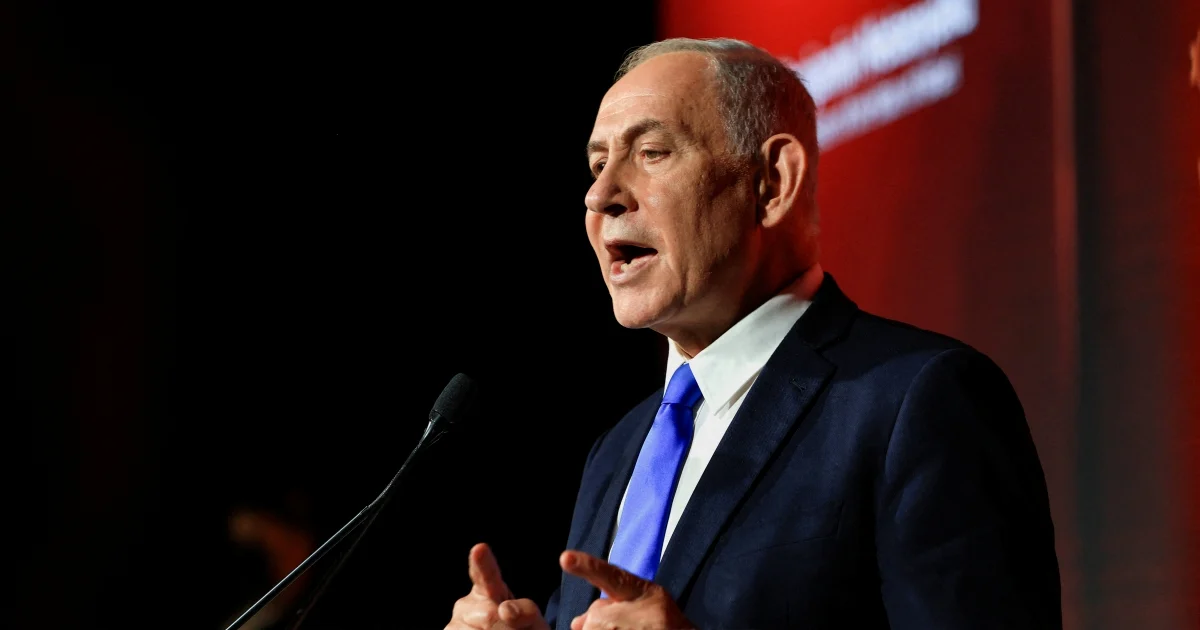
Israeli Prime Minister Benjamin Netanyahu has committed to keeping military forces deployed in southern Lebanon without specifying an end date, declaring they will remain "as long as necessary" to achieve security objectives in the region. The statement underscores Israel's determination to maintain control over the southern Lebanese territory despite international pressure and ongoing diplomatic efforts to broker a lasting ceasefire arrangement.
Netanyahu's remarks came as part of a broader security address that touched upon multiple fronts of concern for Israeli leadership. The Prime Minister coupled his commitment to the Lebanese deployment with a parallel vow to prevent Iran from developing nuclear weapons, signalling that Israel continues to view Iran's nuclear programme as a fundamental existential threat that demands vigilant monitoring and potential military intervention if required.
The decision to maintain an open-ended military presence in southern Lebanon represents a significant escalation in the regional conflict dynamics. Unlike previous Israeli military incursions into Lebanese territory, which were typically framed as temporary operations with defined exit strategies, this deployment appears to signal a longer-term commitment to reshaping security arrangements along Israel's northern border. The absence of any timeline for withdrawal reflects the depth of Israeli security concerns regarding Hezbollah's presence and operational capabilities in the southern Lebanese region.
For Malaysia and other Southeast Asian nations with maritime and trade interests in the Eastern Mediterranean, the implications of prolonged Israeli military operations in Lebanon are considerable. Regional instability translates into elevated risks for commercial shipping lanes and increases the cost of international commerce transiting through the area. Malaysian businesses with investments or trading partnerships in the Levantine region face additional uncertainty regarding supply chain reliability and operational security.
The geopolitical context underlying Netanyahu's statement reveals the complex calculation Israel faces in balancing immediate security requirements against the political costs of indefinite military occupation. Southern Lebanon serves as a critical buffer zone against perceived threats emanating from Hezbollah, a militant organization that Israel considers a primary security challenge. By committing to an extended presence, Netanyahu seeks to demonstrate resolve to both domestic constituencies demanding security and regional actors assessing Israeli capabilities and intentions.
Iran's nuclear programme remains a contentious issue that animates Israeli strategic thinking across multiple domains. Netanyahu's reiteration of Israel's determination to prevent Iranian nuclear advancement reflects the priority this objective commands within Israeli defence policy. The two statements—on Lebanon and on Iran—are deeply interconnected, as Israel perceives Iranian influence extending through Hezbollah into Lebanon, creating a strategic triangle that includes Israel's northern border, Lebanese territory, and Iran's nuclear capabilities.
International diplomatic efforts to establish a ceasefire or reduce Israeli military presence in southern Lebanon face headwinds from Netanyahu's unequivocal language. By avoiding any reference to timelines or conditions that might trigger withdrawal, the Prime Minister has effectively closed off easy exit ramps that international mediators might otherwise pursue. This hardline positioning complicates the negotiating environment and may prolong the cycle of military operations and counter-operations.
The broader Middle Eastern context includes parallel conflicts in Gaza and the West Bank, where Israeli military operations continue to generate international controversy. The southern Lebanon commitment therefore represents one element of a comprehensive Israeli security posture that extends across multiple fronts. This multi-theatre approach demands sustained resource allocation and military personnel deployment, imposing logistical and economic burdens on Israeli society.
For ASEAN nations, particularly those with significant Muslim populations or those seeking to maintain balanced regional relationships, Israel's hardline military posture presents diplomatic challenges. Malaysia, with its substantial Muslim majority and its historical positioning as an advocate for Palestinian rights, may face pressure to take positions on these developments while simultaneously managing its economic interests in regional stability. The tension between political principles and pragmatic engagement remains a defining characteristic of Southeast Asian approaches to Middle Eastern conflicts.
Netanyahu's comments also reflect the political landscape within Israel, where rightwing coalition partners have consistently pressured for harder security stances and opposed territorial concessions or military withdrawals. The Prime Minister's definitive language serves multiple domestic audiences simultaneously, reassuring security-conscious voters while satisfying coalition partners who view military strength as the appropriate response to regional threats.
Regional powers including Egypt, Saudi Arabia, and Turkey have varying interests in the Lebanese situation, but Netanyahu's statement of indefinite commitment complicates diplomatic pathways these nations might pursue. The absence of a clear endpoint for Israeli operations removes incentives for quick negotiated settlements and may entrench military competition across the broader Levantine region.
The implications for Lebanon itself are severe, as prolonged Israeli military operations in the southern portion of the country further strain Lebanese state institutions already weakened by economic collapse, political dysfunction, and the presence of multiple armed groups. Lebanon's government faces diminished capacity to exercise sovereignty over its southern regions while Israeli forces maintain operational control.

