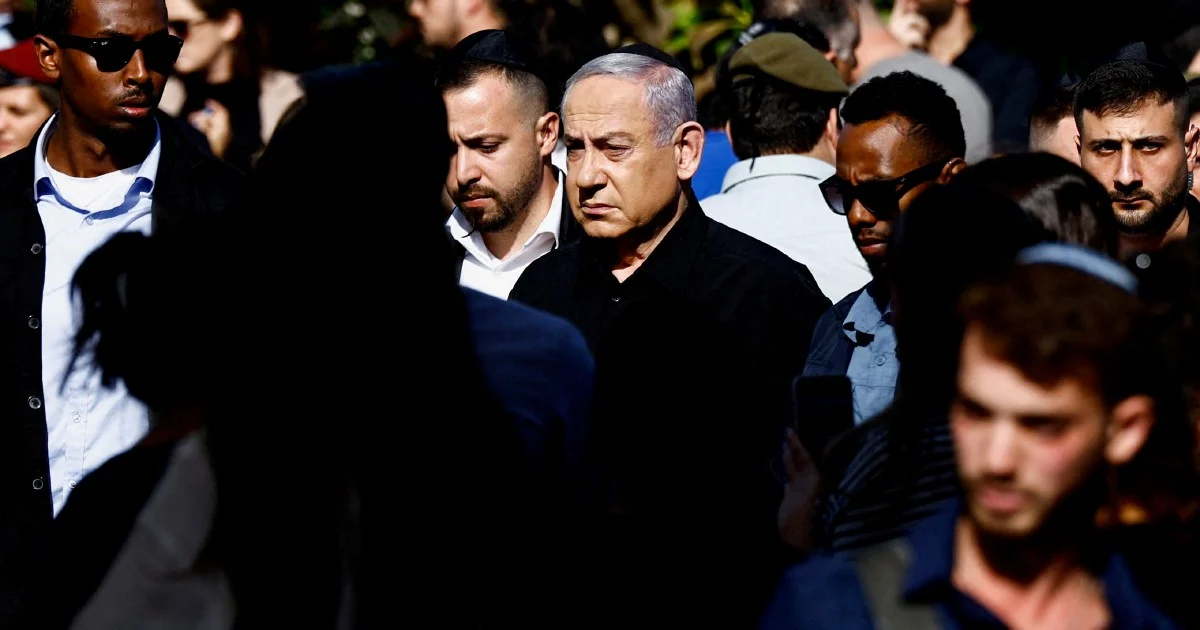
Prime Minister Benjamin Netanyahu has wrapped up his testimony in multiple corruption investigations, the Israeli justice ministry confirmed on Wednesday through official channels. The completion of his evidence-gathering sessions represents a significant milestone in legal proceedings that have shadowed his tenure as the country's leader, even as he manages concurrent foreign policy challenges of considerable consequence.
The timing of Netanyahu's testimony concludes a lengthy process in which he has been required to defend himself against serious allegations of bribery, fraud, and abuse of office spanning multiple cases. These judicial proceedings have persisted through his terms in office, creating an unusual and complex situation in which a sitting prime minister must simultaneously discharge executive responsibilities while undergoing cross-examination in court.
Israel currently faces mounting international pressure regarding negotiations between Washington and Tehran over nuclear matters. The administration's approach to these talks has prompted significant concern within the Israeli government and among many Israeli officials, who perceive the diplomatic framework as fundamentally contrary to their nation's strategic security interests in the Middle East region.
For Malaysian observers and Southeast Asian policymakers, Netanyahu's legal troubles underscore the broader instability affecting the Middle East, a region with which the Association of Southeast Asian Nations maintains substantial economic and diplomatic ties. When major regional powers become consumed by internal political and legal upheaval, it invariably complicates bilateral relationships and multilateral frameworks that depend on stable leadership and predictable policy direction.
The Israeli prime minister's decision to continue in office while facing these trials reflects the structural challenges of his political situation. Domestically, Netanyahu commands sufficient parliamentary support to remain in power despite the legal accusations, even though the court proceedings demand considerable personal time and attention. This duality—maintaining executive authority while defending oneself in court—has become a defining characteristic of modern Israeli politics.
The corruption allegations against Netanyahu involve transactions and decisions made during his earlier terms and his present premiership. Multiple judicial forums have scrutinised his conduct, with prosecutors presenting evidence regarding his alleged receipt of gifts from businessmen and media magnates, as well as accusations that he favoured regulatory decisions benefiting media outlets that provided him favourable coverage. These investigations have proceeded methodically through the Israeli legal system, which maintains institutional independence despite political pressures.
Concurrently, the diplomatic situation regarding Iran presents Netanyahu with arguably his most consequential foreign policy challenge. Israel has consistently maintained that any nuclear agreement that does not permanently eliminate Iran's capacity to develop atomic weapons fails to adequately address existential security concerns. The current Washington-Tehran negotiations have resurfaced these fundamental disagreements about what constitutes acceptable regional security architecture.
For countries throughout Southeast Asia, the stability of Middle Eastern oil supplies and maritime security in critical shipping lanes remain vital economic interests. Escalating tensions in that region, whether driven by nuclear ambitions or leadership instability, create ripple effects across global energy markets and international commerce. Malaysia's own experience with political leadership transitions and judicial processes offers relevant perspective on the complexities of maintaining governance continuity during periods of legal scrutiny.
The conclusion of Netanyahu's courtroom testimony does not signify the end of judicial proceedings against him. Rather, it completes one phase of evidence presentation, with additional legal arguments, deliberations, and potential verdicts still to follow over an extended timeline. The ultimate resolution of these cases may take years to finalise, meaning the legal cloud will likely persist throughout Netanyahu's political future.
Israeli courts have demonstrated their willingness to prosecute sitting leaders, reflecting the country's institutional commitment to rule of law principles, even when politically inconvenient. This stands in contrast to some regional governments where political considerations might override legal procedures. However, the strain of simultaneous executive and legal responsibilities raises questions about governmental effectiveness and decision-making capacity during periods of prolonged judicial scrutiny.
The international dimension of Netanyahu's situation reflects broader trends affecting democratic systems worldwide, where political divisions increasingly manifest through legal and investigative mechanisms. The intersection of Netanyahu's domestic legal battles with his management of critical foreign policy matters, particularly regarding Iran and regional security, creates competing demands on his time and political capital that few leaders have previously navigated.
Looking forward, the resolution of these corruption cases will significantly influence Israeli politics and regional stability. A conviction would likely force Netanyahu from office, triggering a succession process with uncertain implications for existing policies. Conversely, acquittal would vindicate his position but might not entirely resolve the political divisions that have driven the prosecutions. Either outcome carries consequences extending well beyond Israeli borders into the broader Middle Eastern security landscape that affects global interests, including those of Southeast Asian nations dependent on regional stability.

