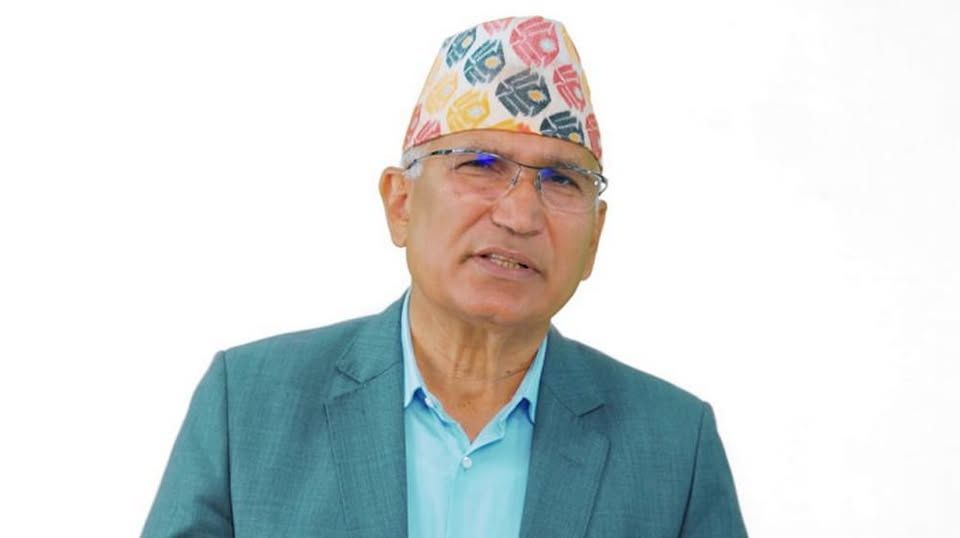
Nepal's police force has arrested Bishnu Paudel, a former finance minister and prominent figure within the country's Communist CPN-UML party, on allegations connected to money laundering. The arrest on Monday represents the latest in a series of corruption-related cases targeting senior ex-officials since anti-corruption protests swept through the nation and forced out the previous government. Nepal Police spokesman Abhi Narayan Kafle confirmed to media outlets that investigators would examine Paudel's involvement in financial crimes, though specific details about the alleged wrongdoing remain under inquiry.
Paudel's position within Nepal's political establishment extends beyond his former role as finance minister. He currently serves as vice-chair of the Communist CPN-UML party, which was led by former Prime Minister KP Sharma Oli before his administration collapsed in the wake of the September uprising. The arrest thus carries symbolic weight in Nepal's ongoing reckoning with corruption at the highest levels of government, suggesting that no political figure—regardless of party affiliation or previous office—remains beyond the reach of law enforcement under the current administration.
The timing of this arrest underscores the anti-corruption agenda that has defined the tenure of Nepal's incumbent Prime Minister Balendra Shah, an unusual political figure who transitioned from a career in entertainment to public office. Shah secured his electoral mandate in March by explicitly promising Nepali citizens that his administration would vigorously pursue graft cases and hold accountable those who had enriched themselves through public office. For many observers, the prosecution of former finance ministers and other high-ranking officials represents a tangible demonstration of that commitment.
However, the arrest has immediately triggered accusations of political vendetta from the opposition. KP Sharma Oli, Shah's predecessor whose party lost parliamentary dominance following the 2025 upheaval, characterised Paudel's detention as a "political stunt" designed to weaken the Communist party rather than pursue genuine justice. Oli further alleged that Shah's government was adopting authoritarian methods in how it wielded state power, a serious charge that suggests deep divisions remain within Nepal's political class despite the apparent momentum for reform.
The Communist party's official response attempted to strike a balance between respecting legal processes and defending its members. Niraj Acharya, the party's publicity chief, stated that CPN-UML leaders were prepared to submit to whatever investigations the law might demand while simultaneously asserting that the government was applying anti-corruption measures selectively against opposition figures. This defensive posture reflects the party's vulnerability following the loss of parliamentary majority and its concerns that the anti-corruption campaign could become weaponised against political opponents.
The broader context for these arrests traces back to the tumultuous 2025 protests that reshaped Nepal's political landscape. What began as public opposition to a temporary social media restriction rapidly evolved into a comprehensive uprising against systemic corruption and economic mismanagement that had plagued the nation for years. The scale of the violence during those demonstrations was devastating, with at least 76 people killed and over 2,500 injured across just two days of clashes between protesters and security forces.
Oli himself faced detention in March, merely one day after Shah assumed office. The former prime minister and his interior minister Ramesh Lekhak were questioned regarding their alleged responsibility for the deadly crackdown on demonstrators. Both men were released after approximately two weeks in custody without formal charges being filed, and both have consistently denied any role in authorising or directing the violent response to the protests. Their release without prosecution raised questions about the strength of evidence against them, even as the government simultaneously pursued other senior figures on graft charges.
Beyond the Paudel case, Nepal's institutional anti-corruption apparatus has been equally active. The Commission for Investigation of Abuse of Authority, the nation's dedicated anti-graft watchdog, has filed formal charges against 16 individuals in connection with a separate and substantial scandal. According to Suresh Neupane, the commission's spokesman, the investigation centres on an alleged embezzlement scheme within the e-passport procurement process, with the financial scale of the alleged wrongdoing reaching approximately 66 million dollars. The inclusion of the passport department chief among the accused suggests systemic corruption within critical government infrastructure.
For Malaysian observers, Nepal's anti-corruption drive offers both cautionary and encouraging lessons. The intensity with which the new government is pursuing cases demonstrates genuine political will to address institutional graft, a challenge that resonates across Southeast Asia where corruption undermines public trust and economic development. However, the opposition's rapid accusations of politically motivated prosecution highlight the delicate balance required when prosecuting powerful figures—the appearance of selectivity or vendetta can undermine the legitimacy of anti-corruption efforts, even when individual cases have genuine merit.
The economic dimensions of corruption in Nepal warrant particular attention from regional analysts. The 2025 protests were substantially fuelled by public anger over a struggling economy, suggesting that citizens increasingly recognise the connection between endemic corruption and their material wellbeing. Finance ministry involvement in money-laundering schemes and massive procurement frauds represent precisely the kind of high-level institutional theft that diverts resources away from infrastructure, healthcare, and education investments that could accelerate development.
Nepal's trajectory over the coming months will indicate whether the anti-corruption campaign can maintain credibility and impartiality as it expands beyond the dramatic high-profile cases. The government faces pressure to demonstrate that prosecutions are driven by evidence and legal principle rather than factional advantage, a test that will determine whether the 2025 uprising succeeds in fundamentally transforming institutional behaviour or merely cycles through another round of elite political turnover without addressing underlying systemic problems.

