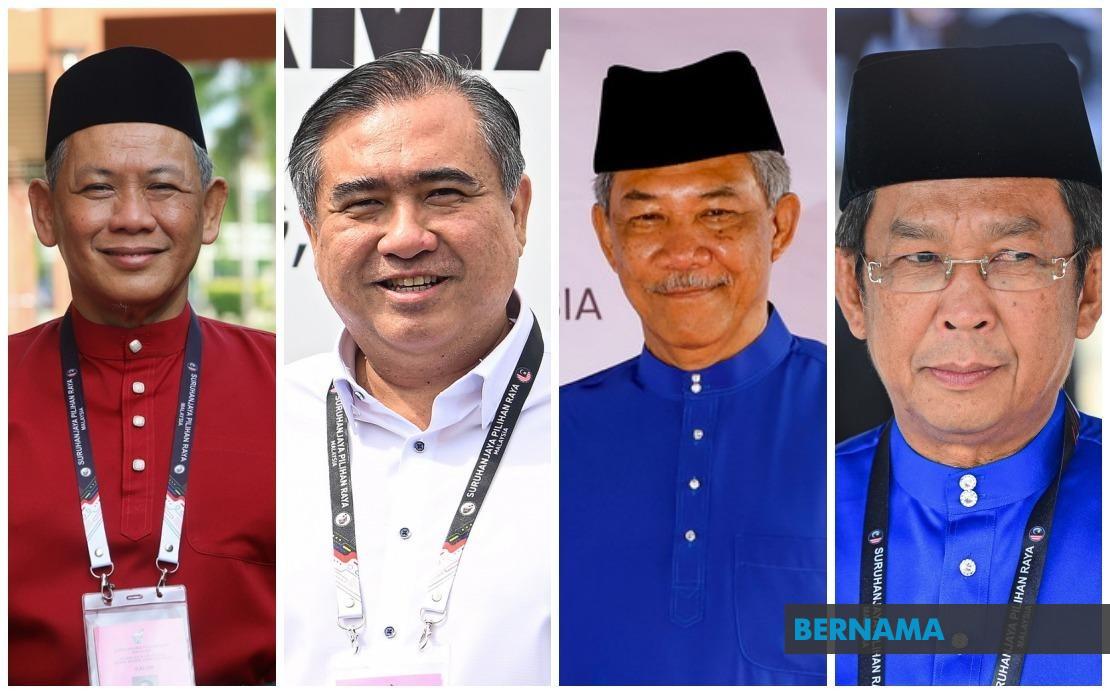
The 16th Negeri Sembilan state election is shaping up as a surprisingly competitive affair, with several major political figures encountering spirited challenges rather than the cakewalks traditionally expected for incumbent heavyweights. Nomination proceedings concluded on July 18, officially launching a two-week campaign period that will culminate in polling on August 1, setting the stage for contests that promise to reshape the state's political landscape.
Cauldron of Negeri Sembilan Pakatan Harapan and caretaker Menteri Besar Datuk Seri Aminuddin Harun finds himself embroiled in a three-way contest for the Linggi seat, a position that would ordinarily appear secure for a sitting chief minister. His opponents are incumbent Datuk Mohd Faizal Ramli of Barisan Nasional and Bersatu candidate Datuk Zamri Md Said, ensuring that even the state's top executive cannot assume an automatic return to office. This triangular battle exemplifies the fragmentation reshaping Malaysian state politics, where historical dominance no longer guarantees electoral success.
The race for Chennah presents another significant challenge to established power. Transport Minister Anthony Loke, who serves as DAP secretary-general, is confronting Negeri Sembilan MCA Youth chief Siow Kong Choon in territory the Democratic Action Party has controlled since 2013. Though DAP has maintained this stronghold for over a decade, the fielding of a younger, well-organised MCA candidate signals Barisan Nasional's intent to recover ground in urban centres traditionally sympathetic to opposition politics.
Rantau emerges as perhaps the most symbolically charged battleground. Datuk Seri Mohamad Hasan, aged 70 and holding the dual positions of Foreign Minister and UMNO deputy president, faces a direct challenge from PH candidate Dr Azizul Hakim Mahdi, who is roughly half his age. Mohamad, popularly known as Tok Mat, has represented Rantau continuously since 2004, accumulating two decades of grassroots connections. Yet the emergence of a formidable challenger suggests that even long-established political machinery cannot automatically withstand generational shifts in voter preferences and the broader electoral currents buffeting the ruling coalition.
Pertang witnesses a three-cornered configuration pitting incumbent Negeri Sembilan UMNO chief Datuk Seri Jalaluddin Alias against PH contestant Mohd Umry Abdul Khois and Bersatu candidate Mohd Faizal Fadli Mohd Idrus. Jalaluddin has held the seat since 2013, yet the presence of two strong challengers demonstrates how Bersatu's persistent third-force positioning complicates traditional binary electoral contests across Malaysia's heartland.
The Nilai constituency presents an unusually crowded field, with five candidates competing for a single seat. DAP national deputy chairman J. Arul Kumar, standing as the PH incumbent, faces opposition from Datuk Lai Chien Kong of Barisan Nasional, Bersatu's Datuk V. Saravana Kumar, independent candidates including Berjasa's Zamani Ibrahim and Omar Mohd Isa. This fragmentation raises intriguing questions about vote-splitting dynamics and whether traditional party affiliations retain sufficient voter loyalty to guarantee victory when faced with multiple credible alternatives.
Sri Tanjung similarly showcases electoral complexity, featuring a five-way battle where PH incumbent Dr G. Rajassekaran confronts candidates from Barisan Nasional and Bersatu alongside two independent contestants. Notably, Bersatu candidate Leevineshwaraan Murugan, at merely 23 years of age, ranks as the state election's youngest aspirant, embodying younger generation's increasing willingness to challenge established political hierarchies across Malaysian politics.
The overall candidate distribution reveals interesting strategic positioning ahead of polling day. Pakatan Harapan has fielded the maximum allocation of 36 candidates for the 36 available seats, signalling comprehensive territorial ambitions. Barisan Nasional presents 25 candidates, suggesting selective contestation rather than blanket coverage. Bersatu fields 24 candidates, demonstrating substantial organisational reach despite its relative youth as a political movement. Perikatan Nasional contributes 11 candidates, while smaller parties including Berjasa, ASLI, and PSM collectively add four candidates, alongside four independent aspirants. This configuration encompasses 103 total candidates competing for legislative representation.
The electoral landscape's fragmentation reflects deeper shifts within Malaysian political alignment. Bersatu's persistent third-force positioning, illustrated across multiple constituencies including Linggi, Pertang, and Nilai, indicates the party has successfully established itself as a genuine electoral competitor rather than ephemeral political entity. This fragmentation potentially benefits Barisan Nasional in constituencies where opposition votes divide between Pakatan Harapan and Bersatu, yet simultaneously creates opportunities for PH victories in areas where BN support remains divided among multiple candidates.
Early voting is scheduled for July 28, enabling certain categories of voters to cast ballots prior to the main polling date of August 1. This two-stage voting process reflects Malaysia's increasingly sophisticated electoral administration, though it also means campaigns must sustain momentum across an extended period rather than culminating in single-day electoral climax.
For Malaysian observers, this election carries significance beyond Negeri Sembilan's immediate political composition. The state's results will provide meaningful indicators regarding federal-level electoral trends, particularly concerning whether incumbent coalition fortunes continue deteriorating or whether recent grassroots consolidation efforts have stabilised support. The establishment of competitive contests involving major political figures suggests voters across Malaysia's heartland increasingly view electoral choices as genuine contests with unpredictable outcomes, a psychological shift that potentially advantages challengers and complicates incumbent strategising heading toward future national elections.

