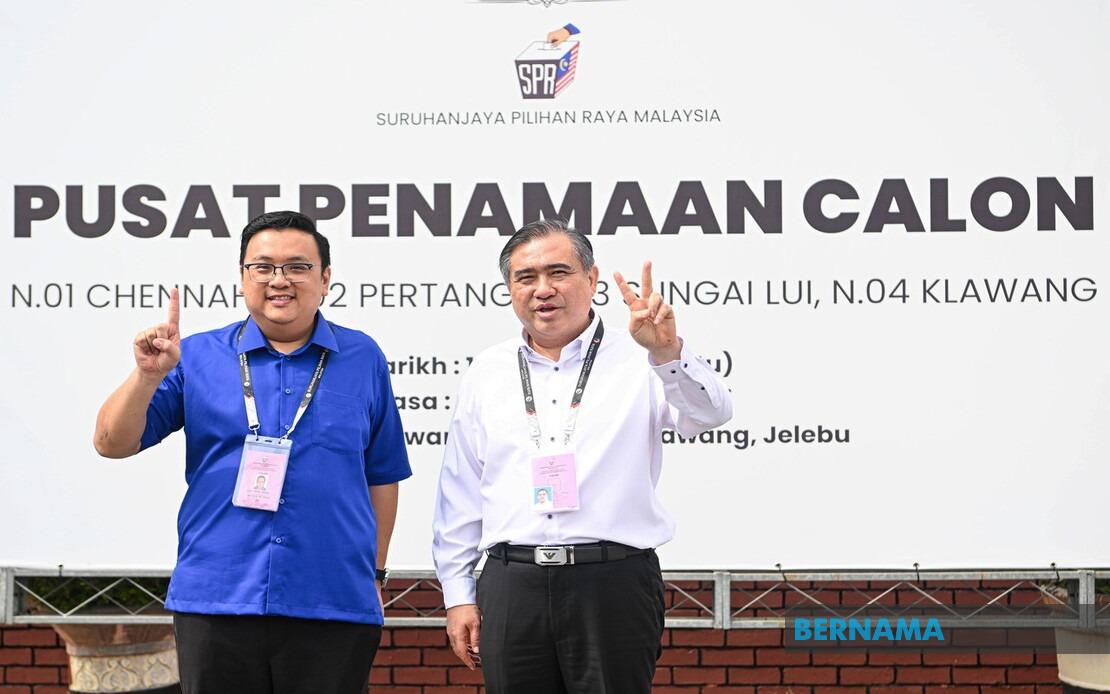
The 16th Negeri Sembilan State Election will crystallise the country's evolving political fragmentation, with senior government figures embroiled in contests that stretch far beyond traditional two-party battles. The shift represents a fundamental reorganisation of electoral competition in the state, where the emergence of splinter parties and independent candidates has reshaped the arithmetic of political victory. Voters will choose from an unprecedented variety of candidate combinations across the 36 seats, reflecting broader instability in Malaysia's coalition politics.
The arithmetic tells a striking story about transformation. Whereas 2023 saw only seven three-cornered races out of 36 constituencies, this election will feature 21 such contests—a threefold increase. Conversely, straight fights between two opponents have collapsed from 27 to just 11, underlining how consensus candidates and united opposition have fractured. Additionally, two constituencies will host four-way battles and another two will see five-way scrambles, a phenomenon that never occurred in the previous cycle. This restructuring suggests that political polarisation has given way to competitive fragmentation, potentially complicating vote-splitting scenarios and outcome prediction.
Several high-profile contests illustrate the stakes and personality-driven nature of the campaign. In Chennah, the DAP secretary-general and Transport Minister Anthony Loke will contest as the Pakatan Harapan standard-bearer against Barisan Nasional's Siow Kong Choon in a straight contest. Simultaneously, in Rantau, the UMNO deputy president and Foreign Minister Datuk Seri Mohamad Hasan will defend his seat for BN against PKR's Dr Azizul Hakim Mahdi, presenting voters with a choice between two cabinet-level figures. These races spotlight how ministerial positions remain contested territory, with national-level accountability factors potentially influencing local voting behaviour.
The three-cornered contests showcase how rival coalitions now face challenges from breakaway and independent forces. In Linggi, Pakatan Harapan's Negeri Sembilan Menteri Besar Datuk Seri Aminuddin Harun confronts both a Barisan Nasional challenger in Datuk Mohd Faizal Ramli and Zamri Md Said from Bersatu, the Malay-Muslim party that broke from Perikatan Nasional's original formation. Similarly, the Pertang seat pits BN's Datuk Seri Jalaluddin Alias against a PH candidate and a Bersatu nominee, illustrating how Bersatu has become a systematic disruptive force across multiple seats. These patterns suggest Bersatu is mounting an aggressive attempt to reclaim ground in Negeri Sembilan after earlier coalition realignments.
Family legacies intersect with political dealignment in the Klawang race, where Danni Rais, the son of veteran politician Tan Sri Rais Yatim, will represent Perikatan Nasional against incumbent Datuk Bakri Sawir of PH and Muhammad Adib Musa from Bersatu. The decision to field a Perikatan Nasional candidate in this seat represents an assertion of the coalition's presence in Negeri Sembilan, while the three-way split signals that even incumbency offers no automatic protection against fragmented opposition. This race exemplifies how generational shifts and party realignments collide within constituencies.
Two constituencies will witness unprecedented four-way contests, reflecting the depth of political subdivision. In Jeram Padang, incumbent Datuk Mohd Zaidy Abdul Kadir faces challenges from PH's G. Manivannan, Bersatu's R. Sri Sanjeevan, and Parti Orang Asli Malaysia's Dayana Dal, signalling the emergence of identity-based parties in electoral competition. The Rahang seat presents another four-candidate battle featuring PH's sitting member Siaw Meow Keong against Barisan Nasional's Yap Siok Moy, Parti Sosialis Malaysia's S. Thinagaran, and Bersatu's Tang Jay San. The inclusion of explicitly socialist and indigenous-focused parties indicates that ideological and communal constituencies have begun mobilising separately from traditional bloc politics.
The two five-cornered contests represent the extreme fragmentation of voter choice. In Nilai, incumbent J. Arul Kumar of PH must contend with Barisan Nasional's Lai Chien Kong, Bersatu's Datuk V. Saravana Kumar, Berjasa's Zamani Ibrahim, and independent Omar Mohd Isa, creating a scenario where the winning candidate may secure office with a minority of votes. Sri Tanjung mirrors this complexity with incumbent Datuk Dr G. Rajasekaran facing Barisan Nasional's A. Achuthan, Bersatu's M. Leevineshwaraan, and two independent candidates—Datuk A. Saravanan and Islah Wahyudi Zainudin. The proliferation of independent candidates, particularly in these multi-cornered races, suggests that local grievances and personal followings are driving candidacies outside formal party structures.
The Electoral Commission has scheduled early voting for July 28, with polling day set for August 1. A total of 889,490 electors are eligible to participate, comprising 867,151 ordinary voters alongside 16,884 military personnel and their spouses and 5,455 police officers. This electorate size and composition means that military and security force voting patterns could assume greater significance in tightly fragmented contests. The compressed campaign timeline may disadvantage candidates seeking to build awareness across multiple-candidate fields, particularly those representing smaller or newer political entities.
For Malaysian and Southeast Asian observers, Negeri Sembilan's election offers a microcosm of democratic volatility in established electoral systems. The surge in multi-cornered contests suggests that traditional two-coalition frameworks have become insufficient to contain Malaysia's political tensions, with defections, identity-based mobilisation, and personality-driven independent candidacies fracturing the landscape. The prevalence of three-way and higher-order contests indicates that plurality victory rules combined with coalition fragmentation may produce winners commanding only modest voter mandates. This dynamic raises questions about post-election coalitional arithmetic, particularly if no bloc achieves a clear majority. As Southeast Asia observes Malaysia's institutional stability, the Negeri Sembilan election will demonstrate whether electoral systems designed for two-party competition can accommodate sustained multi-polar contests without precipitating governance crises or legitimacy challenges.

