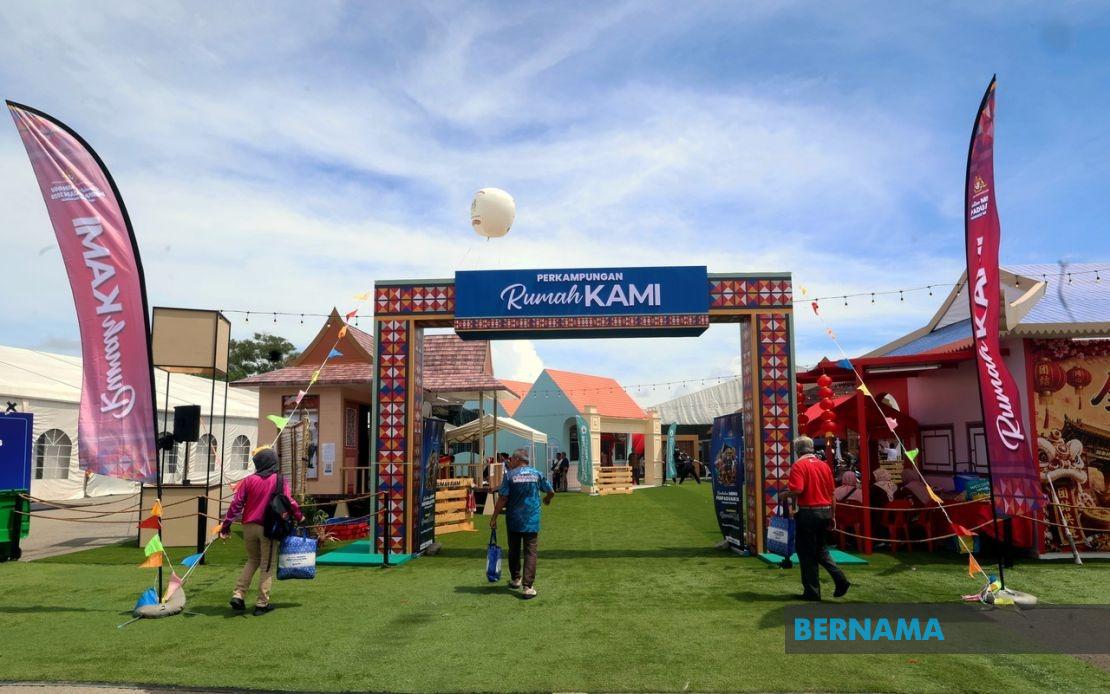
Kota Kinabalu's National Unity Week celebration concluded this month with unprecedented visitor numbers, drawing 284,448 people between June 11 and 14 and establishing a new benchmark since the programme's inception in 2023. National Unity Minister Datuk Aaron Ago Dagang attributed the remarkable turnout to intensifying public recognition of Malaysia's multicultural tapestry and the collective identity that binds the nation together across its varied communities.
The minister's assessment suggests a broader societal shift towards valuing the country's inherent diversity as a source of strength rather than division. The attendance figures represent not merely statistical success but indicate genuine grassroots engagement with Malaysia's cultural foundations. This development carries particular significance in the Southeast Asian context, where questions of national cohesion frequently dominate policy discussions and public discourse. Malaysia's ability to activate popular interest in unity through experiential cultural programming offers valuable lessons for neighbouring nations navigating similar demographic and social complexities.
Three exhibition zones emerged as the primary attractions sustaining visitor engagement throughout the four-day period. The Ethnic Village functioned as the centrepiece, presenting immersive representations of daily life across Malaysia's principal communities and allowing visitors direct exposure to authentic cultural practices and traditions. This approach moved beyond passive observation, creating interactive spaces where understanding could develop through participation rather than mere display.
The Ethnic Houses component proved equally compelling, dedicating dedicated exhibition areas to the distinctive architectural, artistic and social heritage of communities including the Bajau, Melanau, Banjar, Kedayan and Portuguese populations. By isolating and celebrating individual community identities within a unified framework, the exhibition reinforced the principle that national strength emerges precisely from such diversity rather than homogenisation. This curatorial strategy acknowledges that authentic unity acknowledges and respects particularities rather than subsuming them.
Particularly noteworthy was the strong resonance of the Negara Bangsa and Raja Kita Exhibition among younger visitors. The minister specifically highlighted this exhibition's capacity to engage youth audiences with Malaysian historical narratives and national consciousness. Youth engagement represents a critical variable in sustainability of national unity initiatives, as younger generations must internalise these values through their formative years to perpetuate them. The exhibition's apparent success in capturing young people's interest suggests that appropriately designed historical programming can compete effectively with competing entertainments and information sources for attention and engagement.
The Ministry of National Unity's commitment to establishing National Unity Week as an annual fixture reflects institutional recognition that unity building demands regular reinforcement and structured opportunities for cross-cultural encounter. Government statements typically emphasise singular achievements, yet Datuk Aaron Ago Dagang's reflection that unity cannot emerge from episodic interventions demonstrates more sophisticated understanding of social cohesion dynamics. This perspective acknowledges that cultural attitudes and intercommunal relationships require sustained cultivation across years and generations, not momentary mobilisation around commemorative events.
The ministry's pledge to expand platforms for Malaysian interaction and mutual understanding implies planned expansion beyond the annual week-long celebration. Such multiplication of unity-focused programming creates multiple entry points for engagement across different demographic segments, geographic locations and demographic groups. Distributed programming potentially reaches beyond the 284,448 individuals able to attend the Kota Kinabalu gathering, extending influence to communities in peninsular Malaysia, Sarawak and other population centres.
The initiative aligns explicitly with the MADANI Government's stated vision of constructing national unity transcending conventional boundaries of race, religion and region. This articulated framework provides political legitimacy and budgetary support for the Ministry of National Unity's operations and expansion plans. Within Malaysia's political landscape, such explicit ministerial focus on unity and the allocation of resources to cultural programming reflects particular governance priorities and represents a deliberate policy choice with resource implications.
Datuk Aaron Ago Dagang's emphasis on multi-stakeholder participation—encompassing government, private sector, civil society organisations and individual Malaysians—distributes responsibility for unity building across societal structures. This formulation avoids positioning unity as a purely governmental responsibility, instead framing it as a collective endeavour requiring contributions from diverse institutional actors. In practical terms, private sector involvement in sponsoring or organising such events generates resources that government budgets alone might not accommodate, whilst civil society participation ensures grassroots relevance and community authenticity that purely state-managed programming might struggle to achieve.
For Malaysian policymakers and civil society leaders, the Kota Kinabalu results demonstrate demonstrated appetite for cultural programming centred on national identity and diversity. The record attendance suggests that Malaysians across different backgrounds and age groups value opportunities to encounter and learn from other communities' lived experiences and heritage. This appetite creates space for expanding similar initiatives throughout the country, adapting programming to local contexts whilst maintaining core emphasis on understanding Malaysia's multicultural foundations and shared national project.
The international dimension warrants consideration as well. Malaysia's success in mobilising substantial populations around unity-themed cultural programming presents a case study of potential interest to other Southeast Asian nations navigating plural societies and questions of national integration. Singapore, Indonesia, Thailand and Philippines each confront analogous challenges of maintaining social cohesion amidst diversity, and Malaysia's experiential programming model potentially offers transferable insights about effective cultural diplomacy and domestic social engagement strategies that transcend Malaysian particularities.