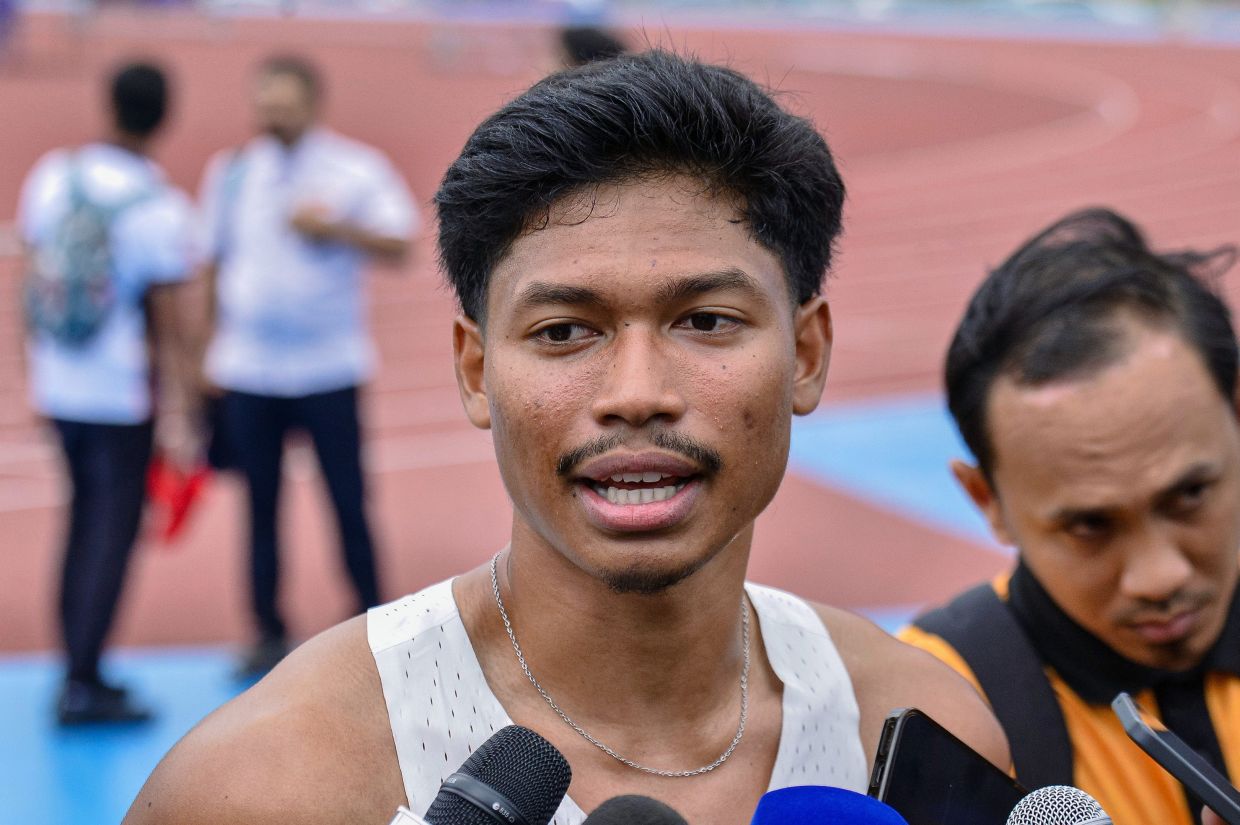
National sprinter Mohd Azeem Fahmi is bringing his athletic ambitions back home, having committed to pursuing a master's degree at Universiti Malaya, the country's oldest and most prestigious university. The decision marks a significant moment in the career trajectory of one of Malaysia's brightest young talents in track and field, who has spent the past two years sharpening his competitive skills in the United States.
Azeem's return to Malaysian shores comes after he successfully completed his undergraduate education at Auburn University in Alabama, where he studied exercise physiology and kinesiology under the tutelage of renowned coach Ken Harnden. His three-year stint abroad, which began in January 2023, provided valuable exposure to world-class training methodologies and competitive standards that have clearly contributed to his emerging dominance in regional athletics. The 21-year-old's decision to complete his postgraduate qualification domestically signals confidence in UM's academic and athletic infrastructure.
The university's commitment to supporting Azeem's academic journey became evident during his recent courtesy visit to campus, where he was formally received by Vice-Chancellor Prof Datuk Seri Dr Noor Azuan Abu Osman. The high-level reception underscores UM's strategic investment in nurturing student-athletes who balance elite competition with rigorous scholarly pursuits. Also participating in the meeting were Associate Prof Dr Zulkarnain Jaafar, dean of the Faculty of Sports and Exercise Sciences, and Afizal Abu Othman, the university's Sports Centre director, indicating institutional alignment across academic and athletic divisions.
The vice-chancellor's public commitment to facilitating the optimal pathway for Azeem to pursue his master's degree reflects a broader institutional philosophy at UM regarding athlete development. This holistic approach—enabling competitors to advance their qualifications while maintaining training intensity—has proven crucial in retaining homegrown talent who might otherwise relocate permanently to overseas institutions. For a nation increasingly invested in developing regional athletic excellence, such institutional support mechanisms remain vital.
UM's track record in producing elite athletes who successfully navigate the student-sportsperson balancing act is well established. The university counts among its distinguished alumni several diving champions, most notably Datuk Pandelela Rinong, whose achievements on the international stage have brought considerable prestige to the institution. Ooi Tze Liang and Bryan Nickson Lomas represent similar success stories in the diving disciplines, having leveraged UM's facilities and support systems while pursuing their competitive objectives. Beyond diving, former national women's doubles shuttler Vivian Hoo exemplifies how UM accommodates diverse athletic disciplines, having graduated with a Bachelor of Sports Science degree in 2019 while maintaining her elite shuttling career.
Azeem's immediate competitive form provides strong validation for this educational investment. His recent performance at the Malaysian Open, held at Universiti Putra Malaysia's Serdang campus, demonstrated the potency of his preparation and the effectiveness of the coaching environment he experienced in Alabama. Winning gold in the men's 100 metres sprint alongside claiming a relay gold medal as part of the four-by-100 metres team—competing alongside Danish Iftikhar Mohd Roslee, Pengiran Aidil Auf Hajam, and Mohd Armin Zahryl—showcased both individual excellence and his capacity to contribute to team success, qualities essential for national representation.
The relay victory holds particular strategic significance for Malaysian athletics, as the four-by-100 metres event remains a critical discipline in international competition and regional championships. Azeem's integration into a high-performing relay squad suggests the emergence of a cohesive sprinting nucleus capable of competing credibly at Southeast Asian and Commonwealth levels. His demonstrated consistency across both individual and relay formats indicates technical soundness and the ability to perform under pressure—attributes that distinguish genuinely elite athletes from merely competent ones.
For Malaysian sports development more broadly, Azeem's trajectory illustrates an evolving pattern wherein young athletes train internationally to access superior coaching and competitive standards, then return home to consolidate their achievements and contribute to the domestic competitive environment. This circular model differs markedly from previous generations, where overseas relocation often meant permanent departure from Malaysian sporting structures. The availability of quality postgraduate facilities at home reduces the incentive for such permanent emigration, potentially creating a virtuous cycle wherein returning athletes elevate standards for subsequent generations.
The pursuit of a master's degree in a discipline directly relevant to athletic performance—whether exercise physiology or sports science—has become increasingly common among elite competitors. Such qualifications provide intellectual foundations for understanding biomechanics, training adaptation, and performance optimization, knowledge that can extend athletic careers and facilitate transitions into coaching, sports science, or management roles post-competition. Azeem's commitment to this pathway suggests strategic career planning beyond his immediate athletic prime.
UM's position as Malaysia's leading university and its established excellence in sports-related disciplines make it an obvious institutional choice for an athlete of Azeem's calibre. The Faculty of Sports and Exercise Sciences offers research and teaching resources comparable to leading international programmes, while enabling students to remain embedded within Malaysian sporting communities. For national selectors and federation administrators, Azeem's presence on campus will facilitate ongoing assessment and integration into medium-term athletic planning and Olympic preparation cycles.

