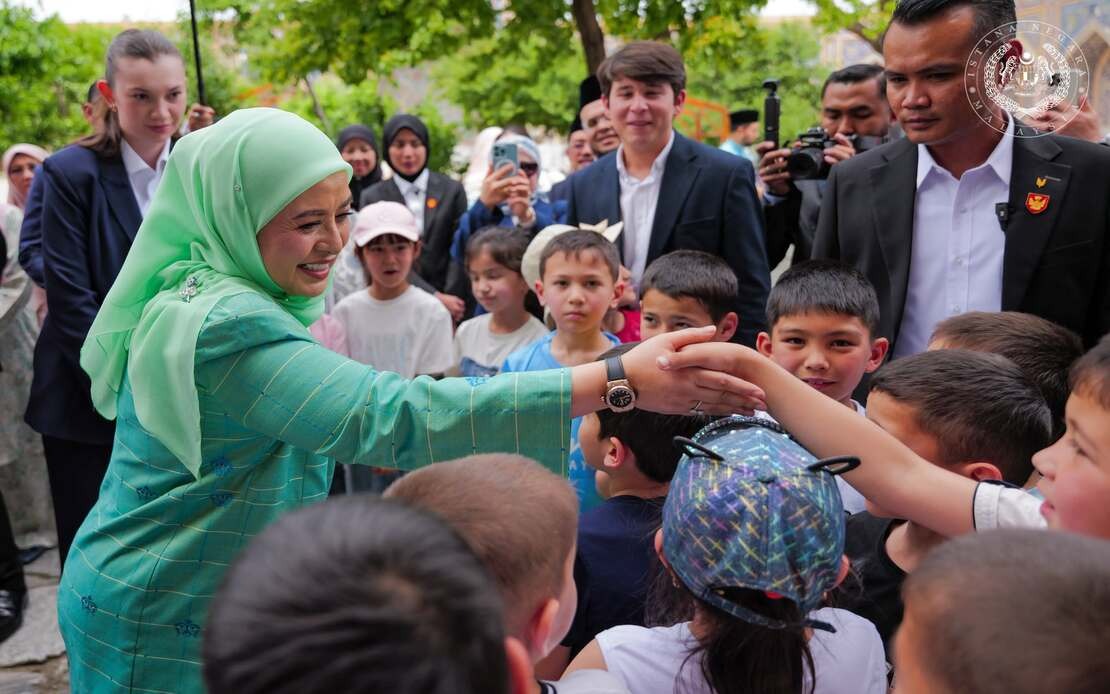
Her Majesty Raja Zarith Sofiah, Queen of Malaysia, has reaffirmed that mutual respect stands as a cornerstone of the harmony Malaysians have consistently practised throughout their shared history. Speaking through an official statement released on the social media platform of Sultan Ibrahim Sultan Iskandar, the Queen highlighted how this foundational value has directly strengthened the nation's unity and overall well-being across generations.
The monarchy's emphasis on respect comes at a moment when societies worldwide grapple with polarisation and fractured civic bonds. For Malaysia, a nation built explicitly on the principle of diversity within a constitutional framework, the Queen's message carries particular significance. Her reminder that courtesy and mutual regard must permeate both domestic life and international relations speaks to the ongoing challenge of maintaining social cohesion in an increasingly complex world. By positioning respect not as an aspirational ideal but as an established Malaysian characteristic, the Queen reinforces a collective identity rooted in behavioural norms rather than ethnic or religious uniformity.
The Queen's statement carried particular resonance through its invocation of Islamic teachings on ethical conduct. Her Majesty specifically referenced a hadith traditionally documented by Al-Bukhari, in which the Prophet Muhammad, as narrated through Abu Hurairah RA, articulated three moral imperatives. The teachings stipulate that any believer who truly maintains faith in Allah and the Day of Judgment must refrain from harming neighbours, must extend proper honour to guests, and must guard their speech by either speaking kindly or maintaining silence. This scriptural grounding demonstrates how religious principles and secular notions of social harmony need not exist in tension within Malaysia's pluralistic framework.
The particular hadith selected deserves closer examination for its contemporary relevance. The Prophet's emphasis on neighbour relations transcends religious boundaries—it articulates a universal principle of non-maleficence that underpins functional society. In the Malaysian context, where Malays, Chinese, Indians, indigenous communities, and numerous immigrant populations inhabit shared urban and rural spaces, the concept of honouring one's neighbour becomes a practical necessity rather than merely spiritual aspiration. Similarly, the injunction concerning guest relations takes on added weight in a nation that has historically positioned itself as a welcoming destination for international commerce, tourism, and skilled migration.
The Queen's emphasis on guarding one's speech through either constructive communication or deliberate silence offers particular guidance in an age of unfiltered digital discourse. Southeast Asian societies have witnessed how social media platforms can amplify divisive rhetoric and casual cruelty. The teaching that silence constitutes an acceptable and honourable response to situations where positive contribution is impossible provides an ethical framework that extends beyond traditional conflict-avoidance stereotypes into genuine moral reasoning. It suggests that restraint itself represents an active choice requiring discipline and maturity.
To illustrate the practical manifestation of these principles, the Queen's office highlighted a February encounter at Istana Negara's main entrance. During this visit, Her Majesty engaged warmly with over one hundred international tourists representing diverse nationalities and backgrounds. This unscripted interaction demonstrated graciousness extending across cultural and linguistic boundaries, embodying the very respect and hospitality the Queen advocates in principle. The documented warmth of these exchanges underscored that such values translate into observable behaviour rather than remaining mere rhetoric, and that the monarchy itself models the conduct it promotes.
This incident at the palace gates carries symbolic weight beyond its surface pleasantness. It suggests that Malaysia's commitment to mutual respect operates not merely as written policy or ceremonial obligation, but as lived practice enacted by national institutions and their representatives. When the nation's Queen chooses to engage extensively with foreign visitors—demonstrating patience, interest, and dignity across potential language and cultural barriers—she performatively validates the inclusive framework she advocates verbally. For Malaysian citizens and international observers alike, such moments reinforce the possibility of genuine intercultural connection within institutional contexts.
The broader context of these statements reflects ongoing efforts by Malaysia's leadership to reinforce social cohesion amid various pressures. Religious considerations, economic disparities, political competition, and generational shifts in values all create centrifugal forces within any diverse society. By anchoring calls for mutual respect explicitly in Islamic theology rather than secular humanist language, the Queen positions this value as consonant with the religious identity of Malaysia's Muslim-majority population while remaining accessible to the nation's substantial non-Muslim communities. This rhetorical strategy avoids false choices between Islamic identity and pluralistic practice.
For Malaysia's business community and international partners, such consistent emphasis on respect and courteous conduct matters considerably. Regional stability and commercial confidence depend partly on predictable social norms and institutional reliability. When the head of state articulates these values through traditional religious sources that command spiritual authority among the majority population, she strengthens the normative infrastructure that enables economic activity and diplomatic exchange. International investors and traders benefit from societies where respect for contractual obligations, honest dealing, and civil conduct are woven into the cultural fabric rather than imposed through enforcement alone.
The Queen's intervention in this discourse also reflects the particular role that constitutional monarchies can play in multicultural democracies. Precisely because the monarchy stands somewhat removed from partisan political competition, royal statements on shared values carry different weight than similar messages from elected politicians. The Queen can appeal to foundational principles that transcend particular policy disagreements or electoral cycles. Her emphasis on respect and harmony therefore functions as a stabilising force, reminding all constituencies of common ground even amid legitimate disagreement on specific issues.
Looking forward, the question emerges whether rhetorical reinforcement of these values, however eloquently expressed and symbolically demonstrated, suffices to meet contemporary challenges. Digital platforms, generational shifts in social behaviour, and polarising political rhetoric in various Southeast Asian nations suggest that articulating values remains necessary but potentially insufficient without accompanying institutional support, education reform, and consistent modelling at all societal levels. The Queen's words provide important moral signposting, yet their ultimate impact depends on broader society choosing to translate respect from ideal into daily practice across spheres from family life through commercial dealings to civic participation.

