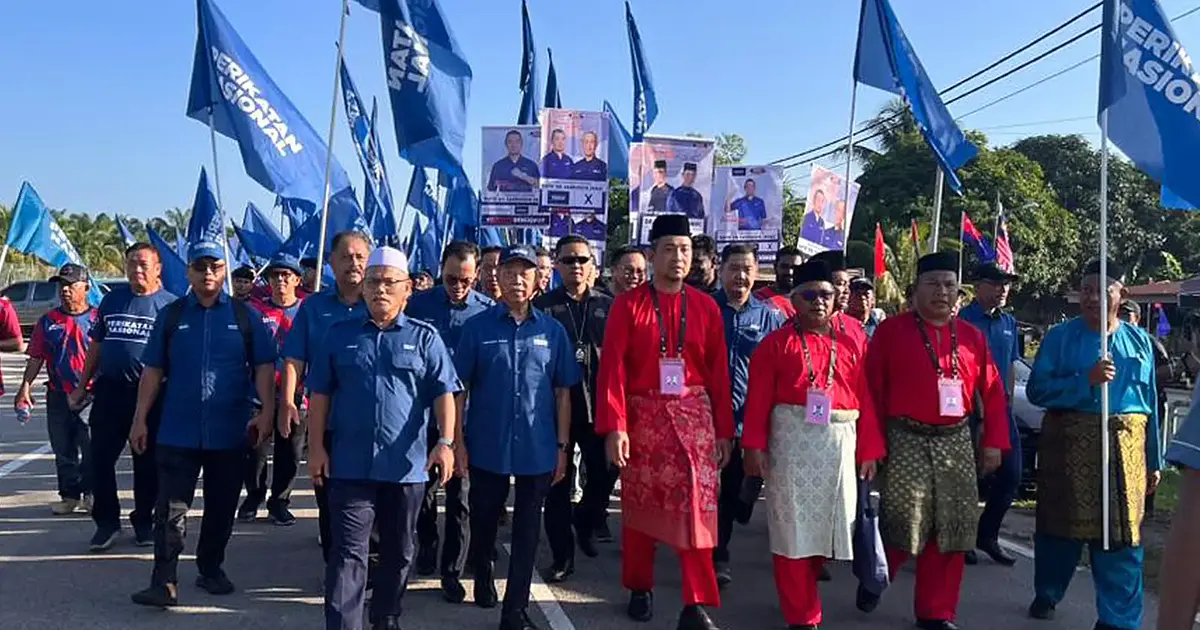
Muhyiddin Yassin, the former Prime Minister and Perikatan Nasional chairperson, threw his weight behind Bersatu's campaign in Bukit Kepong, marshalling hundreds of coalition supporters in a high-profile display of unity ahead of what is shaping up to be a closely contested state election. The rally underscores the PN's determination to consolidate support across key battleground constituencies as Malaysia's political landscape continues to shift following recent electoral developments.
Dr Sahruddin Jamal, the incumbent two-term assemblyman representing Bukit Kepong, carries Bersatu's hopes for retaining the seat. His track record spanning two consecutive terms suggests he has cultivated meaningful grassroots support within the constituency, though the current political environment presents both opportunities and challenges for established representatives seeking to maintain their positions. The decision to deploy Muhyiddin's presence signals that PN strategists view Bukit Kepong as strategically significant enough to warrant intervention from the coalition's highest-ranking figures.
The gathering of hundreds of PN supporters reflects broader organisational momentum within the coalition structure. Perikatan Nasional has positioned itself as a political force distinct from both Barisan Nasional and Pakatan Harapan, and localised campaigns like the Bukit Kepong effort serve to test and reinforce party machinery at the grassroots level. Such mobilisation exercises provide valuable intelligence about voter sentiment while simultaneously generating media visibility that extends beyond the immediate constituency.
Bukit Kepong's electoral significance within the broader state context remains an important consideration for understanding why coalition leadership would invest time and resources in this particular race. The constituency's demographic composition, economic profile, and historical voting patterns all influence strategic calculations about where resources should be deployed during campaign seasons. The fact that PN felt compelled to organise a major rally there suggests they view the seat as either vulnerable or strategically important for maintaining coalition morale and momentum.
Muhyiddin's personal involvement carries symbolic weight within PN circles. As the coalition's formal chair and a former Prime Minister, his attendance lends gravitas to Dr Sahruddin's candidacy while also serving to energise the party faithful. In Malaysian politics, the presence of senior national figures at local campaign events often translates into improved morale among party workers and amplified media coverage that reaches beyond the immediate audience in attendance.
For Dr Sahruddin specifically, securing the backing of PN's top leadership provides both a campaign asset and implicit organisational support that can translate into ground-level advantages. An incumbent assemblymen seeking re-election benefits from signals of party confidence and senior-level endorsement, as these factors influence both voter perceptions and party volunteer commitment. The public show of support also sends a message to other PN members and potential supporters that Bukit Kepong is a priority constituency deserving serious effort.
The timing of such rallies within the broader electoral calendar matters considerably. Political campaigns build momentum through a series of escalating activities, with major figure appearances typically scheduled strategically to maximise impact during critical phases of voter engagement. The decision to hold this rally now suggests PN believes the campaign timeline is moving into a phase where high-visibility events can meaningfully influence voter behaviour.
For Malaysia's broader political landscape, the PN's continued efforts to establish itself as a viable third force alongside BN and PH remain ongoing. State-level elections and by-elections provide laboratories for testing campaign strategies, organisational effectiveness, and messaging approaches that may be refined before larger federal contests. Success in constituency-level races builds a foundation of legitimacy and demonstrated electoral capability that strengthens a coalition's hand in national negotiations.
The commitment of significant supporter numbers to a single constituency rally also reflects the organisational health of Bersatu within the state. Mobilising hundreds of people requires functional party structures, effective communication networks, and genuine grassroots enthusiasm. The scale of participation suggests that at least within PN-aligned constituencies, the coalition retains sufficient organisational capacity to mount coordinated campaign activities.
Dr Sahruddin's experience as a two-term assemblyman means he understands the constituency's specific needs and has presumably built relationships with local stakeholders across multiple election cycles. Such institutional knowledge and established networks provide advantages that newer candidates cannot replicate, though they must be actively leveraged through effective campaigning to translate into electoral success. The PN's decision to rally behind him suggests confidence in these established advantages and his ability to convert them into votes.
As Malaysian politics continues evolving post-2022 general election reshuffling, state-level contests serve as important indicators of shifting voter preferences and coalition strength. The Bukit Kepong race, while local in scope, carries implications for how PN is perceived as a political force capable of delivering results and maintaining relevance in Malaysia's competitive multiparty system. Such contests accumulate into larger patterns that influence long-term political trajectories and coalition positioning heading toward future national elections.

