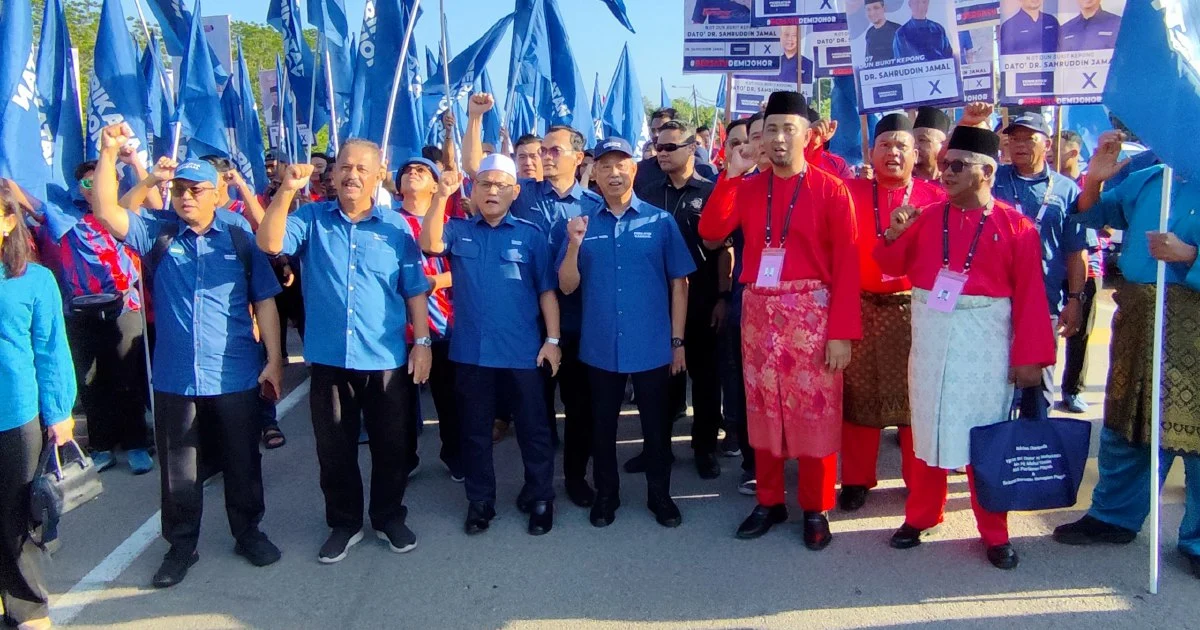
Tan Sri Muhyiddin Yassin, heading the Malaysian United Indigenous Party (Bersatu), turned up at the nomination centre set within Pagoh Sports Complex Hall in the early morning hours to accompany Sahruddin through the official candidacy registration process. His presence at the venue underscored the political backing being marshalled around the Bukit Kepong constituency race during Johor's election cycle.
The party president's decision to appear alongside Sahruddin carries symbolic weight within Bersatu's internal hierarchy and signals organisational commitment to the contest unfolding in this strategically important district. In Malaysian political contexts, such visible endorsements from top-tier party officials often translate into momentum-building exercises designed to energise grassroots supporters and project unity among competing factions.
Bukit Kepong represents one of several constituencies where Bersatu has placed considerable emphasis during this electoral period. The party's investment in Sahruddin's nomination process reflects broader calculations about the peninsula's changing political landscape and the importance of securing representation in Johor, a state that has undergone significant shifts in its political alignment over recent years.
Muhyiddin's profile within the political ecosystem remains consequential despite various transformations in Malaysia's governing coalitions. His hands-on participation in nomination activities demonstrates the party's intention to maintain competitive positioning across key constituencies rather than treating any seat as automatically secure. This granular attention to electoral mechanics, especially at the nomination stage, frequently distinguishes successful campaign operations from those facing structural disadvantages.
The Pagoh Sports Complex Hall served as the designated registration point for candidates advancing their formal candidacies. Such nomination centres operate under strict regulatory timelines and procedural requirements established by the Election Commission, meaning the morning timing reflected official scheduling rather than arbitrary choice. Muhyiddin's arrival at 8.45 am positioned him conspicuously during the early processing hours when media attention tends to concentrate most intensely.
Sahruddin's political trajectory and electoral viability merit context for readers seeking to understand this race's significance. His positioning within Bukit Kepong carries implications extending beyond individual ambition, touching upon coalition dynamics, state-level representation, and the broader realignment occurring within Malaysian politics as traditional voter blocs respond to shifting policy emphases and leadership questions.
Johor's electoral dynamics have proven particularly fluid in recent election cycles, with swing voting patterns suggesting that traditional geographical loyalties no longer determine outcomes as predictably as historical precedent might suggest. This volatility has prompted parties to intensify ground-level mobilisation efforts and concentrate leadership attention on competitive constituencies where margins appear tight. Bukit Kepong apparently falls within this competitive category, justifying presidential-level engagement.
The ceremonial aspects of nomination procedures often obscure their strategic importance. Nominations represent the formal transition point between party selection processes and public electoral competition, making them psychologically meaningful moments within campaign narratives. Media coverage of nomination events, frequently shaped by the calibre of officials present, influences early-stage momentum-building and establishes tone for subsequent campaign phases.
Muhyiddin's visible commitment to Sahruddin's nomination speaks to internal party dynamics as well. Bersatu has navigated various coalition arrangements and strategic repositioning in recent years, requiring the party president to maintain cohesion among potentially competing interests. By personally attending nomination events, he demonstrates accessibility and affirms that leadership regards particular candidates and constituencies as priority areas deserving executive attention.
The broader Johor election context shapes how observers should interpret this nomination centre appearance. Recent political developments within the state have created an environment where coalition composition, representation questions, and voter sentiment regarding competing visions for state governance remain unsettled. Bukit Kepong, like many constituencies in this shifting environment, may well determine outcomes relevant to coalition-building possibilities at both state and federal levels.
Looking forward, the level of high-level party engagement evident in these early nomination-stage activities likely foreshadows the intensity of campaign operations that will unfold during subsequent phases. Constituencies receiving presidential-level attention during nominations typically receive proportionately higher resource allocation and strategic focus throughout campaign periods, suggesting that Bukit Kepong should expect sustained engagement from Bersatu's machinery over coming weeks.

