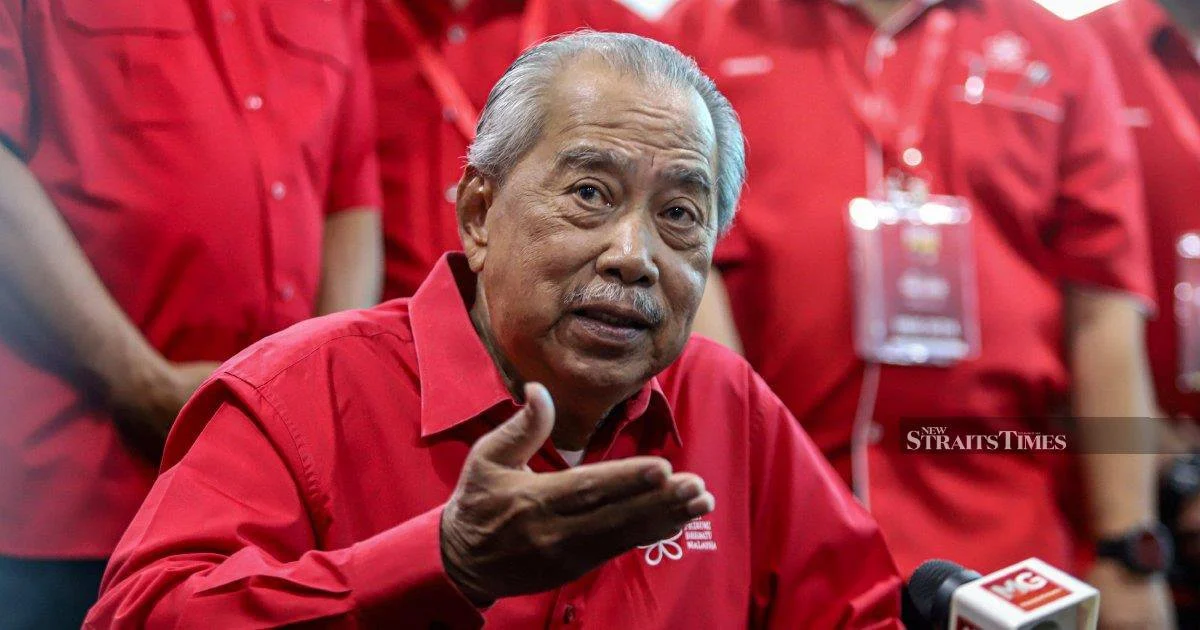
Tan Sri Muhyiddin Yassin has moved to settle mounting questions about Perikatan Nasional's cohesion by asserting that his Bersatu party intends to remain a fixture within the opposition coalition on a permanent basis. The declaration comes at a time when political observers have increasingly scrutinised the durability of the PN alliance, particularly following various electoral setbacks and the shifting dynamics of Malaysia's fractious political landscape. By staking out this firm position, the Bersatu president appears determined to project stability and resolve to party members and the wider electorate.
Perikatan Nasional emerged as a significant political bloc in recent years, assembling various parties opposed to the federal government. The coalition has positioned itself as an alternative to Pakatan Harapan, though cooperation between these two opposition formations remains sporadic and often marked by tactical considerations rather than ideological alignment. Within PN itself, the relationship between its constituent parties—primarily Bersatu, PAS, and Gerakan—reflects the broader fragmentation characterising Malaysian politics at present. Each party maintains distinct interests while nominally committed to collective goals.
The decision by Muhyiddin to publicly reaffirm Bersatu's loyalty to PN carries particular weight given his historical role in Malaysian politics. Having previously served as Prime Minister and navigated the complex terrain of coalition management, Muhyiddin understands intimately how perceptions of instability can undermine a political grouping's electoral prospects. His statement represents an effort to broadcast confidence and durability precisely when critics might question whether the coalition possesses sufficient internal cohesion to mount an effective opposition.
For Malaysian observers, the statement merits careful consideration of what lies beneath. Conjecture about PN's future typically stems from disagreements between its member parties over electoral strategy, seat allocation, and policy direction. Bersatu, despite its relatively recent formation, has established itself as a consequential player in opposition politics, commanding a respectable parliamentary representation and retaining organisational capacity. Any departure from PN would substantially weaken the coalition's parliamentary numbers and signal profound fracturing to voters.
The timing of Muhyiddin's declaration suggests an awareness that public doubts regarding coalition stability can become self-fulfilling prophecies. When supporters question whether a political grouping will endure, they become less inclined to invest resources, volunteer efforts, or extend the long-term commitment that effective opposition movements require. By issuing an unambiguous commitment, the Bersatu leader attempts to project confidence that might shore up organisational morale and discourage speculation that might otherwise gain traction.
Within the broader Southeast Asian context, Malaysia's opposition coalitions operate under distinct structural constraints compared to those in neighbouring democracies. The concentration of patronage networks within the state apparatus, combined with the particular configuration of Malaysia's electoral system, often forces opposition parties into uncomfortable compromises. Bersatu's continued participation in PN reflects practical recognition that individual parties lack the independent capacity to mount credible challenges to the federal government.
PAS, the largest component of PN and a party with deep organisational roots, particularly across northern and eastern Malaysia, remains the coalition's most substantial asset. Bersatu's continued alignment with PAS and other PN components suggests that despite occasional tensions, the parties perceive greater mutual benefit from coalition membership than from striking out independently. Muhyiddin's statement effectively endorses this calculation while seeking to foreclose alternative scenarios.
The political economy of Malaysian coalition politics merits attention from observers trying to assess whether such commitments possess binding force. Unlike in some Westminster-tradition democracies where formal coalition agreements establish contractual relationships, Malaysian political arrangements often rest on understandings that can shift with changing circumstances. Nevertheless, public declarations of permanence create reputational costs for parties that subsequently defect, thereby generating incentives toward consistency.
For voters assessing their electoral options ahead of potential polling opportunities, Muhyiddin's statement offers the proposition that Perikatan Nasional should be evaluated as a stable entity rather than a provisional arrangement. Whether this messaging proves persuasive may depend substantially on whether PN demonstrates capacity to moderate internal differences and present coherent policy positions on issues confronting ordinary Malaysians. Coalition stability remains a prerequisite for electoral credibility, though hardly a guarantee of political success.
The statement also reflects Bersatu's particular vulnerability within the coalition. Lacking the established religious credentials of PAS or the historical prominence of Gerakan, Bersatu relies on perceptions of internal discipline and political durability to maintain relevance. Abandoning PN would expose the party to accusations of instability and unreliability, potentially damaging its capacity to attract and retain supporters concerned about investing in a transient political vehicle.
Moving forward, the sustainability of Muhyiddin's commitment will hinge on whether the PN coalition succeeds in resolving practical disagreements about resource distribution, electoral strategy, and policy emphasis. Recent Malaysian political history demonstrates that coalitions containing multiple significant parties frequently fracture when tensions reach critical thresholds, regardless of prior public assurances. Observers should monitor whether PN's leadership structures develop mechanisms for managing internal disputes before they escalate into existential threats.
The broader implications for Malaysia's political trajectory rest partly on PN's capacity to function as an effective and coherent opposition. A fragmented opposition landscape potentially benefits the incumbent government by dividing anti-government sentiment among competing entities. Conversely, a stable opposition coalition might generate sufficient electoral pressure to reshape government behaviour or create opportunities for political alternation. Muhyiddin's statement represents an investment in the former scenario, though replicating such outcomes across the diversity of Malaysian political contexts presents genuine challenges.

