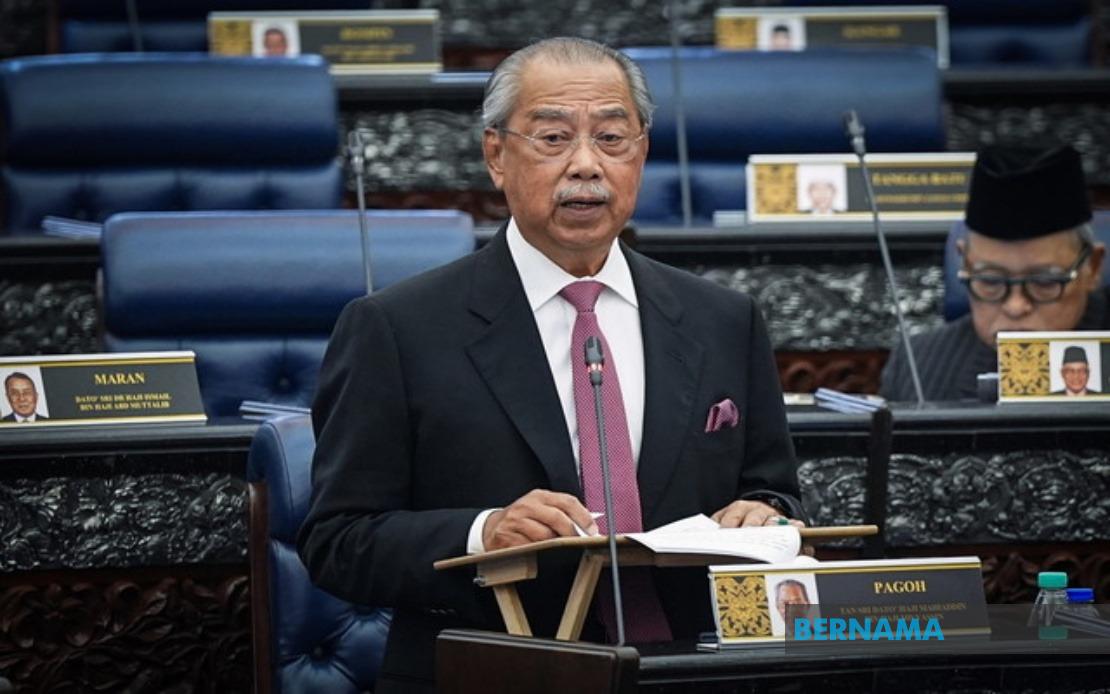
Tan Sri Muhyiddin Yassin, the former prime minister and Bersatu president, has made an urgent appeal to the government to launch an independent and transparent forensic audit of Tabung Haji's fund management, with completion targeted within twelve months. His intervention during the parliamentary sitting on the Tabung Haji Royal Commission of Inquiry (RCI) report underscores the gravity of governance failures uncovered at the institution, which has long served as the primary financial vehicle for Malaysian pilgrims preparing for the Hajj.
The RCI report, made public on 29 July after cabinet approval, has revealed troubling evidence of institutional mismanagement over the seven-year period from 2014 to 2020. The inquiry found that Tabung Haji accumulated estimated cumulative losses ranging between RM10 billion and RM12.6 billion during this timeframe—a staggering figure that demands accountability. For context, these losses are equivalent to several years of Malaysia's defence spending and represent funds that rightfully belonged to millions of Malaysian Muslim account holders who trusted the institution with their savings.
Muhyiddin's proposal for a forensic audit addresses a fundamental requirement in corporate governance and institutional accountability. Such an audit would systematically trace the movement of funds through various investment channels, pinpoint where fraudulent activities may have occurred, and identify instances where officials abused their authority or acted negligently. The former premier emphasised that this investigation must be rigorous and independent, free from political interference or institutional bias that might otherwise shield culpable parties from consequences. Without such forensic rigour, the true extent of wrongdoing could remain obscured, and those responsible might escape justice.
The call for accountability carries particular weight given Muhyiddin's historical significance in Malaysian politics and his previous tenure as prime minister. His willingness to hold the government's feet to the fire on this issue demonstrates that the Tabung Haji scandal transcends partisan boundaries—it is fundamentally about protecting the interests of ordinary Malaysians whose life savings have been compromised. The fact that a senior opposition-aligned figure is making this case suggests growing cross-party consensus that half-measures will not suffice.
Syed Saddiq Syed Abdul Rahman of MUDA has advanced the proposal further by suggesting the establishment of a multi-agency task force to investigate fourteen specific problematic investments identified in the RCI report. This approach recognises that investigating complex financial malfeasance requires coordination among institutions with different expertise and statutory powers. The Malaysian Anti-Corruption Commission (MACC), the police force, and the Inland Revenue Board each bring distinct investigative capabilities—the MACC's specialisation in corruption, the police's general investigative authority, and the Inland Revenue Board's financial tracking abilities. Operating in silos, these agencies risk missing connections and patterns that cross-cutting investigations would reveal.
Syed Saddiq's proposal also contemplates extending scrutiny beyond Tabung Haji to related institutions including Felda, FGV, and Eagle High. This broader scope reflects an emerging understanding that governance problems at Tabung Haji may not be isolated but rather symptomatic of systemic weaknesses affecting multiple government-linked entities managing substantial public resources. Malaysian investors and account holders in these institutions would understandably demand equivalent transparency and accountability.
Datak Seri Hasni Mohammad's contribution emphasises the need for transparent, periodic reporting to parliament. By requiring enforcement agencies to provide regular updates within clearly defined timeframes, Hasni's proposal creates a mechanism for sustained public accountability rather than allowing the matter to fade from public consciousness once initial announcements have been made. Parliamentary oversight of implementation, conducted on a bipartisan basis, would establish institutional memory and ensure that RCI recommendations do not languish unimplemented due to bureaucratic inertia or political convenience.
The RCI report itself contained twenty-five recommendations for institutional reform, of which seventy-five percent had reportedly been implemented by Tabung Haji as of 30 July. However, implementation of procedural recommendations does not automatically address the substantive question of accountability for past losses. A new governance framework is necessary but insufficient without simultaneous investigation into how losses occurred and who bears responsibility. The Malaysian public deserves to know whether criminal proceedings will be initiated, whether civil recovery efforts will be pursued, and what disciplinary action has been taken against officials involved.
The Tabung Haji scandal carries implications extending beyond the institution itself. It touches on fundamental questions about Malaysia's standards for public accountability and whether those in positions of trust face meaningful consequences for breaches of that trust. For a Southeast Asian nation aspiring to improve its governance reputation and attract international investment, demonstrating the capacity to investigate and prosecute financial malfeasance is essential. The treatment of the Tabung Haji matter will signal to international observers and domestic stakeholders alike whether Malaysia takes institutional accountability seriously.
The special parliamentary sitting convened to debate the RCI report represents a rare opportunity for genuine deliberation on matters of governance and accountability. When such windows open, the legislature must seize them decisively. Muhyiddin's call for comprehensive forensic audit, Syed Saddiq's multi-agency task force proposal, and Hasni's oversight mechanism together form a coherent framework for investigation and accountability. Implementation of these measures would demonstrate that Malaysia's political system, despite its fraught recent history, retains the capacity to hold power accountable and protect the interests of ordinary citizens whose trust has been violated. The coming months will reveal whether parliament's professed commitment to accountability translates into sustained action.

