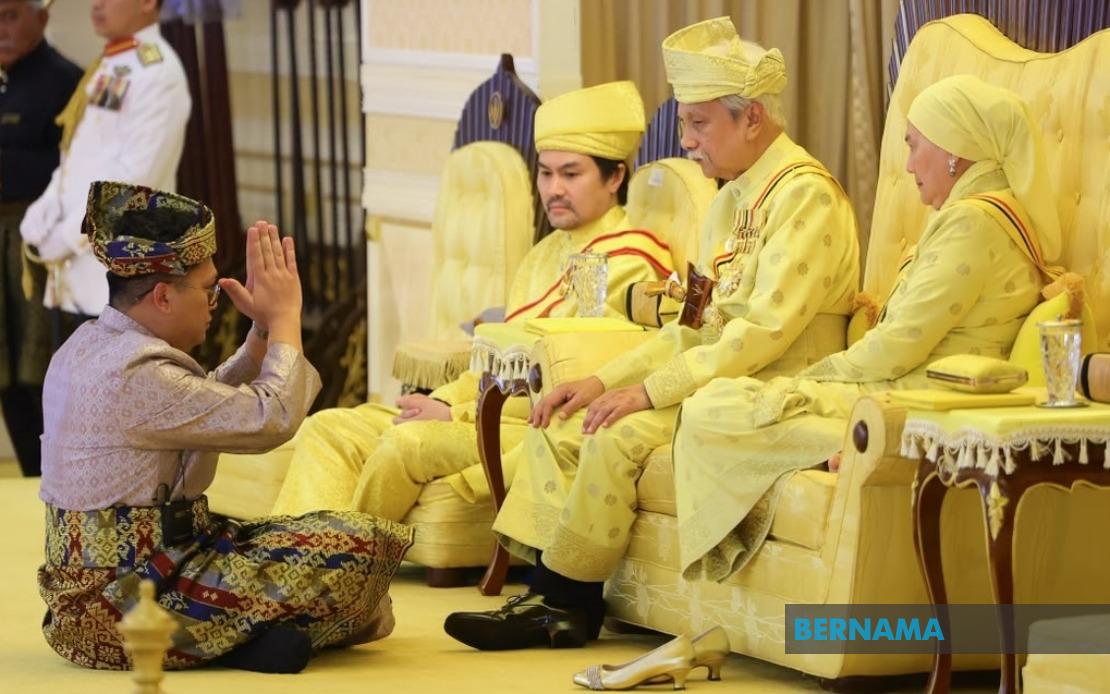
The Yang Dipertuan Besar of Negeri Sembilan, Tuanku Muhriz Tuanku Munawir, has officially conferred the position of 11th Undang of Luak Sungei Ujong upon Muhammad Faris Johari in a formal ceremony held at Istana Besar Seri Menanti on the morning of June 27. The appointment carries with it the hereditary title Datuk Klana Petra, marking a significant moment in the constitutional traditions of Negeri Sembilan's administrative structure.
The installation followed customary protocols carefully observed within the Adat Perpatih framework that governs the state's traditional governance. Initial proceedings witnessed the Orang Empat Istana, senior palace officials, seeking the ruler's formal permission before the ceremony could advance. Muhammad Faris then took his oath of allegiance before the sovereign, a moment that reinforced the hierarchical relationship between the Undang and the Yang Dipertuan Besar enshrined in Negeri Sembilan's unique constitutional arrangements.
In his address, Tuanku Muhriz emphasized the importance of fulfilling ceremonial pledges with genuine commitment, moral integrity and a profound awareness of public duty. The ruler articulated expectations that bind the traditional leadership to principles of accountability and responsible stewardship. He specifically directed his remarks toward the assembled Orang Kaya, urging them to remain steadfast in their allegiance to the institution of the Yang Dipertuan Besar and to cultivate relationships with the Palace grounded in mutual respect and protocol.
The broader message from the sovereign reflected contemporary concerns about preserving institutional stability amid evolving modern governance. Tuanku Muhriz stressed that relationships built upon mutual respect, genuine trust and consensus-driven decision-making remain foundational to sustaining the constitutional monarchy, maintaining customary traditions and fostering sustained prosperity across the state. This articulation connects traditional authority with the practical necessities of contemporary governance.
Among those witnessing the proceedings were Tunku Ampuan Besar Tuanku Aishah Rohani Tengku Besar Mahmud, Tunku Besar Seri Menanti Tunku Ali Redhauddin Tuanku Muhriz, and Tunku Panglima Besar Tunku Zain Al-'Abidin, representing the broader royal household. Additionally present were senior government figures including Menteri Besar Datuk Seri Aminuddin Harun and heads of state departments, underscoring the significance of bridging traditional institutions with the modern state administration.
Muhammad Faris, at 28 years old, represents a generation of Negeri Sembilan's traditional leadership educated within contemporary institutional frameworks. Born on October 30, 1997, he completed his degree in accountancy through Universiti Teknologi MARA and subsequently obtained professional certification via the Association of Chartered Certified Accountants programme in 2022. This background reflects how modern professional qualifications increasingly complement traditional roles within Malaysia's hereditary leadership structures. He is married to Sharifah Amirah Syed Ismail Ash-Shahab.
The appointment of Muhammad Faris assumes particular importance in Negeri Sembilan's context, where the Undang positions carry substantial administrative and ceremonial responsibilities within their respective luaks or districts. Luak Sungei Ujong occupies a historically significant territory within the state, and the Undang serves as an intermediary between traditional community structures and state governance frameworks. This succession ensures continuity of customary leadership while introducing fresh professional perspectives shaped by contemporary education.
Tuanku Muhriz's remarks also directed attention toward preserving Adat Perpatih, the customary legal and social system practised throughout Negeri Sembilan for generations. The ruler called upon residents to cooperate meaningfully with customary leadership in fulfilling their respective obligations whilst simultaneously upholding and transmitting the cultural values embedded within this traditional framework. This dual emphasis suggests recognition that traditional governance systems must evolve to remain relevant whilst maintaining their distinctive character and accumulated wisdom.
The ceremony represents one component of a broader tradition renewal process within Negeri Sembilan's governance structure. Later that same day, the Yang Dipertuan Besar was scheduled to preside over another royal audience formally installing the 22nd Undang of Luak Rembau, indicating systematic attention to ensuring all traditional leadership positions remain appropriately filled and recognized.
For Malaysian observers and particularly those within Negeri Sembilan, these installations demonstrate how the federation's constitutional monarchy incorporates hereditary traditional institutions within its democratic framework. The careful ceremonial protocols, the emphasis on sworn loyalty and institutional respect, and the integration of state administrative officials alongside royal household members reflect Malaysia's distinctive approach to balancing monarchical tradition with modern governance. The appointment of younger, professionally qualified individuals to these hereditary roles suggests these institutions continue adapting to contemporary requirements whilst preserving their foundational character and constitutional significance.

