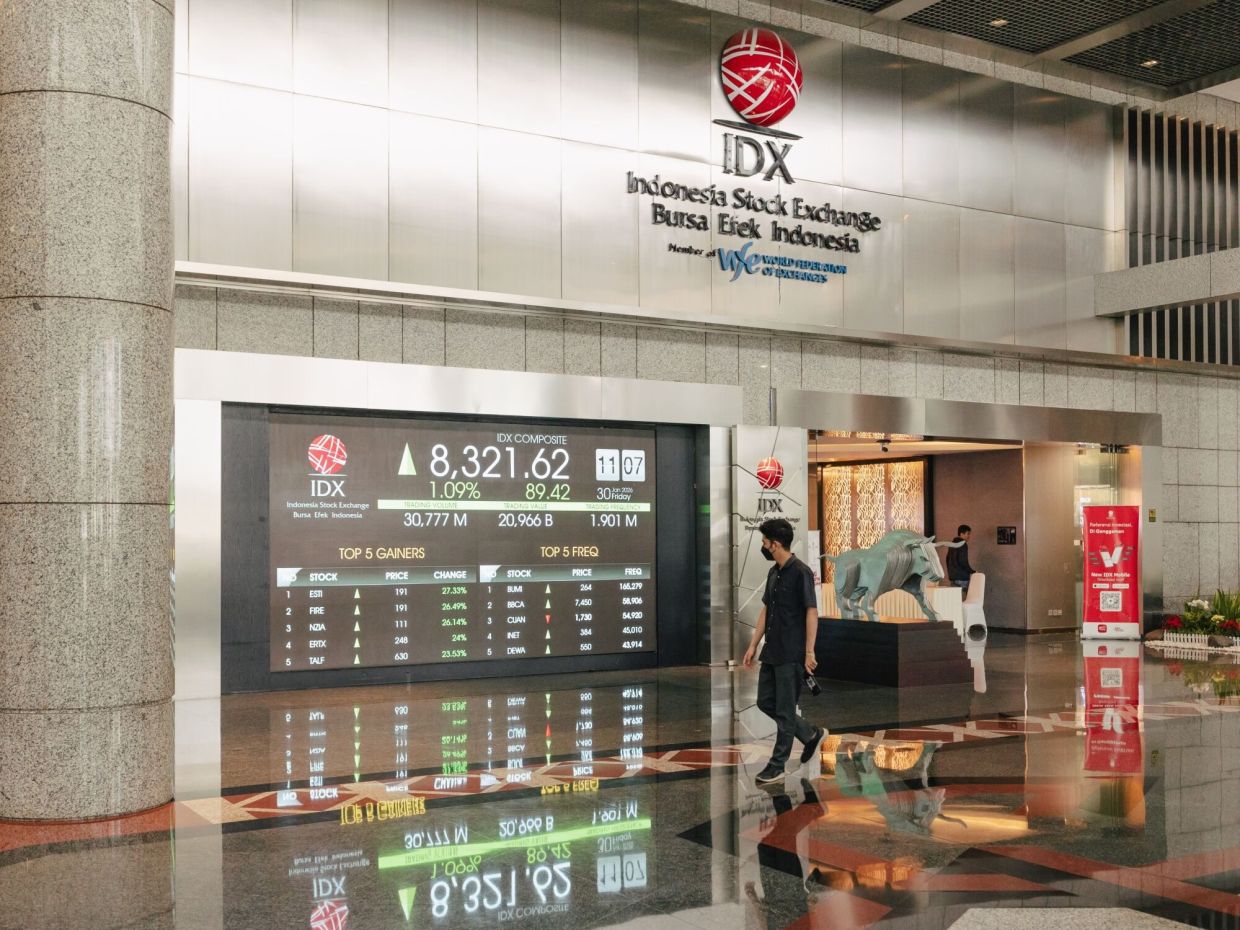
Indonesia's path to financial rehabilitation has encountered another significant obstacle, as MSCI, the world's most influential equity index provider, escalated concerns about the transparency of the country's capital markets on Thursday. The fresh warning strikes particularly hard given that Indonesia's stock market has already suffered dramatically since January, when MSCI first flagged potential downgrade risks. The decision expected next week from MSCI on whether to reclassify Indonesia from emerging market to frontier status represents a pivotal moment that could reshape investment flows and shake already fragile investor confidence in Southeast Asia's largest economy.
At the heart of MSCI's renewed concern lies a fundamental problem that undermines the entire price discovery mechanism: inadequate visibility into shareholding structures and evidence of coordinated trading behaviour. In its latest market accessibility review released Thursday, MSCI downgraded Indonesia's information flow criterion to negative, signalling that opacity in ownership data and market activity patterns is preventing proper price formation. This technical assessment carries profound implications because global institutional investors rely on transparent ownership information to calculate free float—the portion of shares available to public investors—which determines investment eligibility and position sizing for passive index funds managing trillions of dollars worldwide.
The potential consequences of a downgrade extend far beyond Jakarta's trading floors. A reclassification from emerging to frontier status would compel tracking funds to divest holdings and pressure active managers benchmarked to MSCI indices to reduce exposure, triggering estimated outflows of as much as $13 billion. For Malaysia and other regional economies, such a development would reverberate through Asian markets, potentially dampening appetite for emerging market investments broadly and reinforcing perceptions that governance risks in Southeast Asia warrant defensive positioning.
Yet not all observers interpret MSCI's latest assessment as uniformly negative. Mohit Mirpuri, fund manager at SGMC Capital in Singapore, suggests markets may be misreading the review's implications, noting that only one accessibility measure actually deteriorated while Indonesia continues to score favourably against major peers including South Korea, China, and India across several critical criteria. This nuanced reading hints at the possibility that Indonesia might escape the worst-case downgrade scenario, though such optimism remains tentative given the broader context of investor exodus and currency weakness.
Indonesian authorities responded to the January transparency warning by implementing a sweeping reform agenda, including doubling the minimum free float requirement for listed companies to 15 percent. In a dramatic show of commitment, the chief executives of both the stock exchange and the financial services regulator resigned on the same day in January. Yet these corrective measures proved insufficient to arrest the decline in investor confidence or prevent MSCI from extending its review period in April and subsequently removing six companies—predominantly linked to prominent tycoons—from its indices in May, triggering another sharp market selloff.
The underlying governance challenges that MSCI is identifying reflect deeper structural weaknesses in Indonesia's investment framework. The opacity in shareholding structures often perpetuates patterns where ultimate beneficial owners remain obscured through layered corporate vehicles, making it difficult for international fund managers to properly assess concentration risks and ensure compliance with regulatory constraints on single-shareholder exposure. These concerns take on added significance in Indonesia, where prominent business figures with close government ties control sprawling conglomerates across multiple sectors, creating potential conflicts of interest that transparency rules are designed to prevent.
President Prabowo Subianto's administration faces mounting economic headwinds that compound the market confidence crisis. Populist policy measures and mounting concerns about fiscal sustainability have pushed the rupiah to record lows, forcing Bank Indonesia to raise interest rates in recent weeks to defend the currency. These monetary policy interventions, while necessary to stabilise the exchange rate, increase borrowing costs across the economy and constrain growth prospects at a time when investor confidence is already fragile. The $1.4 trillion Indonesian economy, once celebrated as a regional growth engine, now confronts reduced policymaking credibility that has prompted both Moody's and Fitch to downgrade their debt rating outlooks to negative.
The currency weakness compounds Indonesia's capital market woes in multiple ways. MSCI specifically flagged that Indonesia lacks an efficient offshore currency market while onshore currency markets face constraints, limiting sophisticated hedging strategies that international investors typically employ to manage foreign exchange risk. These technical limitations, combined with higher interest rates and political uncertainty, render Indonesian assets considerably less attractive to portfolio managers accustomed to frictionless capital flows and predictable policy environments. For Malaysian investors and policymakers, the Indonesian experience underscores the critical importance of maintaining market infrastructure and currency market liquidity to retain international capital.
The human toll of this capital market deterioration extends beyond market indices and fund performance metrics. Indonesia's benchmark Jakarta stock index has plummeted 29 percent this year alone, erasing substantial wealth from retail investors and pension funds while simultaneously raising the cost of equity capital for Indonesian companies seeking to fund expansion. Foreign investors have sold approximately $3.65 billion worth of Indonesian stocks so far in 2026, representing a devastating loss of confidence from the international investor base that had previously viewed Indonesia as a crucial emerging market allocation.
MSCI's role as arbiter of market classification carries disproportionate influence because its indices serve as benchmarks for hundreds of billions of dollars in passively managed funds. Once MSCI downgrades a market, investors tracking MSCI indices must mechanically reduce or eliminate holdings regardless of fundamental value assessments, creating a self-fulfilling prophecy where classification becomes destiny. This structural dynamic means that MSCI's decision next week will likely prove determinative for Indonesia's near-term market trajectory, potentially accelerating the outflow cycle unless authorities can demonstrate convincing progress on transparency reforms.
For Malaysia, the Indonesian experience offers critical lessons about maintaining strong governance standards and capital market infrastructure. Malaysia's own history of addressing corporate governance concerns through timely reforms and regulatory enhancement has positioned it more favourably in the international investment community's assessment. The divergence between Indonesia's deteriorating market access and Malaysia's more stable positioning suggests that investors differentiate between emerging economies based on governance quality and regulatory responsiveness, creating potential opportunities for Malaysian markets to attract capital displaced from less transparent jurisdictions.

