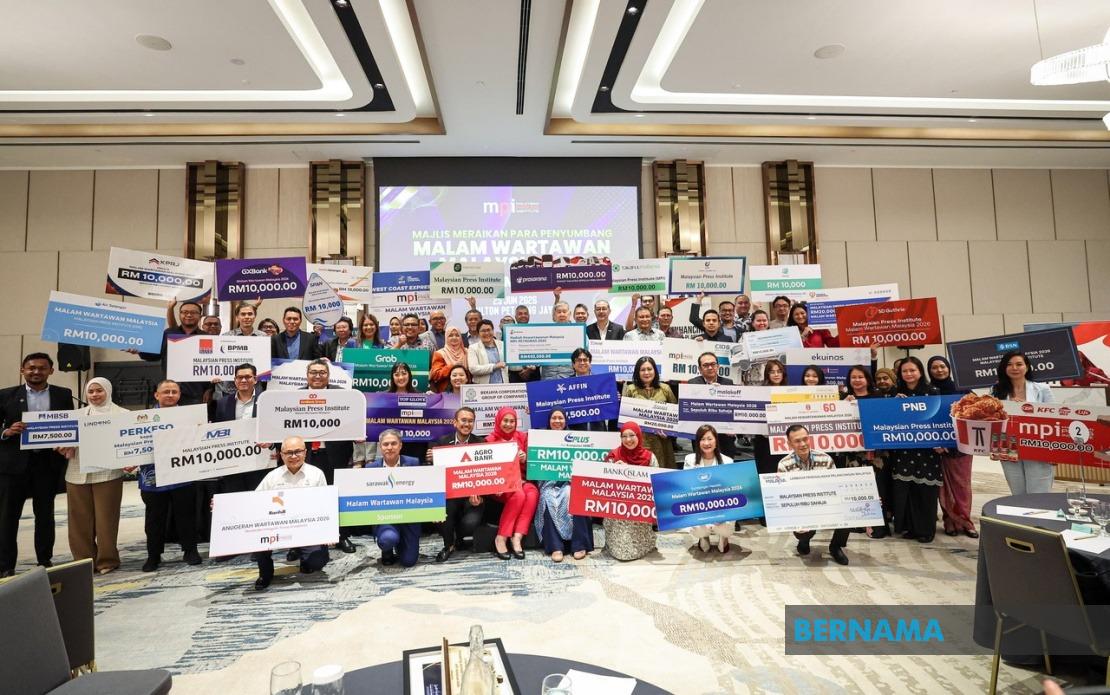
The Malaysian Press Institute (MPI) has successfully assembled more than RM1 million in financial support for its marquee Malaysia Press Night (MWM) 2026 gathering, marking a fresh demonstration of industry backing for the country's journalism sector. The funding milestone, announced at a contributors' appreciation ceremony in Kuala Lumpur, underscores the persistent relevance of formal recognition mechanisms within Malaysia's media landscape, even as the industry grapples with economic headwinds and shifting consumer habits.
The total package of RM1.037 million breaks down into two distinct components: RM587,000 raised from sixty separate organisations through direct contributions, and RM450,000 committed by PETRONAS as headline sponsor. The oil and gas multinational's continued participation stretches back three decades, having underwritten the MPI-PETRONAS Malaysian Journalism Awards since 1994, a longevity that signals stable corporate engagement with professional journalism initiatives despite broader marketplace disruptions.
Dr Ainol Amriz Ismail, the institute's chief executive officer, framed the fundraising achievement as evidence of collective determination to preserve journalism standards. He positioned the financial commitments as reflections of stakeholder consensus around the importance of factual reporting, information verification, and accountable media practice in democratic systems. This framing carries particular weight in Malaysia's context, where public confidence in mainstream media institutions has faced intermittent pressure from digital disruption, polarisation, and competing narrative frameworks across social platforms.
The event drew representation from MPI's institutional hierarchy, including president Datuk Yong Soo Heong and deputy president Farrah Naz Abd Karim, alongside Datin Paduka Nur-ul Afida Kamaludin from Bernama, the national news agency. PETRONAS brought Jalina Joheng, general manager of strategic communications, channels and media relations, underscoring corporate investment in the visibility and symbolic weight of journalism recognition ceremonies.
Anticipation surrounding the 2026 edition has intensified following confirmation that Prime Minister Datuk Seri Anwar Ibrahim will attend on July 17, elevating the event's political profile and signalling governmental endorsement of professional journalism frameworks. Prime ministerial attendance at media industry gatherings carries symbolic significance in Southeast Asian contexts, often interpreted as an administration's receptiveness to or partnership with institutional media structures rather than reliance solely on digital communication channels.
The Malaysia Press Night functions, in MPI's characterisation, as an annual institutional recognition ceremony honouring journalists and media professionals whose labour sustains factual reporting ecosystems. The language deployed by institute leadership repeatedly emphasises tireless effort, investigative rigour, and commitment to public interest—framing journalism as essential democratic infrastructure rather than merely commercial enterprise. This rhetorical positioning becomes relevant as newsroom economics deteriorate across the region and content producers face mounting pressure to prioritise digital engagement metrics over investigative depth.
Corporate and organisational participation in Malaysia Press Night through financial contributions carries implications beyond ceremonial acknowledgment. For sponsoring entities, such involvement signals alignment with professional journalism standards and positions them as stakeholders in media ecosystem health. The breadth of participating organisations—sixty contributors alongside PETRONAS—suggests cross-sectoral interest in maintaining institutional structures for journalism recognition, though specifics regarding participating sectors remain unreported.
MPI's continued emphasis on professional development programming, industry training initiatives, and broader capacity-building efforts addresses structural vulnerabilities within Malaysian newsrooms. Regional media organisations face talent retention challenges, skills gaps in emerging technologies and data journalism, and resource constraints limiting investigative capacity. Institutional support from MPI for training and professional advancement becomes more critical as legacy business models prove insufficient to sustain full editorial operations.
The ceremony also featured a panel discussion hosting distinguished industry figures including Datuk A. Kadir Jasin, a prominent Malaysian journalism icon, Karangkraf Group chief executive Firdaus Hussamuddin, TV AlHijrah chief executive Namanzee Harris, and Vanakkam Malaysia editor-in-chief Thiaga Rajan Muthusamy. Such forums provide platforms for senior media leadership to discuss sector challenges and strategic directions, though substantive detail regarding specific discussion outcomes remains unavailable from currently circulated reports.
For Malaysian readers and media industry stakeholders, the fundraising success demonstrates sustained institutional architecture supporting journalism practice despite economic headwinds. The participation of major corporations like PETRONAS and diverse organisational contributors indicates that significant elements of Malaysia's business and institutional sectors maintain investment commitments to formal journalism recognition mechanisms. The upcoming July ceremony, elevated by Prime Minister Anwar Ibrahim's confirmed attendance, will likely generate discussion regarding government perspectives on media industry development and professional journalism's role in contemporary Malaysian governance and public discourse.
The Malaysia Press Night 2026 ultimately represents a convergence point where corporate sponsors, institutional media organisations, government representatives, and journalism practitioners intermingle around shared investment in professional standards. Whether such ceremonial gatherings translate into material improvements for newsroom operations, journalist compensation, or investigative capacity remains an ongoing question for the Southeast Asian media landscape, though the continued financial commitments suggest stakeholder belief in their continued relevance and necessity.

