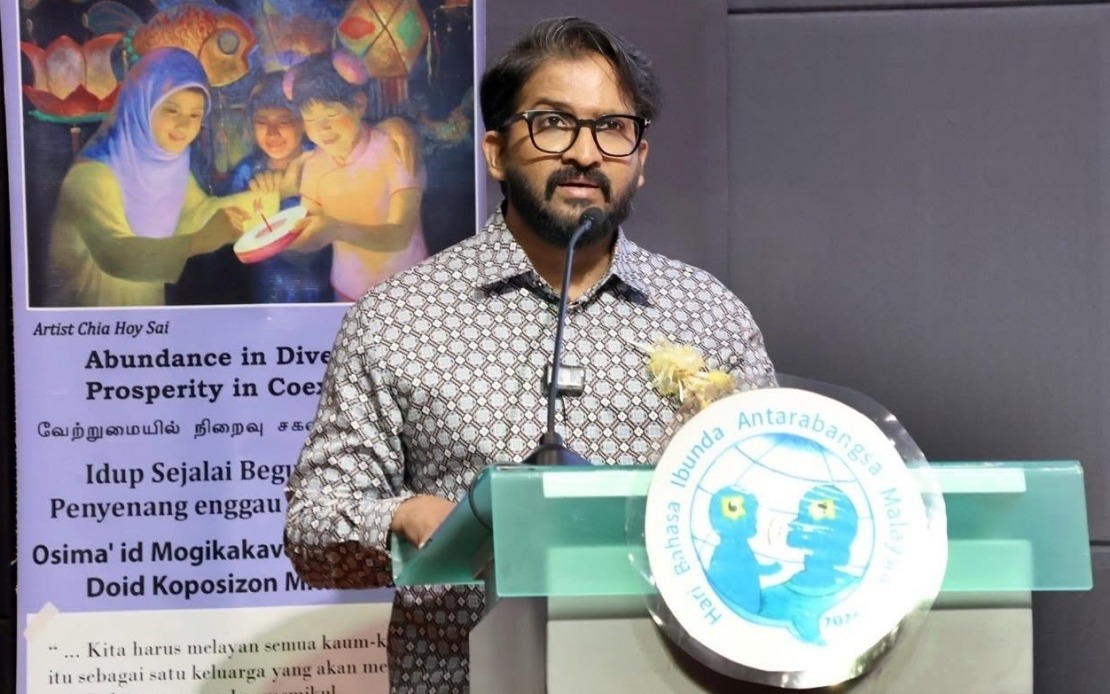
Deputy National Unity Minister R. Yuneswaran has called for renewed focus on mother-tongue education, positioning linguistic heritage as a critical tool for bridging Malaysia's deepening social divisions. Speaking on June 21, Yuneswaran argued that proficiency in one's native language could significantly reduce the frequency and intensity of race, religion and royalty (3R) controversies that have become an almost daily fixture across social media platforms, fragmenting the national fabric.
The minister's intervention arrives amid a persistent pattern of inflammatory discourse online that frequently centres on sensitive communal issues. Rather than viewing such tensions through purely regulatory lenses, Yuneswaran has reframed the challenge as fundamentally rooted in cultural and linguistic disconnection. He contends that many Malaysians lack sufficient understanding of their neighbours' histories, languages, and cultural foundations—deficiencies that create fertile ground for misinterpretation, stereotype, and conflict. This diagnosis suggests that divisive online behaviour stems not merely from bad faith, but from a genuine erosion of cross-cultural literacy.
Yuneswaran's position reflects a sophisticated understanding of language's role beyond mere communication. He emphasised that every language embodies a people's identity, heritage, and foundational values. To neglect or marginalise mother tongues, in this framing, is to erode the cultural anchors that provide meaning and belonging to communities. Malaysia's estimated 130 languages represent an extraordinary asset, yet their erosion—particularly among younger generations—has proceeded largely unchecked. The deputy minister has repositioned this linguistic diversity not as a challenge to unity, but as evidence of Malaysia's richness, provided it is actively nurtured and mutually appreciated.
Critically, Yuneswaran has addressed a persistent anxiety within Malaysian policy discourse: the fear that strengthening mother-tongue education undermines national cohesion or the primacy of Bahasa Malaysia. He has drawn on his own biographical experience as an Indian Malaysian educated in both Chinese and national school systems to demonstrate that multilingual competence operates cumulatively rather than competitively. Proficiency in one's mother tongue does not inhibit learning Bahasa Malaysia or other languages; instead, deep literacy in one's own language creates the cognitive and cultural foundations necessary for genuine intercultural respect. This argument directly counters assimilationist logic that has historically framed minority languages as obstacles to unity.
The National Unity Ministry's responsibilities under the 13th Malaysia Plan place nation-building at the centre of government policy. Yuneswaran has essentially redefined what effective nation-building requires. Rather than diluting distinct identities into a homogeneous whole, he proposes that authentic unity emerges through mutual understanding and genuine knowledge of one another's backgrounds. This represents a paradigm shift from earlier frameworks that often treated cultural minorities' preservation efforts with suspicion. Instead, the government is now endorsing mother-tongue maintenance as a prerequisite for, rather than an impediment to, social cohesion.
For Malaysian readers and policymakers, this statement carries significant implications. Many communities—Indian, Chinese, Indigenous, and others—have witnessed gradual attrition in mother-tongue speakers, particularly among children born since the 1990s. Educational policies have increasingly centred Bahasa Malaysia and English, marginalising vernacular education. Yuneswaran's remarks suggest a potential rebalancing, though whether government resources will follow remains uncertain. The statement reflects elite acknowledgement that current trends are unsustainable and that linguistic homogenisation correlates with social fragmentation rather than strengthening it.
The connection Yuneswaran draws between language loss and 3R tensions is empirically grounded. When communities lose fluency in their ancestral languages, they simultaneously lose access to cultural narratives, proverbs, and conceptual frameworks that traditionally transmitted values and built empathy. Younger Malaysians increasingly encounter one another primarily through English or Bahasa Malaysia, media landscapes, and social platforms—domains where nuance frequently collapses into polarisation. Without direct linguistic and cultural bridges, misunderstandings metastasise rapidly, unchecked by shared reference points or cultural humility.
The deputy minister's emphasis on mutual respect and willingness to learn reflects lessons from other plural societies. Countries with sustained social peace often succeed in maintaining genuine multicultural literacy—not merely formal tolerance, but active engagement with others' worldviews. Malaysia's founding compact, enshrined in the Constitution, presumed such engagement; that assumption has eroded. Yuneswaran implicitly suggests that restoring it requires deliberate investment in the linguistic foundations of cross-community understanding.
However, translating this rhetoric into policy presents formidable challenges. Malaysia's education system is already stretched; teachers competent in minority languages are scarce; parental support for mother-tongue learning has declined among middle-class families prioritising English proficiency. Digital platforms dominated by English and Bahasa Malaysia further disadvantage minority languages. Yuneswaran's call therefore demands not merely philosophical endorsement but sustained institutional commitment, curriculum redesign, teacher training, and resource allocation—measures that require political will beyond ministerial statements.
The timing of this intervention matters. Social media has amplified 3R tensions precisely because algorithms reward engagement, and divisive content generates engagement most reliably. Policymakers have typically responded through regulation, moderation guidelines, and criminal statutes. Yuneswaran offers a complementary, longer-term strategy rooted in cultural reconstruction rather than prohibition. Whether this approach can coexist with or eventually supersede more punitive measures remains to be seen, but it signals official recognition that Malaysia's social cohesion depends less on controlling speech than on deepening the mutual understanding that makes inflammatory speech less likely to gain traction.
For Southeast Asia more broadly, Yuneswaran's argument resonates with regional discussions about linguistic colonialism and cultural preservation in globalised contexts. As English and dominant regional languages edge out minority tongues across the region, questions about cultural erosion and social fracture grow increasingly urgent. Malaysia's experience—as a constitutionally recognised plural society—offers lessons both cautionary and potentially instructive.

