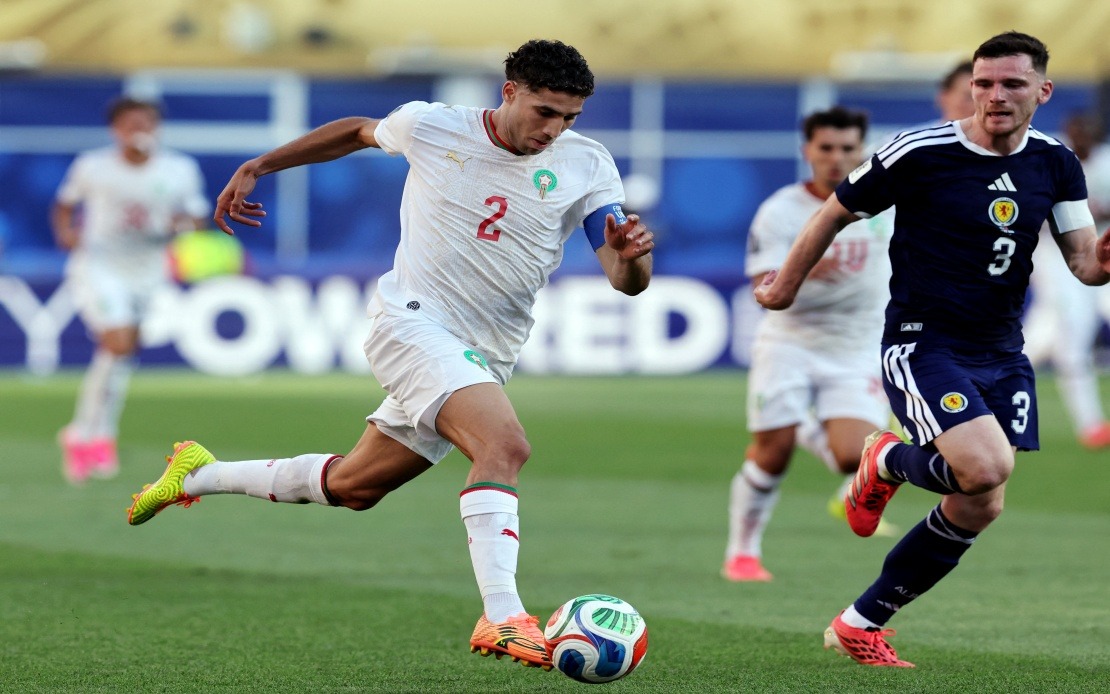
Morocco's football federation faced an unusual challenge at the World Cup in Massachusetts when supporters reacted negatively to captain Achraf Hakimi during Friday's 1-0 victory over Scotland. The timing proved particularly sensitive, as news had broken just hours earlier that a French court had ordered the Paris Saint-Germain defender to stand trial on rape allegations. Rather than allowing the distraction to overshadow Morocco's sporting achievement, coach Mohamed Ouahbi moved swiftly to rally behind his player and maintain team cohesion.
Whistles and jeers greeted Hakimi from portions of the crowd when the Morocco lineup was announced at Foxborough, Massachusetts. The hostile reception persisted whenever the right-back received possession during the match, creating an uncomfortable atmosphere that tested both the player's composure and his teammates' concentration. Such organised disapproval at international tournaments can undermine team morale and expose internal vulnerabilities, yet Ouahbi's response suggested the squad remained unified despite the external pressure and negative headlines.
In his immediate post-match statement, Ouahbi chose to sidestep discussion of the legal proceedings entirely, a strategic decision that prioritised sporting integrity over media speculation. Rather than engage with allegations or court proceedings, the coach directed attention toward Hakimi's on-field performance, describing the defender as displaying considerable strength during the contest. This approach reflected a professional understanding that permitting external controversy to dominate the narrative could fracture team focus during a tournament where mental resilience proves as important as tactical execution.
Ouahbi's confidence in Hakimi extended beyond mere loyalty. The coach made a bold assessment of his captain's calibre, suggesting that the World Cup would serve as a platform to demonstrate Hakimi's status as the world's finest right-back. Such endorsement served multiple purposes: it reasserted the player's worth to teammates, signalled to global audiences that Morocco stood by their influential defender, and provided Hakimi himself with a clear message that his manager viewed the allegations as separate from professional football matters.
The broader context in France had proven turbulent for the 25-year-old international. The Versailles appeal court's decision came after Hakimi had contested an earlier ruling from an investigating judge, indicating he had actively pursued legal channels to challenge the charges. The player's insistence on his innocence remained public through a social media statement where he expressed relief at finally having the opportunity to present his defence, suggesting confidence in his position despite the formal indictment.
Throughout the ordeal, Hakimi's teammates maintained disciplined silence on the subject. Their reluctance to comment publicly reflected both professional protocol and an implicit show of solidarity, avoiding inflammatory remarks that might complicate his legal position or fuel media narratives. In elite football, such restraint demonstrates institutional maturity and team discipline during periods of genuine crisis.
The rape allegations stemmed from an incident allegedly occurring at Hakimi's residence in 2023, involving a 24-year-old woman. The seriousness of such charges meant that Morocco faced potential reputational complications by fielding the player, yet the federation appeared to have concluded that suspending or benching Hakimi pending trial would constitute prejudgment. This distinction between legal process and sporting opportunity reflects the complicated terrain occupied by professional athletes facing criminal allegations in multiple jurisdictions.
For Malaysian and Southeast Asian observers, the situation illustrates the contemporary challenges facing international football when players confront serious legal difficulties across borders. The case raises questions about institutional responsibility, the separation between sporting merit and personal conduct, and whether national teams should distance themselves from players facing criminal charges or maintain support pending trial outcomes. Different football cultures navigate these waters differently, influenced by local legal traditions and social values.
Ouahbi's measured defence of Hakimi positioned Morocco as an organisation willing to extend due process protections to its players while maintaining competitive standards. By concentrating on performance rather than allegations, the coach attempted to protect both individual dignity and collective reputation. Whether this approach would sustain positive public perception throughout the tournament remained uncertain, particularly given the intensity of global football coverage and the proliferation of parallel commentary on legal proceedings.
For Hakimi specifically, the World Cup stage became an unexpected arena where sporting excellence might simultaneously serve as personal vindication. A strong performance over the tournament's duration could reframe the narrative from legal liability toward athletic contribution, though the psychological burden of simultaneous trial preparation and tournament participation cannot be understated. Elite athletes have occasionally performed brilliantly under adversity, yet the concentration required for World Cup football against this backdrop represented an exceptional test.
Morocco's tactical prospects also remained intact despite the distraction. The squad's victory over Scotland demonstrated that team cohesion had survived the initial shock of the allegations and crowd reaction. Should the squad maintain performance levels throughout their remaining matches, the incident might eventually occupy smaller space in the tournament's historical record than in immediate headlines.
The broader implications extended to questions about athlete representation and support systems during personal crises. Professional football clubs and national associations increasingly employ mental health specialists and welfare officers, yet the practical application of such support during ongoing legal proceedings tests institutional capabilities. Ouahbi's public backing effectively communicated that Morocco's football programme prioritised Hakimi's wellbeing alongside competitive outcomes, though implementation of such principles during pressure situations often proves more complicated than stated intentions suggest.

