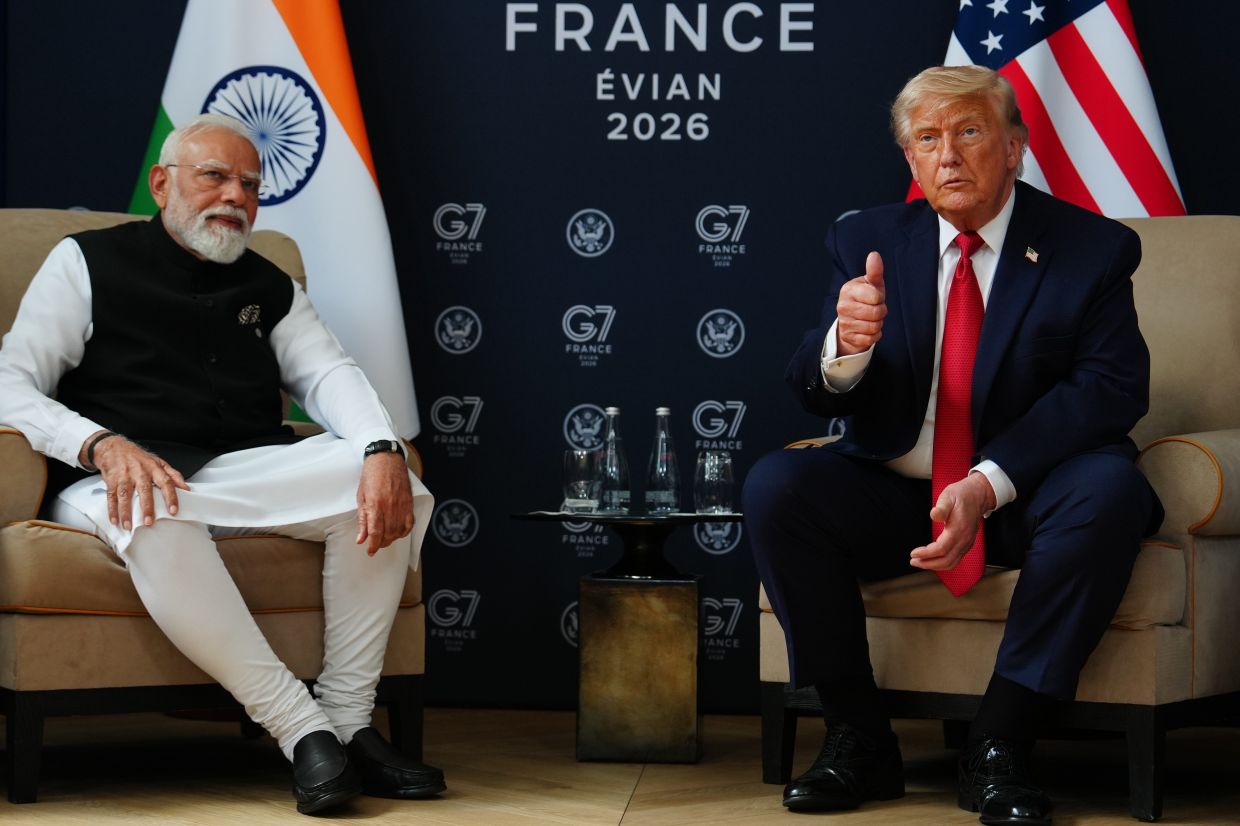
Indian Prime Minister Narendra Modi emerged from his meeting with US President Donald Trump at the G7 summit in Evian, France, with optimistic remarks about the state of long-stalled trade negotiations between the two nations. In a formal statement released Thursday following their Wednesday encounter, Modi's government indicated that talks toward an interim bilateral trade agreement had achieved "significant progress." Trump himself reinforced this assessment when questioned by reporters at the summit, characterizing the two countries' positions as "very close" to resolving outstanding differences—a notably upbeat evaluation given the complexity of the issues on the negotiating table and the turbulent history of these discussions.
The meeting marked the first in-person encounter between the two leaders since February 2025, when they last convened in Washington to discuss the broadening economic partnership. The timing proved significant, as both governments have been working toward an ambitious target of expanding bilateral commerce to USD500 billion by 2030, a substantial increase from current levels. Multiple negotiating rounds have been held over the past eighteen months in an effort to bridge the considerable gap between American and Indian positions on market access, tariff structures, and sectoral protections that have long complicated the relationship.
Trump's characterization of Modi during their talks revealed his sometimes unconventional diplomatic style. The American president described Modi as "one of the toughest" negotiators he had encountered, offering an assessment that mixed personal observation with metaphor. Whether intended as genuine praise or calculated flattery, such comments underscore the personal dimension of the Modi-Trump relationship, which has historically served as a stabilizing force in navigating bilateral differences that might otherwise prove intractable.
Official Indian government statements indicated that both leaders had instructed their respective trade teams to accelerate work toward achieving what was termed a "commercially meaningful agreement at the earliest." This language suggests an acknowledgment that previous timelines had slipped, and that both sides now recognize the urgency of concluding negotiations. US Trade Representative Jamieson Greer is scheduled to travel to India the following week for additional rounds of talks, signaling continued momentum in the process.
For Malaysian and Southeast Asian observers, the progress toward a US-India trade deal carries regional implications. Any agreement between Washington and New Delhi would reshape trade patterns across Asia, potentially affecting how goods flow through regional supply chains and influencing the competitive landscape for ASEAN manufacturers. The agreement's final structure could determine whether Indian products gain preferential access to American markets in sectors ranging from pharmaceuticals to textiles, with ripple effects felt throughout the region.
However, the path to finalizing these negotiations has not been straightforward. The two countries reached an initial understanding in February, but momentum subsequently stalled after the US Supreme Court struck down Trump's sweeping tariff measures. Following that court decision, the Trump administration launched fresh investigations into alleged unfair trade practices by numerous countries, including India, while simultaneously imposing a blanket 10 percent tariff across the board. These developments created uncertainty about whether the February framework would remain viable, or whether negotiations would need to be recalibrated entirely.
India's Commerce Minister Piyush Goyal provided a more granular assessment in early June, suggesting that the two countries had completed approximately 99 percent of the first phase of the trade deal. That extraordinarily high figure, if accurate, suggests that only technical and final legal details separate the parties from announcing at least an interim agreement. The remaining one percent, however, has historically proven the most difficult to resolve in trade negotiations, as it often involves high-stakes issues where one country's gain becomes another's significant loss.
Beyond the conventional trade agenda, Modi used his Evian meeting to raise a security and humanitarian concern directly with Trump. The Indian leader urged the US president to ensure the safety of Indian seafarers operating in international waters, citing a June 10 incident in which a US military strike on a commercial vessel off Oman resulted in the deaths of three Indian sailors. This tragedy illustrated the grave risks that Indian maritime workers face in the volatile Middle East region, where ongoing conflict has created unpredictable and dangerous conditions. Modi's direct appeal reflected India's vulnerability as a nation heavily dependent on regional shipping routes and the livelihoods of workers employed in that sector.
India has indeed borne disproportionate costs from the Middle Eastern instability. The closure of the Strait of Hormuz by Iran as part of broader geopolitical tensions has severely constrained the flow of energy supplies to South Asia, creating inflationary pressure on fuel costs and cascading disruptions across multiple economic sectors. Beyond energy, the conflict has interrupted the movement of fertilizers and food products that India relies upon for agricultural production and domestic consumption. These supply chain fractures pose an ongoing threat to India's economic growth and the stability of its commodity-dependent industries.
Modi seized the opportunity to issue a broader warning about the global ramifications of Middle Eastern instability, particularly for developing nations. In his statement from Evian, he observed that the disruptions affecting fuel, fertilizer, and food supply chains resulting from the crisis would likely impose lasting burdens on Global South economies for an extended period. This perspective carries particular weight for Southeast Asian nations, which similarly depend on stable energy prices and uninterrupted access to regional trade routes. The implications for Malaysia and neighboring countries underscore why a stable Middle East serves the interests of the entire developing world.
The convergence of trade progress and security concerns during the Modi-Trump meeting exemplified how modern economic diplomacy increasingly encompasses multifaceted challenges. While the two leaders focused substantial attention on reaching a commercially viable trade agreement, they simultaneously grappled with security threats to third-country nationals and the spillover effects of regional conflicts on global economic stability. For ASEAN nations watching from the sidelines, the outcome of these discussions carries consequences that extend well beyond Indian-American relations alone.