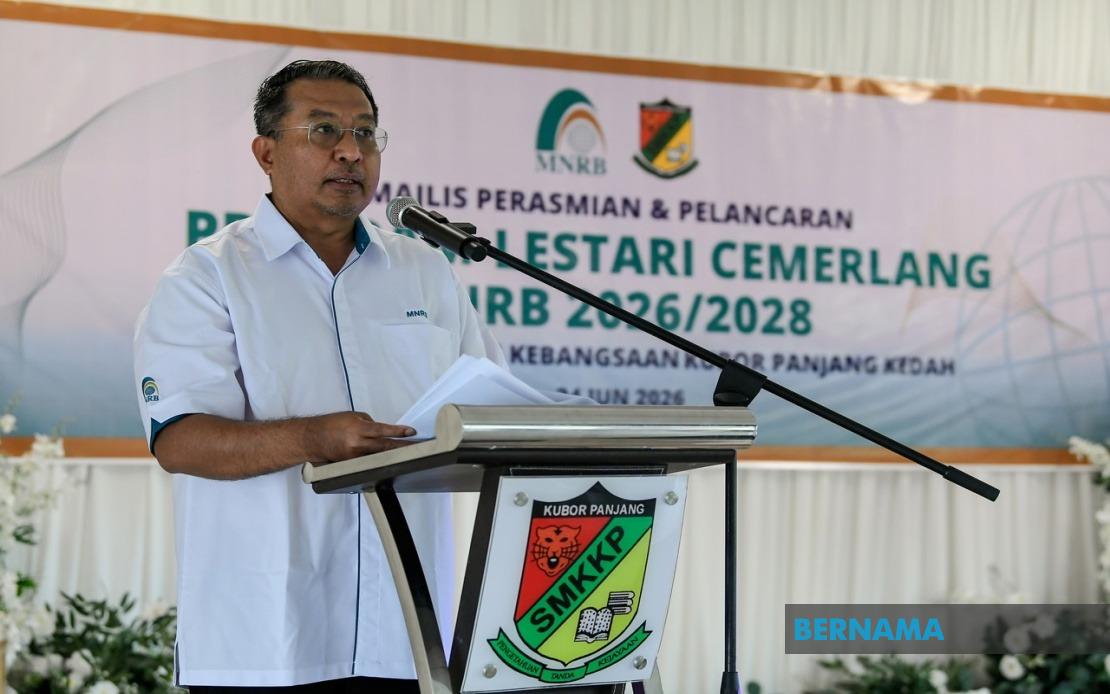
MNRB Holdings Berhad, an investment holding company, has distributed nearly RM600,000 to support six schools across Malaysia through its Lestari Cemerlang Programme, underscoring the company's commitment to educational advancement in underserved areas. The initiative was formally launched at Sekolah Menengah Kebangsaan Kubor Panjang in Pendang, Kedah, with SMK Kubor Panjang becoming the sixth institution to join the programme, which now spans Perak, Pahang, Negeri Sembilan, Melaka, Selangor, and Kedah.
Datuk Rudy Rodzila Che Lamin, MNRB's interim president and group chief executive officer, explained that the adopted school programme originated in 2011 as part of the company's broader corporate social responsibility framework. The initiative reflects a strategic decision to direct resources toward institutions with genuine potential for improvement, particularly those in rural communities where educational infrastructure and support systems remain comparatively limited. By concentrating efforts on both academic performance and character development, the programme addresses a multifaceted approach to school excellence that goes beyond traditional teaching metrics.
The Lestari Cemerlang Programme operates on the premise that meaningful educational transformation requires simultaneous investment in infrastructure, staffing capacity, and student motivation. Rather than focusing narrowly on examination results, MNRB's model incorporates supplementary classes for Form Five students preparing for critical examinations, motivational camps designed to build confidence and resilience, and structured student development programmes that cultivate leadership and interpersonal skills. This comprehensive approach recognises that rural schools often lack the financial resources and specialist facilities available to better-funded urban institutions, creating disparities that affect long-term student outcomes.
Tangible infrastructure improvements form a cornerstone of MNRB's engagement with participating schools. The company has funded upgrades to learning facilities, provided sponsorship for sports jerseys that enable student participation in competitive events, and implemented school greening programmes that simultaneously beautify campuses and instil environmental consciousness. Notably, MNRB has established a dedicated learning space called the MNRB Smart e-Learning Room, equipped with advanced technology including smart television systems and reliable internet connectivity. This facility represents a direct response to the digital divide affecting rural Malaysian schools, enabling educators and learners to access online resources and contemporary teaching methodologies that would otherwise remain inaccessible.
The integration of digital infrastructure reflects growing recognition that technology access has become fundamental to educational equity in Malaysia. Rural schools frequently operate without adequate broadband connectivity or modern learning equipment, placing their students at a disadvantage when competing for university places or employment against peers from better-resourced institutions. By providing these technological foundations, MNRB addresses a structural inequality that extends beyond individual school performance to shape lifetime economic prospects and career trajectories. The smart e-learning room concept allows teachers to diversify instructional methods and exposes students to digital literacy skills increasingly essential in Malaysia's evolving job market.
Beyond the immediate school environment, MNRB operates the Tabung Biasiswa MNRB scholarship scheme, which extends support to exceptional students from adopted schools pursuing higher education in fields directly relevant to the company's business operations, including insurance, takaful, and finance sectors. Under this scheme, five top-performing students from SMK Kubor Panjang have been selected for sponsorship support extending through diploma, bachelor's, and master's degree levels. This targeted approach creates visible pathways from rural secondary education into tertiary qualifications and professional careers, simultaneously addressing Malaysia's skills shortage in the financial services industry.
The scholarship programme demonstrates measurable impact across MNRB's adopted institutions. To date, fourteen students from earlier participating schools have received sponsorship under Tabung Biasiswa MNRB, with eight subsequently securing employment within MNRB Group upon graduation. This employment conversion rate illustrates the practical value of aligning educational support with sectoral workforce needs, a model that potentially addresses broader Malaysian challenges around graduate employment and skills misalignment. By creating a pipeline from supported schools through tertiary education to direct employment, MNRB effectively transforms corporate social responsibility into talent development with mutual benefit.
The programme's expansion to Kedah, with SMK Kubor Panjang's participation, signals MNRB's commitment to extending its education initiatives beyond previously targeted states. The geographical spread across Peninsular Malaysia reflects a deliberate strategy to support schools in diverse contexts rather than concentrating resources in limited areas. This distribution approach maximises the programme's regional impact while potentially building institutional knowledge about effective educational interventions applicable across different cultural and socioeconomic contexts. The involvement of state-level education officials, including participation by Kedah State Education Department's deputy director for the learning sector, indicates alignment between MNRB's initiatives and government educational priorities.
For Malaysian policymakers and educators, the MNRB initiative offers insights into how private sector resources can effectively complement government education funding, particularly in under-resourced rural areas. The programme's emphasis on both tangible infrastructure improvements and intangible factors like motivation and character development reflects contemporary understanding of educational excellence as multidimensional. Rather than viewing corporate social responsibility as charitable giving, MNRB's approach integrates educational support with workforce development objectives, creating institutional incentives for sustained engagement rather than one-off contributions.
The initiative also highlights the persistent challenges facing rural Malaysian schools, which the RM600,000 investment implicitly acknowledges remain inadequately addressed through government funding alone. Issues including limited access to qualified teachers in specialist subjects, outdated learning facilities, and psychological barriers affecting student aspiration in communities with limited higher education or professional employment visibility require sustained intervention. MNRB's multi-year commitment to adopted schools, rather than time-limited projects, suggests understanding that meaningful educational transformation requires consistency and adaptation to local contexts.
Looking forward, the programme's expansion raises questions about scalability and whether private sector models can effectively serve Malaysia's broader rural education challenges. With thousands of rural schools across the country facing similar constraints, the six institutions currently supported represent a small fraction of schools requiring investment. The success of MNRB's approach may encourage other Malaysian corporations to develop comparable initiatives, potentially creating a broader ecosystem of corporate-education partnerships that collectively address structural inequities. This would require clear measurement of outcomes and transparent sharing of lessons learned about what interventions produce sustainable improvements in academic performance and student life prospects.
The Lestari Cemerlang Programme ultimately reflects a recognition that educational excellence cannot be divorced from the socioeconomic realities shaping student trajectories. By combining infrastructure investment, targeted scholarship support, and structured development programmes, MNRB addresses multiple constraints simultaneously. For Malaysian readers concerned with equity in education and sustainable development, the initiative demonstrates how corporate resources, when thoughtfully deployed in partnership with schools and aligned with both educational and business objectives, can generate tangible improvements in opportunities available to young people in underserved communities.

