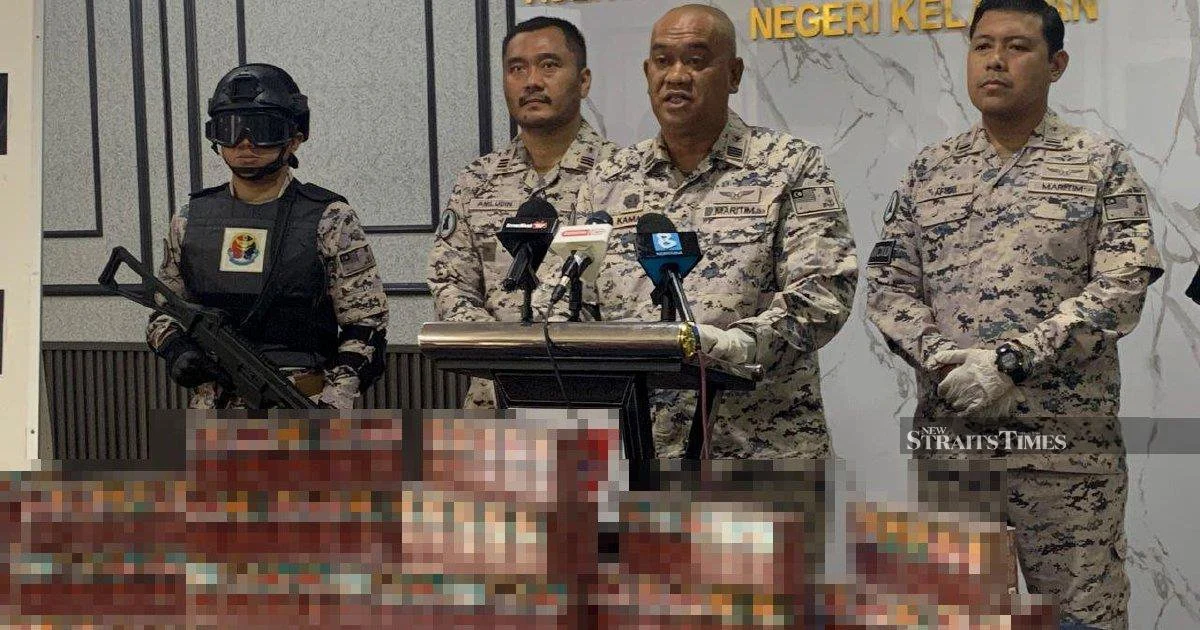
The Malaysian Maritime Enforcement Agency (MMEA) has intensified its enforcement efforts against smuggling operations, securing a significant haul of contraband cigarettes valued at roughly RM212,000 during a river-based operation near Kampung Penambang in Pasir Puteh, Kelantan. The interdiction of 24 boxes of illicit cigarettes underscores the ongoing challenge of illicit tobacco trafficking through Malaysia's waterways, a problem that has persisted despite repeated crackdowns across coastal and inland regions.
Kelantan's river systems have emerged as a critical vulnerability in Malaysia's border security infrastructure. The state's complex network of waterways connecting to Thailand provides smugglers with alternative routes that circumvent conventional land-based customs checkpoints and enforcement patrols. These maritime corridors present particular challenges for enforcement agencies because they operate across jurisdictional boundaries, require specialized equipment and trained personnel, and demand round-the-clock surveillance capabilities that stretch already limited resources.
The MMEA's operation demonstrates the agency's commitment to disrupting trafficking networks, yet the sheer volume of contraband regularly intercepted suggests that substantial quantities still slip through undetected. When translated into typical retail markup structures within Malaysia's illicit tobacco market, a RM212,000 seizure represents just one transaction among countless daily smuggling attempts occurring across the nation's extensive maritime zones. The economic incentive for traffickers remains extraordinarily high, given the substantial price differential between legally produced cigarettes and untaxed contraband products sold through informal channels.
Tobacco smuggling generates enormous profits for organized crime syndicates operating across Southeast Asia. These networks typically source cigarettes from manufacturers in Thailand, Myanmar, and other regional producers, exploiting weak regulatory oversight and porous borders to move products into Malaysia where tax-advantaged pricing creates strong demand. Malaysian retailers, small merchants, and street-level distributors often serve as the final link in these supply chains, knowingly purchasing smuggled stock at significant discounts compared to genuine, tax-stamped products available through licensed wholesalers.
The revenue impact extends beyond lost excise duties to encompass broader public health and economic consequences. Illicit cigarettes deprive the Malaysian government of substantial tax income that could fund healthcare and social programs. The prevalence of cheaper, untaxed tobacco products also creates price pressure that undermines tobacco control objectives by making smoking more affordable and accessible to price-sensitive consumers, particularly young people and lower-income demographics. Public health authorities have repeatedly flagged this dynamic as a significant impediment to achieving smoking reduction targets outlined in national health policy frameworks.
Enforcement against cigarette smuggling intersects with Malaysia's broader counter-trafficking agenda. The same criminal networks moving illicit tobacco often simultaneously engage in trafficking of other contraband goods, including drugs, wildlife products, and counterfeit merchandise. By disrupting cigarette smuggling operations, enforcement agencies simultaneously dismantle infrastructure and distribution channels utilized for smuggling of more dangerous and socially harmful products. This integrated approach recognizes that compartmentalized enforcement strategies prove ineffective against sophisticated, diversified smuggling enterprises.
The Kelantan operation also reflects heightened international cooperation on smuggling matters. The MMEA coordinates with Thai maritime authorities, Customs officials, and intelligence agencies across ASEAN to map trafficking patterns and interdict major shipments. Real-time information sharing through bilateral and regional mechanisms has enabled more targeted enforcement responses, though coordination challenges persist given differing legal frameworks, operational capabilities, and resource constraints across neighboring jurisdictions. Enhanced cooperation with Brunei, Indonesia, Thailand, Singapore, and other neighbors remains essential for effectively combating a problem that transcends national boundaries.
From a Malaysian perspective, cigarette smuggling represents a significant cost to national revenue and public health objectives. Annual estimated losses from tobacco duty evasion run to hundreds of millions of ringgit, funds urgently needed across healthcare, infrastructure, and education. The prevalence of illicit cigarettes also complicates public smoking cessation campaigns and regulatory efforts, as public messaging about health risks loses credibility when cheaper alternatives remain readily accessible through informal markets. Every seizure like the Kelantan operation signals enforcement capacity, yet the ongoing scale of smuggling indicates that substantially greater resources and coordinated regional action would be required to meaningfully reduce flow volumes.
The MMEA's interception success requires sustained operational momentum. Smugglers continuously adapt routes, timing, concealment methods, and transaction structures to evade enforcement. Last week's seizure likely disrupted one particular trafficking cell, yet the underlying demand, price differentials, and geographic vulnerabilities that enable smuggling persist unchanged. Effective counter-smuggling requires sustained enforcement investment, improved maritime surveillance technology, enhanced intelligence gathering capabilities, and strengthened cooperation mechanisms that enable real-time information sharing and coordinated interdiction across maritime jurisdictions throughout Malaysia and Southeast Asia.

