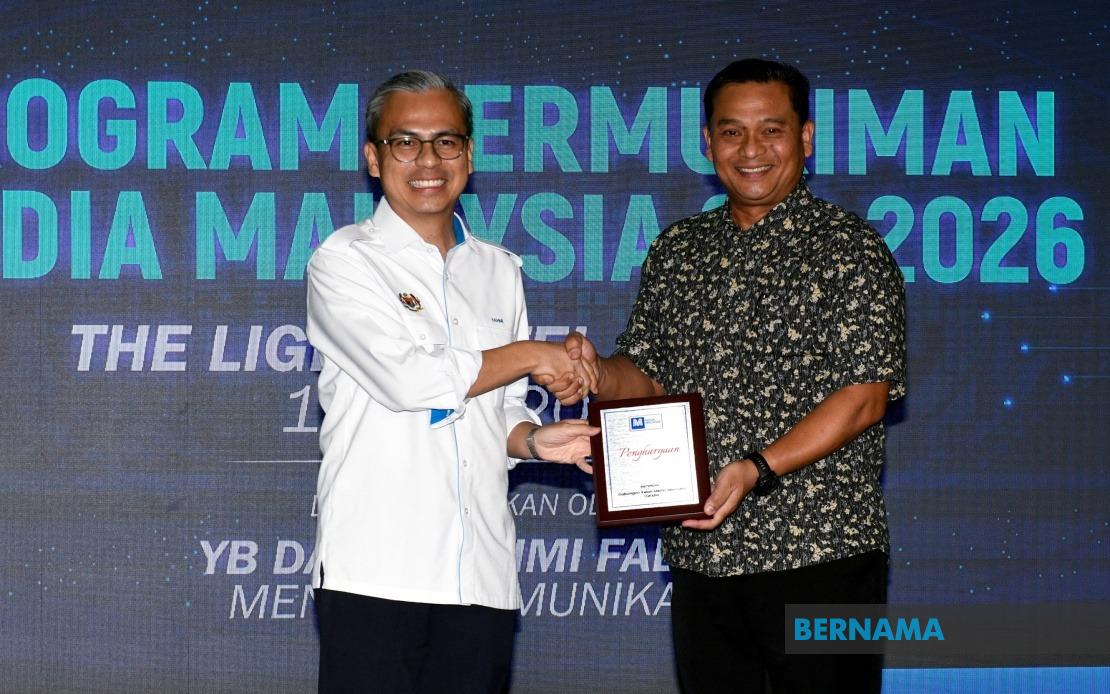
The Communications Ministry is channelling financial support to Malaysia's media fraternity through a dual funding initiative targeting state-level media clubs and their national umbrella organisation. Communications Minister Datuk Fahmi Fadzil unveiled the allocation during the Malaysia Media Retreat Programme 2.0 in Butterworth on June 19, pledging RM10,000 to each state media club that holds membership in the Malaysian Media Clubs Association (GKMM), while the association itself receives RM30,000 for programming and activities centred on journalist welfare.
The funding announcement reflects the government's stated commitment to supporting journalism practitioners at a time when the media industry faces mounting pressures from technological disruption and evolving business models. Fahmi framed the contribution as part of a broader ministerial strategy to preserve journalistic employment and recognise the irreplaceable function that trained reporters and editors perform in the nation's information ecosystem. The minister stressed that artificial intelligence, despite its rapid advancement, cannot replicate the investigative depth, ethical judgment and contextual understanding that human journalists bring to news gathering and dissemination.
The allocation to GKMM carries particular significance because the association, while not formally constituted as a workers' union, has emerged as a de facto channel through which the concerns and grievances of media professionals reach government decision-makers. Fahmi acknowledged this intermediary role explicitly, positioning GKMM as an essential platform for surfacing welfare issues, articulating practitioners' anxieties about the industry's trajectory, and communicating aspirations for journalism's future in Malaysia. This framing suggests the government views the association as a legitimate interlocutor whose input shapes policy development affecting the sector.
The minister's remarks underscored journalism's foundational importance to democratic governance and public discourse. He characterised journalists as essential witnesses to events who transform raw information gathered from primary sources into vetted, contextualised news through disciplined methodology, accumulated expertise and technical skill. This characterisation directly counters narratives that dismiss journalism as obsolete or expendable in an age of social media and citizen reporting. By emphasising the irreplaceability of professional journalists, Fahmi positioned the financial support as investment in a public good rather than mere subsidy to a struggling industry sector.
The government's engagement with media organisations and professional associations also extended to policy formation in recent years. Fahmi noted that the Malaysian Media Council Act, which represents a significant regulatory framework for the sector, was substantially shaped by suggestions and feedback from the media industry itself. This collaborative approach to legislation differs markedly from top-down regulatory imposition and suggests the Communications Ministry has adopted a consultative model that incorporates practitioner perspectives into governance design. Whether this consultation model materialises consistently across all media policy initiatives remains an open question, particularly given Malaysia's complex media environment and the sometimes fraught relationship between government and independent news organisations.
The timing of the funding announcement merits consideration within Malaysia's broader information ecosystem dynamics. Media organisations nationwide have experienced revenue pressures stemming from advertising migration to digital platforms, declining print circulation, and competition for audience attention. Against this backdrop, government financial support to industry associations and clubs can provide tangible relief, though such funding also raises questions about editorial independence and potential implicit expectations regarding coverage. The distribution mechanism through state media clubs rather than directly to news organisations themselves suggests an attempt to support the profession as a collective entity while maintaining some distance from editorial operations.
Fahmi's assertion that the government will continue soliciting media practitioner input during future policy development carries implications for how the sector might advocate for its interests. If such consultation remains genuine and consequential, it creates space for journalists and media managers to shape regulatory and support frameworks affecting their work. Conversely, if consultation becomes largely symbolic while predetermined government positions ultimately prevail, such promises risk generating cynicism among practitioners. The credibility of future consultation efforts will depend on visible evidence that industry feedback meaningfully influences policy outcomes.
The allocation's quantum deserves examination in the context of actual operational needs facing state media clubs and the national association. Whether RM10,000 per state club and RM30,000 for GKMM adequately funds meaningful welfare initiatives, professional development programmes, or advocacy activities depends on the scope of intended activities and current funding baselines. For some established clubs with existing revenue streams, the allocation may represent supplementary capacity; for newer or less well-resourced clubs, it could enable substantive programming that would otherwise prove impossible. Understanding the proportionate impact requires visibility into clubs' budgets and operational expenses, information rarely disclosed publicly.
The broader policy context illuminates why the government might prioritise support for media professional organisations at this particular moment. Regional discussions about media literacy, misinformation, polarisation, and journalism's role in democratic societies have intensified across Southeast Asia. Malaysia's own experience with social media-driven polarisation and its ongoing regulatory challenges around digital speech suggest that policymakers may view investment in professional journalism institutions as contributing to a healthier information environment. Supporting organised journalism practitioners and their associations could be understood as part of a strategy to strengthen traditional news media against both technological disruption and the spread of unreliable information sources.
The presence of senior Ministry officials including secretary-general Datuk Abdul Halim Hamzah, Bernama chief executive officer Datin Paduka Nur-ul Afida Kamaludin, and Bernama editor-in-chief Arul Rajoo Durar Raj at the retreat programme signalled institutional commitment to the occasion. Bernama's participation is particularly notable given the national news agency's role as a foundational source for much of Malaysia's media ecosystem. When official structures like Bernama engage with independent media club networks, it reinforces the notion that government and the broader media sector, despite occasional tensions, share interests in journalism's institutional vitality.
Looking forward, the sustainability and effectiveness of this funding initiative will depend on how both recipient organisations and the Communications Ministry measure success. Will RM10,000 allocations to state clubs translate into demonstrable journalist welfare improvements or professional development opportunities? Will GKMM's RM30,000 enable it to amplify practitioner concerns more effectively in policy discussions? The absence of articulated metrics or accountability mechanisms in Fahmi's announcement means progress will be difficult to assess independently. Establishing clear expectations about fund utilisation and creating transparent reporting on activities funded would strengthen the initiative's credibility and demonstrate genuine commitment to supporting the journalism profession beyond symbolic gestures.

