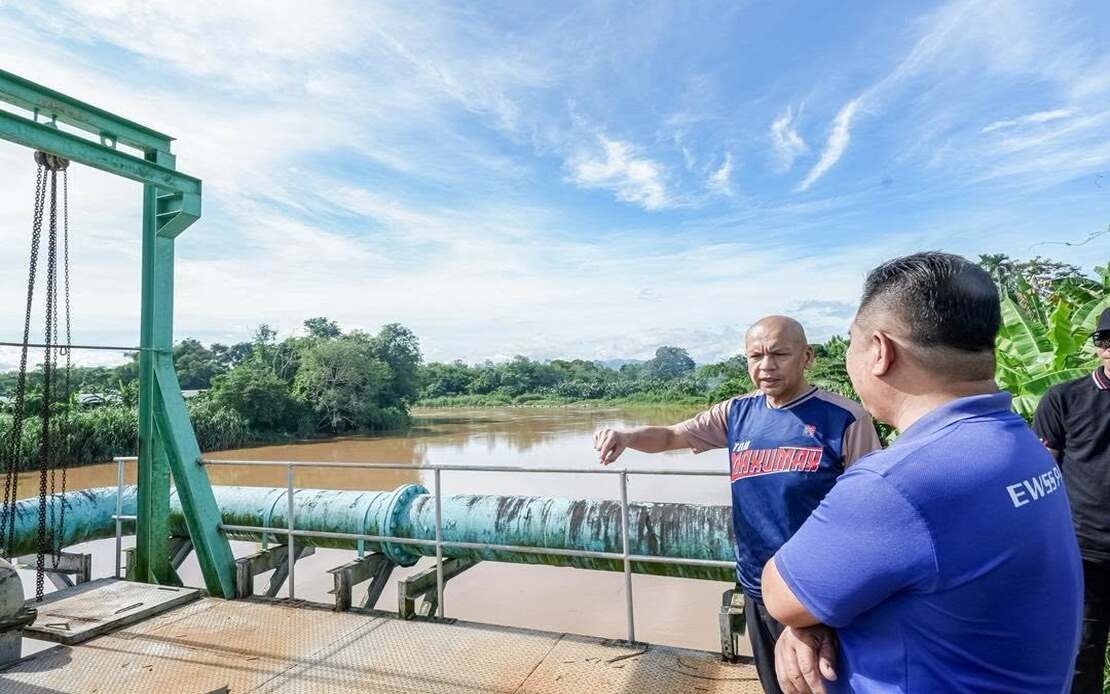
Datuk Armizan Mohd Ali, Malaysia's Domestic Trade and Cost of Living Minister and Member of Parliament for Papar, has undertaken a comprehensive inspection of water infrastructure developments in the district following mounting concerns over supply reliability. The visit on June 19 came just days after a dedicated meeting on June 15 to assess the status of multiple water stabilisation initiatives designed to tackle persistent shortages affecting residents across the region.
The district faces escalating pressure on its water systems as demand continues to rise with population growth and economic development. Two major projects are currently underway to expand capacity and improve operational efficiency. The Kogopon Water Treatment Plant is being upgraded to double its production from 40 million litres per day to 80 million litres per day, representing a significant expansion of the area's primary treatment infrastructure. Simultaneously, the intake facilities serving Kampung Kabang are undergoing enhancement to improve raw water collection capabilities and reduce vulnerability to seasonal fluctuations.
These infrastructure initiatives reflect a broader recognition that Papar's existing water systems have been strained by demographic and economic pressures. The district, like many areas across Malaysia experiencing rapid growth, has struggled to maintain supply consistency without sustained investment in treatment and distribution infrastructure. The dual approach of increasing treatment capacity while simultaneously strengthening intake systems suggests planners recognise that bottlenecks can occur at multiple points in the water supply chain.
However, the timing of Armizan's inspection highlights an immediate crisis beyond the medium-term solutions represented by these upgrade projects. During the visit, the minister reviewed operational conditions at the EWSS Plant and the JETAMA Limbahau Plant, both of which have suffered recent disruptions. The disruptions stem from raw water turbidity problems—specifically high nephelometric turbidity unit (NTU) values at plant inlets—forcing temporary operational shutdowns until water quality met treatment standards.
Turbidity issues, while often viewed as technical challenges, reflect underlying environmental pressures on Sabah's water resources. Elevated NTU values typically result from heavy rainfall, erosion, or seasonal changes that increase suspended particles and organic matter in raw water sources. For treatment plants dependent on consistent raw water quality, such spikes necessitate brief closures to prevent equipment damage and maintain treated water safety standards. These disruptions, though intended to be temporary, directly impact household access to water across affected service areas.
Armizan's approach emphasises direct field inspection as essential for understanding operational realities that statistics alone cannot convey. By personally reviewing both the EWSS and JETAMA Limbahau facilities, the minister sought to move beyond written reports and grasp the specific technical constraints and logistical challenges confronting plant operators. This hands-on oversight is particularly important in managing water infrastructure across diverse terrain in Sabah, where geographic isolation and climatic variability compound operational complexity.
The minister's statement underscores the government's commitment to implementing solutions more effectively by grounding decision-making in field-level evidence. Water supply disruptions carry significant political and social consequences, affecting households, businesses, and public institutions alike. By demonstrating direct ministerial engagement with infrastructure challenges, Armizan signals accountability and the priority assigned to resolving Papar's water security issues.
For Malaysian consumers in water-stressed regions, these developments reflect a wider pattern: major population centres increasingly require substantial capital investment to sustain reliable supply. The Papar situation exemplifies challenges facing many districts where aging infrastructure and rising demand have converged. The combination of long-term capacity expansion projects with immediate crisis management suggests authorities are simultaneously addressing chronic systemic constraints and acute operational failures.
The upgrades to Kogopon and Kampung Kabang represent significant commitments that should enhance supply stability once completed, yet their extended timelines mean residents will continue experiencing occasional disruptions during the interim period. This gap between current reliability and future capacity creates vulnerability windows where environmental pressures—whether high turbidity events or infrastructure failures—can quickly cascade into supply shortages affecting thousands of consumers.
Robust water management requires coordinating multiple elements: expanding treatment capacity, protecting raw water sources from contamination, maintaining aging infrastructure, and developing contingency systems for emergency situations. Armizan's engagement across these fronts suggests a holistic approach to Papar's water security, though the effectiveness of coordinated efforts ultimately depends on sustained funding, skilled technical personnel, and alignment between different agencies responsible for different segments of the supply chain.
For consumers in Papar and across Sabah, the inspection represents an opportunity for formal documentation of infrastructure needs and operational constraints that can inform future budget allocation decisions. Water security remains a fundamental prerequisite for sustainable development, and the visibility that ministerial oversight brings to local challenges can help ensure that infrastructure investment keeps pace with demographic and economic growth trajectories.

