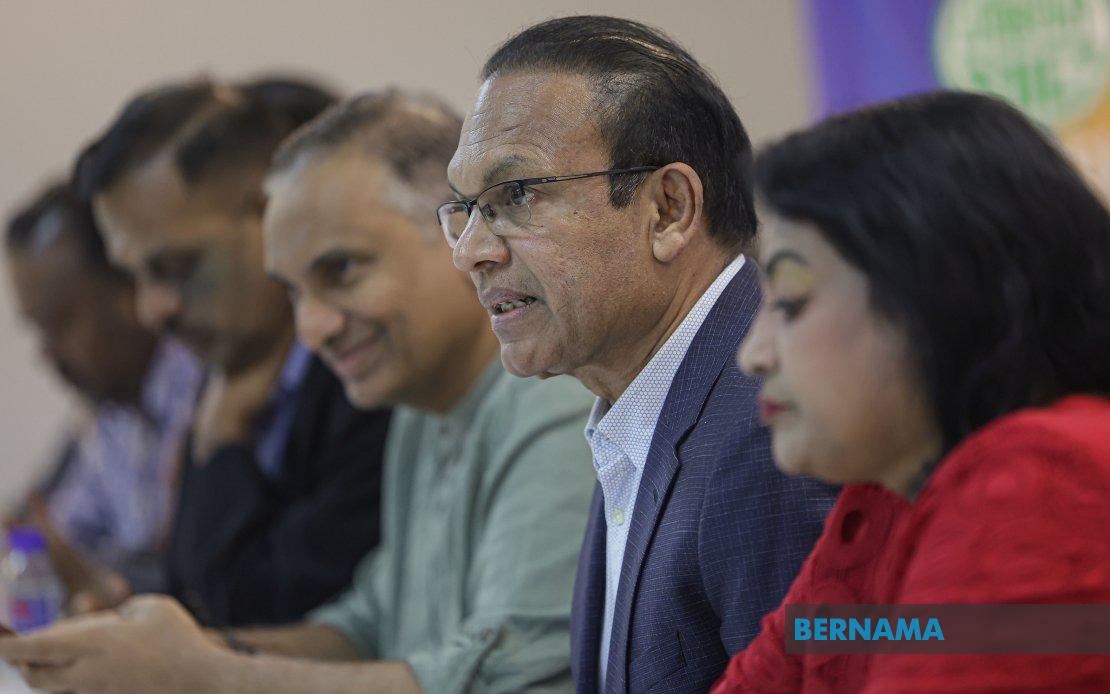
The Malaysian Indian Congress (MIC) will field candidates in four constituencies during the Johor state election slated for July 11, marking the party's continued presence in the state legislature following recent coalition negotiations. Datuk T. Murugiah, vice-president of the party, disclosed the allocation after MIC president Tan Sri SA. Vigneswaran completed talks with other Barisan Nasional component parties on the allocation of state seats ahead of the polls. This decision reflects the ongoing arrangement within Malaysia's ruling coalition to balance representation across ethnic and regional lines, a cornerstone of the BN's power-sharing formula that has dominated Malaysian politics for decades.
While MIC's seat allocation in Johor appears settled, discussions over the party's representation in Negeri Sembilan remain fluid, suggesting that negotiations with coalition partners in the southern state are progressing at a different pace. Murugiah indicated that finalisation of the Negeri Sembilan numbers is expected soon, reflecting the complex logistics of coordinating multiple state elections across different Barisan Nasional members. The timing of these two separate state polls—Johor in July and Negeri Sembilan in August—has necessitated distinct nomination schedules, with Johor candidates formally nominated on June 27 and their Negeri Sembilan counterparts on July 18, giving each constituency distinct campaign periods.
To ensure effective campaigning among the Indian electorate across Johor's 56 state constituencies, MIC is launching an intensive training initiative targeting approximately 150 party speakers. The two-day workshop, scheduled for Johor Bahru over the weekend immediately following the announcement, aims to equip campaigners with refined messaging and public speaking capabilities. This strategic investment in grassroots mobilisation underscores the party's recognition that winning back support from the Indian community requires more than traditional appeals; it demands coordinated, articulate communication of Barisan Nasional's policy positions and electoral promises. The deployment of trained speakers across all 56 seats—even those where MIC is not fielding candidates—indicates the coalition's intention to maximise Indian voter turnout and consolidate community support wherever possible.
MIC's performance in the 2022 Johor election provides both encouragement and concern as the party approaches the forthcoming contest. In that election, the party captured three of four seats it contested: Kemelah, Kahang, and Tenggaroh fell to MIC candidates, while Bukit Batu was lost to a competitor. The prospective seat lineup for 2024 suggests modest adjustments to this configuration, with Kemelah and Kahang retained and Bukit Batu targeted for recapture. However, the anticipated surrender of Tenggaroh in a swap arrangement with UMNO for the Perling seat represents a strategic concession, indicating that internal BN negotiations prioritised strengthening Malay-majority constituency control while maintaining MIC's overall seat count. This swap reflects the delicate balance maintained within a coalition where UMNO, as the largest Malay party, typically exercises greater leverage in seat allocation discussions.
The prospect of approximately fifty percent new candidate faces reflects both generational renewal and potential internal restructuring within MIC's state apparatus. The infusion of fresh candidates may energise party machinery and offer improved appeal to younger voters within the Indian community, particularly in urban constituencies. Conversely, the displacement of established incumbents could risk losing accumulated grassroots networks and institutional knowledge that prove invaluable during campaigns. The party's decision to introduce this level of candidate rotation suggests leadership confidence in the viability of new contenders, though the electoral viability of these candidates will ultimately determine whether renewal translates into improved performance compared to the previous election cycle.
MIC's electoral strategy extends beyond constituency-focused campaigning into broader community engagement. The organisation of sports competitions across 152 locations nationwide this Saturday—encompassing football, badminton, bowling, carrom, and hiking—demonstrates an attempt to build goodwill and social connection beyond traditional political messaging. By explicitly inviting participation from all racial communities rather than exclusively targeting Indian voters, the party projects an inclusive vision that aligns with Barisan Nasional's multiracial coalition branding. These grassroots activities serve dual purposes: they reinforce party presence in dispersed communities while generating positive local media coverage that supports the broader electoral campaign.
The MIC's participation in state elections occurs against a backdrop of shifting Indian community political preferences in Malaysia. Historically a reliable BN constituency, sections of the Indian electorate have demonstrated openness to opposition alternatives, particularly when driven by economic concerns or perceived neglect of community interests. By committing substantial resources to speaker training and grassroots mobilisation, MIC signals its intention to actively contest rather than passively inherit Indian votes. The focus on accurate information dissemination and consistent messaging across all 56 Johor constituencies reflects recognition that Indian voters increasingly evaluate parties on policy substance rather than traditional communal loyalty alone.
The allocation of seats within Barisan Nasional continues to reflect historical power dynamics, though with subtle shifts in emphasis. MIC's four-seat allocation in Johor, coupled with potential presence in Negeri Sembilan, represents meaningful participation without dominant influence. This positioning reflects the party's gradual evolution from pre-1998 hegemony within Indian community politics toward a more contested space where it must actively earn support. The upcoming elections will provide early indicators of whether MIC's strategic investments in candidate quality, speaker training, and community engagement translate into electoral gains that exceed or merely sustain the 2022 baseline.
The nomination schedule concentration on late June for Johor provides a relatively compressed campaign period before the July 11 polling date, allowing roughly two weeks for candidate introduction and grassroots persuasion activities. This compressed timeline amplifies the importance of pre-nomination preparation work, including the speaker training programme. Candidates lacking established public recognition must rely on rapid mobilisation of party machinery and volunteer networks to achieve visibility within their constituencies. Conversely, incumbent or well-known candidates benefit from existing name recognition that reduces campaign startup friction.
Looking forward, MIC's performance in these 2024 state elections will likely influence the party's positioning within Barisan Nasional ahead of the next federal general election, which must occur by October 2025. Strong performance could strengthen MIC's negotiating position for federal seat allocations, while disappointing results might justify coalition partners demanding larger parliamentary representations. The Indian community's voting behaviour across Johor and Negeri Sembilan will therefore carry significance extending well beyond state-level governance, affecting the broader calculus of ethnic representation within Malaysia's national coalition architecture.